


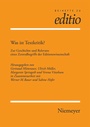
Was ist Textkritik?
Zur Geschichte und Relevanz eines Zentralbegriffs der Editionswissenschaft (Innsbruck 2/04)
1st Edition
Published on 7. April 2009
VIII, 337 pages
978-3-484-97078-6 (ISBN)
Description

Scholars concerned with editing text, principally Germanists and musicologists, have placed a central editorial concept, that of textual criticism, centre-stage. In the course of the past decades, a development has taken place in this area, combined with new thoughts, but also with constant irritations. The contemporary significance and function of textual criticism are discussed using concrete examples.
More details
Other editions
Additional editions

Gertraud Mitterauer | Ulrich Müller | Margarete Springeth
Was ist Textkritik?
Zur Geschichte und Relevanz eines Zentralbegriffs der Editionswissenschaft (Innsbruck 2/04)
Book
04/2009
De Gruyter
€259.00
Article exhausted; check different version
Gertraud Mitterauer | Ulrich Müller | Margarete Springeth
Was ist Textkritik?
Zur Geschichte und Relevanz eines Zentralbegriffs der Editionswissenschaft (Innsbruck 2/04)
Book
01/2009
1st Edition
De Gruyter
€270.00
Shipment within 7-9 days
Persons
Content
1 - Frontmatter [Seite 1]
2 - Inhalt [Seite 5]
3 - Vorwort [Seite 9]
4 - Zur Nachhaltigkeit von elektronischen Texten: XML und TEI [Seite 11]
5 - Zur Textkritik von Handschriften [Seite 27]
6 - Kritik am Text und Textkritik [Seite 37]
7 - Warum und wie sollen Literatenbriefwechsel des 17. Jahrhunderts kritisch ediert werden? [Seite 47]
8 - "schreibe nur wie du reden würdest ." [Seite 57]
9 - Warum und unter welchen Umständen ist eine textkritische Bearbeitung von Briefen sinnvoll? [Seite 77]
10 - Philologische Textkritik als Technik geistiger Überlieferung bei Johann Gottfried Herder [Seite 95]
11 - Möglichkeiten und Grenzen der Textkritik bei Incerta [Seite 111]
12 - Early Enlightenment or High Philology? [Seite 121]
13 - Franz Schuberts Deutsche Trauermesse (D 621) als Problem der Text- und Stilkritik [Seite 137]
14 - Textkritik und Marx-Engels-Edition [Seite 149]
15 - "Die Landschaft ist die Sprache." [Seite 161]
16 - Textkritische Probleme der Edition von Ferdinand Raimunds Zauberspielen [Seite 169]
17 - "Von dem Verfasser selbst herausgegeben" [Seite 179]
18 - Textkritische Probleme bei der Edition von Grimmelshausens Simplicissimus [Seite 191]
19 - Textschichten [Seite 203]
20 - Textkritik und Interpretation bedingen einander [Seite 217]
21 - Synopse als Hilfsmittel und als Selbstzweck [Seite 229]
22 - Genetic textual editing: the end of an era [Seite 241]
23 - Textkritische Arbeit an einer Mischhandschrift des ausgehenden 16. Jahrhunderts [Seite 249]
24 - Textkonstitution und Interpretation [Seite 255]
25 - Popularität und Wissenschaftlichkeit [Seite 273]
26 - Zur Genese der neuen Studienausgabe der Werke Hugos von Montfort [Seite 285]
27 - Textkritik und Dekonstruktion [Seite 291]
28 - Emblem Book Digitisation: State of Affairs, Options and Challenges [Seite 299]
29 - Ödön von Horváth: Wiener Ausgabe [Seite 311]
30 - Textkritik bei der Edition von Trakls Werk [Seite 325]
31 - Reise zu den Grenzen der Textkritik [Seite 337]
2 - Inhalt [Seite 5]
3 - Vorwort [Seite 9]
4 - Zur Nachhaltigkeit von elektronischen Texten: XML und TEI [Seite 11]
5 - Zur Textkritik von Handschriften [Seite 27]
6 - Kritik am Text und Textkritik [Seite 37]
7 - Warum und wie sollen Literatenbriefwechsel des 17. Jahrhunderts kritisch ediert werden? [Seite 47]
8 - "schreibe nur wie du reden würdest ." [Seite 57]
9 - Warum und unter welchen Umständen ist eine textkritische Bearbeitung von Briefen sinnvoll? [Seite 77]
10 - Philologische Textkritik als Technik geistiger Überlieferung bei Johann Gottfried Herder [Seite 95]
11 - Möglichkeiten und Grenzen der Textkritik bei Incerta [Seite 111]
12 - Early Enlightenment or High Philology? [Seite 121]
13 - Franz Schuberts Deutsche Trauermesse (D 621) als Problem der Text- und Stilkritik [Seite 137]
14 - Textkritik und Marx-Engels-Edition [Seite 149]
15 - "Die Landschaft ist die Sprache." [Seite 161]
16 - Textkritische Probleme der Edition von Ferdinand Raimunds Zauberspielen [Seite 169]
17 - "Von dem Verfasser selbst herausgegeben" [Seite 179]
18 - Textkritische Probleme bei der Edition von Grimmelshausens Simplicissimus [Seite 191]
19 - Textschichten [Seite 203]
20 - Textkritik und Interpretation bedingen einander [Seite 217]
21 - Synopse als Hilfsmittel und als Selbstzweck [Seite 229]
22 - Genetic textual editing: the end of an era [Seite 241]
23 - Textkritische Arbeit an einer Mischhandschrift des ausgehenden 16. Jahrhunderts [Seite 249]
24 - Textkonstitution und Interpretation [Seite 255]
25 - Popularität und Wissenschaftlichkeit [Seite 273]
26 - Zur Genese der neuen Studienausgabe der Werke Hugos von Montfort [Seite 285]
27 - Textkritik und Dekonstruktion [Seite 291]
28 - Emblem Book Digitisation: State of Affairs, Options and Challenges [Seite 299]
29 - Ödön von Horváth: Wiener Ausgabe [Seite 311]
30 - Textkritik bei der Edition von Trakls Werk [Seite 325]
31 - Reise zu den Grenzen der Textkritik [Seite 337]
