

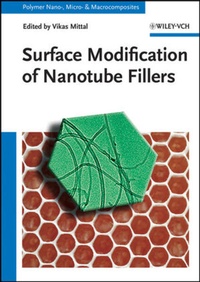
Surface Modification of Nanotube Fillers
1st Edition
Published on 20. January 2011
XV, 316 pages
978-3-527-63510-8 (ISBN)
Description

The book series "Polymer Nano-, Micro- and Macrocomposites" provides complete and comprehensive information on all important aspects of polymer composite research and development, including, but not limited to, synthesis, filler modification, modeling, characterization as well as application and commercialization issues. Each book focuses on a particular topic and gives a balanced in-depth overview of the respective subfield of polymer composite science and its relation to industrial applications. With the books the readers obtain dedicated resources with infomation relevant to their research, thereby helping to save time and money.
In this first volume in the series, authors from leading academic institutions and companies share their first-hand knowledge of nanotube-surface enhancements for use in polymer composites. All the important methods for the functionalization of nanotube fillers, including polymer wrapping, non-covalent modification with nanoparticles, silica layers or entrapped micelles, chemically induced growth of multilayers, techniques based on covalent bonding, such as polmer or quantum dot attachment, and direct polymerization approaches are covered.
In this first volume in the series, authors from leading academic institutions and companies share their first-hand knowledge of nanotube-surface enhancements for use in polymer composites. All the important methods for the functionalization of nanotube fillers, including polymer wrapping, non-covalent modification with nanoparticles, silica layers or entrapped micelles, chemically induced growth of multilayers, techniques based on covalent bonding, such as polmer or quantum dot attachment, and direct polymerization approaches are covered.
More details
Other editions
Additional editions
V. Mittal
Surface Modification of Nanotube Fillers
Software
04/2011
Wiley-VCH
€198.26
No shipping information available
Vikas Mittal
Surface Modification of Nanotube Fillers
Book
04/2011
Wiley-VCH
€145.00
Article exhausted; check different version
Person
Vikas Mittal is Polymer Engineer at BASF Polymer Research in Ludwigshafen, Germany. He obtained his PhD in 2006 in Polymer and Materials Engineering from the Swiss Federal Institute of Technology in Zurich, Switzerland. Later, he worked as a Materials Scientist in the Active and Intelligent Coatings section of SunChemical in London, UK. His research interests include polymer nanocomposites, novel filler surface modifications, thermal stability enhancements, polymer latexes with functionalized surfaces etc. He has authored over 40 scientific publications, book chapters and patents on these subjects.
Content
Preface
CARBON NANOTUBES SURFACE MODIFICATIONS: AN OVERVIEW
Introduction
Noncovalent Functionalization of Nanotubes
Covalent Modification of Carbon Nanotubes
MODIFICATION OF CARBON NANOTUBES BY LAYER-BY-LAYER ASSEMBLY APPROACH
Introduction
Layer-by-Layer Modification of the Carbon Nanotubes
LbL Assembly on CNTs Using Click Chemistry
LbL Assembly on Vertically Aligned (VA) MWNTs
LbL on CNTs of Biological Molecules
LbL on CNTs for Template Development
Applications of LbL-Modified CNTs
Conclusions
NONCOVALENT FUNCTIONALIZATION OF ELECTRICALLY CONDUCTIVE NANOTUBES BY MULTIPLE IONIC OR PI-PI STACKING INTERACTIONS WITH BLOCK COPOLYMERS
Noncovalent Functionalization of CNTs by Pi-Pi Stacking with Block Copolymers Bearing Pyrene Groups
Noncovalent Functionalization of Electrically Conducting Nanotubes by Multiple Ionic Interactions with Double-Hydrophilic Block Copolymers
MODIFICATIONS OF NANOTUBES WITH CONJUGATED BLOCK COPOLYMERS
Introduction
Synthesis of P3HT Block Copolymer
Dispersion of CNTs
Conclusions and Perspective
THEORETICAL ANALYSIS OF NANOTUBE FUNCTIONALIZATION AND POLYMER GRAFTING
Introduction
Theoretical Techniques in Modeling Nanotube Functionalization
Functionalizing Carbon Nanotubes through Mechanical Deformation
Functionalizing Carbon Nanotubes via Chemical Modification
Polymer Grafting
Summary
COVALENT BINDING OF NANOPARTICLES ON CARBON NANOTUBES
Introduction
Covalent Binding of Quantum Dots on CNTs
Covalent Binding of Magnetic Nanoparticles on CNTs
Covalent Binding of Gold Nanoparticles on CNTs
Growth of Poly(amidoamine) Dendrimers on Carbon Nanotubes
Application of Nanoparticles-Conjugated CNTs Composites
Concluding Remarks
AMINE-FUNCTIONALIZED CARBON NANOTUBES
Introduction
Functionalization Strategies for CNTs
Importance of Amine Functionalization
Methods of Amine Functionalization
Characterization Techniques
Degree of Amine Functionalization
Changes in the Band Structure
Applications of Amine-Functionalized CNTs
Limitations of Amine-Functionalized CNTs
Conclusions
FUNCTIONALIZATION OF NANOTUBES BY RING-OPENING AND ANIONIC SURFACE INITIATED POLYMERIZATION
Introduction
Surface-Initiated Polymerization
Conclusions
GRAFTING OF POLYMERS ON NANOTUBES BY ATOM TRANSFER RADICAL POLYMERIZATION
Introduction
Grafting of Polymers on CNTs by ATRP
Functionalization of CNTs by Other CRPs
Grafting of Polymers on Other Nanotubes by ATRP
Conclusions
POLYMER GRAFTING ONTO CARBON NANOTUBES VIA CATIONIC RING-OPENING POLYMERIZATION
Introduction
Cationic Ring-Opening Polymerization of Cyclic Monomers in the Presence of Chain Transfer Reagents in One Pot
Preparation of Polymers-Grafted Carbon Nanotubes
Applications of Polymer-Grafted CNTs
PLASMA DEPOSITION OF POLYMER FILM ON NANOTUBES
Introduction
Principle and Experiment
Results
Summary
FUNCTIONALIZATION OF CARBON NANOTUBES BY POLYMERS USING GRAFTING TO METHODS
Introduction
Overview of the "Grafting to" Methods
Conclusions
ORGANIC FUNCTIONALIZATION OF NANOTUBES BY DIPOLAR CYCLOADDITION
Introduction
The Case of Azomethine Ylide
The Case of Pyridinium Ylides
The Case of Nitrile Oxide
The Case of Nitrone
The Case of Nitrile Imines
Conclusions
CARBON NANOTUBES SURFACE MODIFICATIONS: AN OVERVIEW
Introduction
Noncovalent Functionalization of Nanotubes
Covalent Modification of Carbon Nanotubes
MODIFICATION OF CARBON NANOTUBES BY LAYER-BY-LAYER ASSEMBLY APPROACH
Introduction
Layer-by-Layer Modification of the Carbon Nanotubes
LbL Assembly on CNTs Using Click Chemistry
LbL Assembly on Vertically Aligned (VA) MWNTs
LbL on CNTs of Biological Molecules
LbL on CNTs for Template Development
Applications of LbL-Modified CNTs
Conclusions
NONCOVALENT FUNCTIONALIZATION OF ELECTRICALLY CONDUCTIVE NANOTUBES BY MULTIPLE IONIC OR PI-PI STACKING INTERACTIONS WITH BLOCK COPOLYMERS
Noncovalent Functionalization of CNTs by Pi-Pi Stacking with Block Copolymers Bearing Pyrene Groups
Noncovalent Functionalization of Electrically Conducting Nanotubes by Multiple Ionic Interactions with Double-Hydrophilic Block Copolymers
MODIFICATIONS OF NANOTUBES WITH CONJUGATED BLOCK COPOLYMERS
Introduction
Synthesis of P3HT Block Copolymer
Dispersion of CNTs
Conclusions and Perspective
THEORETICAL ANALYSIS OF NANOTUBE FUNCTIONALIZATION AND POLYMER GRAFTING
Introduction
Theoretical Techniques in Modeling Nanotube Functionalization
Functionalizing Carbon Nanotubes through Mechanical Deformation
Functionalizing Carbon Nanotubes via Chemical Modification
Polymer Grafting
Summary
COVALENT BINDING OF NANOPARTICLES ON CARBON NANOTUBES
Introduction
Covalent Binding of Quantum Dots on CNTs
Covalent Binding of Magnetic Nanoparticles on CNTs
Covalent Binding of Gold Nanoparticles on CNTs
Growth of Poly(amidoamine) Dendrimers on Carbon Nanotubes
Application of Nanoparticles-Conjugated CNTs Composites
Concluding Remarks
AMINE-FUNCTIONALIZED CARBON NANOTUBES
Introduction
Functionalization Strategies for CNTs
Importance of Amine Functionalization
Methods of Amine Functionalization
Characterization Techniques
Degree of Amine Functionalization
Changes in the Band Structure
Applications of Amine-Functionalized CNTs
Limitations of Amine-Functionalized CNTs
Conclusions
FUNCTIONALIZATION OF NANOTUBES BY RING-OPENING AND ANIONIC SURFACE INITIATED POLYMERIZATION
Introduction
Surface-Initiated Polymerization
Conclusions
GRAFTING OF POLYMERS ON NANOTUBES BY ATOM TRANSFER RADICAL POLYMERIZATION
Introduction
Grafting of Polymers on CNTs by ATRP
Functionalization of CNTs by Other CRPs
Grafting of Polymers on Other Nanotubes by ATRP
Conclusions
POLYMER GRAFTING ONTO CARBON NANOTUBES VIA CATIONIC RING-OPENING POLYMERIZATION
Introduction
Cationic Ring-Opening Polymerization of Cyclic Monomers in the Presence of Chain Transfer Reagents in One Pot
Preparation of Polymers-Grafted Carbon Nanotubes
Applications of Polymer-Grafted CNTs
PLASMA DEPOSITION OF POLYMER FILM ON NANOTUBES
Introduction
Principle and Experiment
Results
Summary
FUNCTIONALIZATION OF CARBON NANOTUBES BY POLYMERS USING GRAFTING TO METHODS
Introduction
Overview of the "Grafting to" Methods
Conclusions
ORGANIC FUNCTIONALIZATION OF NANOTUBES BY DIPOLAR CYCLOADDITION
Introduction
The Case of Azomethine Ylide
The Case of Pyridinium Ylides
The Case of Nitrile Oxide
The Case of Nitrone
The Case of Nitrile Imines
Conclusions
