

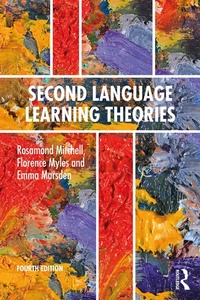
Second Language Learning Theories
Fourth Edition
4th Edition
Published on 21. January 2019
462 pages
978-1-317-20677-4 (ISBN)
Description

Written by a team of leading experts working in different SLA specialisms, this fourth edition is a clear and concise introduction to the main theories of second language acquisition (SLA) from multiple perspectives, comprehensively updated to reflect the very latest developments SLA research in recent years.
The book covers all the main theoretical perspectives currently active in SLA and sets each chapter within a broader framework. Each chapter examines the claims and scope of each theory and how each views language, the learner and the acquisition process, supplemented by summaries of key studies and data examples from a variety of languages. Chapters end with an evaluative summary of the theories discussed. Key features to this fourth edition include updated accounts of developments in cognitive approaches to second language (L2) learning, the implications of advances in generative linguistics and the "social turn" in L2 research, with re-worked chapters on functional, sociocultural and sociolinguistic perspectives, and an entirely new chapter on theory integration, in addition to updated examples using new studies.
Second Language Learning Theories continues to be an essential resource for graduate students in second language acquisition.
The book covers all the main theoretical perspectives currently active in SLA and sets each chapter within a broader framework. Each chapter examines the claims and scope of each theory and how each views language, the learner and the acquisition process, supplemented by summaries of key studies and data examples from a variety of languages. Chapters end with an evaluative summary of the theories discussed. Key features to this fourth edition include updated accounts of developments in cognitive approaches to second language (L2) learning, the implications of advances in generative linguistics and the "social turn" in L2 research, with re-worked chapters on functional, sociocultural and sociolinguistic perspectives, and an entirely new chapter on theory integration, in addition to updated examples using new studies.
Second Language Learning Theories continues to be an essential resource for graduate students in second language acquisition.
More details
Edition
4th edition
Language
English
Place of publication
London
United Kingdom
Publishing group
Taylor & Francis Ltd
Target group
College/higher education
Illustrations
59 Tables, black and white; 33 Line drawings, black and white; 33 Illustrations, black and white
File size
3,54 MB
ISBN-13
978-1-317-20677-4 (9781317206774)
Copyright in bibliographic data and cover images is held by Nielsen Book Services Limited or by the publishers or by their respective licensors: all rights reserved.
Schweitzer Classification
Other editions
Additional editions
Book
01/2019
4th Edition
Routledge
€74.30
Shipment within 10-20 days

Book
01/2019
4th Edition
Routledge
€207.90
Shipment within 10-20 days
Persons
Rosamond Mitchell is Emeritus Professor of Applied Linguistics at the University of Southampton, UK.
Florence Myles is Professor of Second Language Acquisition at the University of Essex, UK.
Emma Marsden is Professor at the Centre for Research into Language Learning and Use at the University of York, UK.
Florence Myles is Professor of Second Language Acquisition at the University of Essex, UK.
Emma Marsden is Professor at the Centre for Research into Language Learning and Use at the University of York, UK.
Content
Table of Contents
List of illustrations
Acknowledgements
Preface
Second language learning: key concepts and issues
Introduction
What makes for a good theory?
Views on the nature of language
The language learning process
Views of the language learner
Links with social practice
Conclusion
References
The recent history of second language learning research
Introduction
The 1950s and 1960s
The 1970s
The 1980s: a turning point
Continuities and new themes
Second language learning timeline
References
Linguistics and language learning: the Universal Grammar approach
Introduction
Why a Universal Grammar?
What does Universal Grammar consist of?
Universal Grammar and L1 acquisition
Universal Grammar and L2 acquisition
Evaluation of Universal Grammar-based approaches to L2 acquisition
References
Cognitive approaches to second language learning (1): general learning mechanisms
Introduction
Input-based emergentist perspectives
Processing-based perspectives
Evaluation of general cognitive approaches
References
Cognitive approaches to second language learning (2): Memory systems, explicit knowledge, and skill learning
Introduction
Memory systems and their role in L2 learning
Explicit knowledge, information processing and skill acquisition
Awareness and attention in L2 acquisition
Working memory and L2 learning
Evaluation of cognitive approaches (2): memory systems, explicit knowledge, and skill learning
References
Interaction in second language learning
Introduction
The revised Interaction Hypothesis (Long, 1996): an appeal to cognitive theory
Negotiation of meaning and the learning of target L2 structures and vocabulary
The role of feedback during oral interaction
The problem of "noticing"
L2 development in computer-mediated interaction
Characteristics of learners and of tasks
Evaluation
References
Meaning-based perspectives on second language learning
Introduction
Early functionalist studies of second language learning
Functionalism beyond the case study: the "learner varieties" approach
"Time talk": developing the means to talk about time
The Aspect Hypothesis
Cognitive linguistics and "thinking for speaking"
Second language pragmatics
Evaluation
References
Sociocultural perspectives on second language learning
Introduction
Sociocultural theory
Applications of sociocultural theory to second language learning
Evaluation
References
Sociolinguistic perspectives
Introduction
Sociolinguistically driven variability in second language use
Second language socialization
Conversation analysis and second language learning
Communities of practice and situated learning
The language learner as social being: L2 identity, agency and investment
Evaluation: the scope and achievement of sociolinguistic inquiry
References
Integrating theoretical perspectives on second language learning
10.1. Introduction
10.2. The MOGUL framework
10.3. Dynamic Systems Theory (DST)
10.4. Conclusion
10.5. References
Conclusion
One theory or many?
Main achievements of second language learning research
Future directions
Second language research and language education
Glossary
Subject index
Name index
List of illustrations
Acknowledgements
Preface
Second language learning: key concepts and issues
Introduction
What makes for a good theory?
Views on the nature of language
The language learning process
Views of the language learner
Links with social practice
Conclusion
References
The recent history of second language learning research
Introduction
The 1950s and 1960s
The 1970s
The 1980s: a turning point
Continuities and new themes
Second language learning timeline
References
Linguistics and language learning: the Universal Grammar approach
Introduction
Why a Universal Grammar?
What does Universal Grammar consist of?
Universal Grammar and L1 acquisition
Universal Grammar and L2 acquisition
Evaluation of Universal Grammar-based approaches to L2 acquisition
References
Cognitive approaches to second language learning (1): general learning mechanisms
Introduction
Input-based emergentist perspectives
Processing-based perspectives
Evaluation of general cognitive approaches
References
Cognitive approaches to second language learning (2): Memory systems, explicit knowledge, and skill learning
Introduction
Memory systems and their role in L2 learning
Explicit knowledge, information processing and skill acquisition
Awareness and attention in L2 acquisition
Working memory and L2 learning
Evaluation of cognitive approaches (2): memory systems, explicit knowledge, and skill learning
References
Interaction in second language learning
Introduction
The revised Interaction Hypothesis (Long, 1996): an appeal to cognitive theory
Negotiation of meaning and the learning of target L2 structures and vocabulary
The role of feedback during oral interaction
The problem of "noticing"
L2 development in computer-mediated interaction
Characteristics of learners and of tasks
Evaluation
References
Meaning-based perspectives on second language learning
Introduction
Early functionalist studies of second language learning
Functionalism beyond the case study: the "learner varieties" approach
"Time talk": developing the means to talk about time
The Aspect Hypothesis
Cognitive linguistics and "thinking for speaking"
Second language pragmatics
Evaluation
References
Sociocultural perspectives on second language learning
Introduction
Sociocultural theory
Applications of sociocultural theory to second language learning
Evaluation
References
Sociolinguistic perspectives
Introduction
Sociolinguistically driven variability in second language use
Second language socialization
Conversation analysis and second language learning
Communities of practice and situated learning
The language learner as social being: L2 identity, agency and investment
Evaluation: the scope and achievement of sociolinguistic inquiry
References
Integrating theoretical perspectives on second language learning
10.1. Introduction
10.2. The MOGUL framework
10.3. Dynamic Systems Theory (DST)
10.4. Conclusion
10.5. References
Conclusion
One theory or many?
Main achievements of second language learning research
Future directions
Second language research and language education
Glossary
Subject index
Name index
