

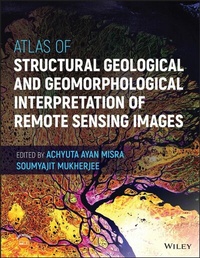
Atlas of Structural Geological and Geomorphological Interpretation of Remote Sensing Images
Description

An extensive compilation of case studies in structural geology and geomorphology for interpreting remotely sensed images
In the Atlas of Structural Geological and Geomorphological Interpretation of Remote Sensing Images, a team of experts delivers an extensive collection of over 20 different examples of structural geological and geomorphological studies by remote sensing. The book demonstrates how to properly interpret geological features and gather robust and reliable information from remote sensing images.
This atlas contains high-quality colour images that depict a diversity of structures and geomorphic features from different tectonic regimes and geographic localities in the Americas, Europe, and Australasia. While its primary emphasis is on structural geology, geomorphology is considered in some depth as well. The examples also cover geological hazards, including volcanic eruptions and earthquakes.
Readers will also find:
* A thorough introduction to the background of remote sensing, including foundational concepts and the classification of remote sensing based on data type, source, platform and imaging media
* Comprehensive discussions of geomorphology, including explorations of lava fissures, badlands and beaches
* In-depth explorations of structural geology, including discussions of deformation bands, fault lines and earthquake effects
* Several examples of how to trace hydrological processes such as glacier retreat, changes in drainage patterns and bar formation
Perfect for advanced students and researchers in the geoscience community, Atlas of Structural Geological and Geomorphological Interpretation of Remote Sensing Images will also earn a place in the libraries of practicing professionals with an interest in the interpretation of remote sensing images.
More details
Other editions
Additional editions
Persons
Achyuta Ayan Misra, Reliance Industries Ltd., Mumbai, India.
Soumyajit Mukherjee, Department of Earth Sciences, Indian Institute of Technology Bombay, India.
Content
Section A: Background
Introduction to "Atlas of Structural Geological and Geomorphological Interpretation of Remote Sensing Images"
- Remote Sensing Fundamentals
- Classification of Remote Sensing Depending on Data Type, Source, Platform, and Imaging Media
Section B: Geomorphology
- Geodynamic Quantification of Mid-Channel Bar Morphology: A Spatio-Temporal Study
- Geomorphic Indicators of Glacier Retreat from Jorya-Garang Glacier of Baspa Valley, Himachal Pradesh, India
- Aerial Views of the 2018 Kilauea Eruption, Hawaii, U.S.A.
- Depositional Systems - An Overview Via Google Earth
- The Lateritic Badlands of Garbeta (West Bengal, India)
- Geomorphology Along the West Coast of India, Through Remote Sensing
- Fluvial Geomorphology in a part of the Spiti River Basin, Himachal Pradesh, India
Section C: Structural Geology
- Deformation Bands Mapped in the Miocene Sandstone-Dominated Outcrops, Sengkurong, Brunei Darussalam, SE Asia
- Disaggregation Deformation Bands Dominate the Trapping and Sealing Process at The Lion King Fault Zone, Brunei, SE Asia
- Surface Deformation Along Katrol Hill Fault, Kachchh, Evidenced by Satellite and DEM Data
- Tectonics, Fault Zones, and Topography in the Alaska-Canada Cordillera with a Focus on the Alaska Range and Denali Fault Zone
- Use of Remote Sensing in Lineament Analysis
- Tectonic Structures Interpretation using Airborne-Based LiDAR DEM on the Examples from the Polish Outer Carpathians
- Spatial Variability of Tectonic Influences on Drainage Networks
- Archival Airborne Visible/Infrared Imaging Spectrometer (AVIRIS) Image of Faults in a Mixed Carbonate-Clastic Succession, Northwestern Spring Mountains, Nevada, USA
- Coseismic Surface Rupture and Related Disaster During the 2018 Mw 7.5 Palu Earthquake, Sulawesi Island, Indonesia
- Structural and Alteration Mapping using ASTER imagery and DEM for Gold Mineralization in the Gadag Schist Belt of Karnataka, India
- Identifying Subtle Deformation Structures from Satellite Images in Parts of the Mesozoic Kachchh (Kutch) Basin, Kachchh District, Gujarat, India
- Lineament Analysis in a Part of the Son River Valley, Madhya Pradesh, India
- Meso Scale Sinistral Shear, Eastern Dharwar Craton, Telangana, India
- Regional Polyclinal Fold with Faulted Limbs, Rajasthan, India
- Drainage Architecture and Bar Formation of the Rangit Tributaries, Darjeeling-Sikkim Himalaya, India
Introduction to "Atlas of Structural Geological and Geomorphological Interpretation of Remote Sensing Images"
Achyuta Ayan Misra*,1 and Soumyajit Mukherjee2
1 Reliance Industries Ltd., Reliance Corporate Park, Mumbai, Maharashtra, India
2 Department of Earth Sciences, Indian Institute of Technology Bombay, Mumbai, Maharashtra, India
Remote sensing has been immensely useful in tectonics, structural geology, and geomorphic studies (e.g. Misra et al. 2014; Dasgupta and Mukherjee 2017, 2019; Shaikh et al. 2020; Dasgupta et al. 2022). This edited book consists of 24 chapters authored and co-authored by 53 persons from 21 academic organizations and industries from 7 countries.
Misra (2022a; Chapter 1) presents the definition, fundamental processes, and scopes of remote sensing in structural geologic and geomorphologic studies. Misra (2022b; Chapter 2) pens the next introductory chapter, which classifies remote sensing based on data type, source, platform, and imaging media. Gupta and Biswas (2022, Chapter 3) present a morpho-tectonic analysis of a mid-channel bar using remote sensing images from the Jaldhaka river (India). Deota et al. (2022, Chapter 4) present geomorphic indicators of glacier retreat from Jorya-Garang glacier, Baspa Valley (India). They identify different stages of moraines. Jordan (2022, Chapter 5) presents several interesting aerial views of the 2018 Kilauea eruption (U.S.A). Geomorphic features such as lava fissures are documented from images. Awais (2022, Chapter 6) documents different kinds of depositional systems observable in images in Google Earth, viz. different rivers, deltas, lakes, alluvial fans, dunes, and estuaries. Patel et al. (2022, Chapter 7) discuss in detail badland geomorphology from images and several field photos. Their study area was Garbeta (India). Dongare et al. (2022, Chapter 8) discuss the geomorphology of the Indian west coast. The area is important from the perspective of hydrocarbon exploration (Mukherjee et al. 2020) and few recent field data have been available (e.g. Misra and Mukherjee 2017). The present authors focus on the erosional and depositional landforms of Goa beach. Misra (2022c, Chapter 9) works on satellite images and field snaps of the Spiti valley and discusses different fluvial geomorphic features. Sahari et al. (2022, Chapter 10) reports on deformation bands from drone images mainly located in the sandstone outcrops. Field geologists from any part of the globe will find these images interesting and applicable to their terrains. In another contribution, Aaisyah et al. (2022, Chapter 11) present deformation bands, predominantly through meso-scale photographs, from the Lion King Fault Zone (Brunei) that can have far-reaching implications for the petroleum geoscience of the terrain. Patidar et al. (2022, Chapter 12) use DEM and satellite data and document deformation and tectonic geomorphology from a portion of the Kutch basin, particularly the reorganization of the drainage network. Caine and Benowitz (2022, Chapter 13) work on a part of the Alaska-Canada Cordillera for geomorphologic aspects. They also present a historical development of the subject for the terrain, so that the present contribution is well understood as to where it stands. Ghosh et al. (2022, Chapter 14) discuss how image analyses can reveal lineaments from the Indo-Burma Range, which is a humid tropical region. The subject of lineament delineation in mega-scale is of common interest to tectonicians worldwide. Kania and Szczech (2022, Chapter 15) provide a tectonic interpretation for a part of the Polish Outer Carpathians using airborne-based LiDAR DEM. They identify and interpret faults, joints, overthrusts, bedding planes, and folds. Vasaikar et al. (2022, Chapter 16) work on the Narmada-Tapi interfluve in Gujarat (India) and demonstrate how tectonics, folding, and faulting can alter drainage patterns. Abolins (2022, Chapter 17) utilizes Airborne Visible/Infrared Imaging Spectrometer (AVIRIS) images to study faults in the Spring Mountains (U.S.A.). Liu et al. (2022, Chapter 18) study images of coseismic ruptures from Sulawesi Island (Indonesia) after a 2018 earthquake. Several field snaps present the severity of the seismic shock. Rani et al. (2022, Chapter 19) elaborate how ASTER imagery and DEM can be useful in structural and alteration mapping from the Gadak Schist Belt (India). They also present drainage patterns and lineaments from image analyses. Misra et al. (2022d, Chapter 20) present images from the Kutch basin (India), otherwise a favorite spot for paleontologists and sedimentologists, and manifestation of regional faults, scarps, and domes from remote sensing images. Misra (2022d, Chapter 21) shows images from Son River, Central India, and interprets lineaments on various scales. The lineaments are correlated in the field and classified based on the confidence of them being deformation structures. Biswas (2022, Chapter 22) presents regional faulting from the Eastern Dharwar craton using the Sentinel-2A satellite imagery. Biswas and Roy (2022, Chapter 23) study mega-scale fold with faulted limbs from Rajasthan (India). Deb (2022, Chapter 24) study drainage morphology and genesis of bars from Darjeeling Sikkim region (India) using Google Earth images. She also refers to sinuosity magnitudes of several rivers.
Acknowledgements
Wiley Blackwell Acquisition Editors (present: Frank Weinreich, past: Andrew Harrison), Stacey Woods (Handling Editor), and the proofreading team. CPDA grant (IIT Bombay) supported SM.
References
- Aaisyah, D., Sahari, S., Shah, A.A. et al. (2022). Disaggregation deformation bands dominate the trapping and sealing process at the Lion King Fault Zone, Brunei, SE Asia. In: Atlas of Structural Geological and Geomorphological Interpretation of Remote Sensing Images (ed. A.A. Misra and S. Mukherjee). Wiley Blackwell.
- Abolins, M. (2022). Archival Airborne Visible/Infrared Imaging Spectrometer (AVIRIS) image of faults in a mixed carbonate-clastic succession, northwestern Spring Mountains, Nevada, USA. In: Atlas of Structural Geological and Geomorphological Interpretation of Remote Sensing Images (ed. A.A. Misra and S. Mukherjee). Wiley Blackwell.
- Awais, M. (2022). Depositional systems - an overview via Google Earth. In: Atlas of Structural Geological and Geomorphological Interpretation of Remote Sensing Images (ed. A.A. Misra and S. Mukherjee). Wiley Blackwell.
- Biswas, A. (2022). Meso scale sinistral shear, eastern Dharwar craton, Telangana, India. In: Atlas of Structural Geological and Geomorphological Interpretation of Remote Sensing Images (ed. A.A. Misra and S. Mukherjee). Wiley Blackwell.
- Biswas, A. and Roy, P. (2022). Regional polyclinal fold with faulted limbs, Rajasthan, India. In: Atlas of Structural Geological and Geomorphological Interpretation of Remote Sensing Images (ed. A.A. Misra and S. Mukherjee). Wiley Blackwell.
- Caine, J.S. and Benowitz, J.A. (2022). Tectonics, fault zones, and topography in the Alaska-Canada cordillera with a focus on the Alaska range and Denali fault zone. In: Atlas of Structural Geological and Geomorphological Interpretation of Remote Sensing Images (ed. A.A. Misra and S. Mukherjee). Wiley Blackwell.
- Dasgupta, S. and Mukherjee, S. (2017). Brittle shear tectonics in a narrow continental rift: asymmetric non-volcanic Barmer basin (Rajasthan, India). The Journal of Geology 125: 561-591.
- Dasgupta, S. and Mukherjee, S. (2019). Remote sensing in lineament identification: examples from western India. In: Problems and Solutions in Structural Geology and Tectonics, Developments in Structural Geology and Tectonics Book Series, vol. 5. Series Editor: Mukherjee, S. (ed. A. Billi and A. Fagereng), 205-221. Elsevier. ISSN: 2542-9000. ISBN: 9780128140482.
- Dasgupta, S., Biswas, M., Mukherjee, S., and Chatterjee, R. (2022). Depositional system, morphological signatures, tectonics and sedimentation pattern along the transform margin - Palar-Pennar basin, Indian east coast. Journal of Petroleum Science & Engineering 211: 110155.
- Deb, T. (2022). Drainage architecture and bar formation of the Rangit tributaries, Darjeeling-Sikkim Himalaya, India. In: Atlas of Structural Geological and Geomorphological Interpretation of Remote Sensing Images (ed. A.A. Misra and S. Mukherjee). Wiley Blackwell.
- Deota, B.S., Trivedi, Y.N., Bahuguna, I.M. et al. (2022). Geomorphic indicators of glacier retreat from Jorya-Garang glacier of Baspa Valley, Himachal Pradesh, India. In: Atlas of Structural Geological and Geomorphological Interpretation of Remote Sensing Images (ed. A.A. Misra and S. Mukherjee). Wiley Blackwell.
- Dongare, C.U., Deota, B.S., Joshi, A.U., and Limaye, M.A. (2022). Geomorphology along the west coast of India, through remote sensing. In: Atlas of Structural Geological and Geomorphological Interpretation of Remote Sensing Images (ed. A.A. Misra and S. Mukherjee). Wiley...
