

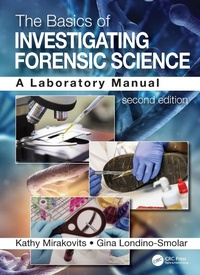
The Basics of Investigating Forensic Science
A Laboratory Manual
2nd Edition
Published on 15. July 2021
218 pages
978-1-000-40856-0 (ISBN)
Description

The Basics of Investigating Forensic Science: A Laboratory Manual, Second Edition presents foundational concepts in forensic science through hands-on laboratory techniques and engaging exercises. The text offers numerous lab projects on a range of subjects including fingerprinting, shoeprint analysis, firearms, pathology, anthropology, forensic biology and DNA, drugs, trace evidence analysis, and more.
This Second Edition is fully updated to include extensive full-color photos and diagrams to reflect current best-practices focussing on laboratory procedure, techniques, and interpretation of results. Each laboratory illustrates processes and concepts, and how the equipment should be set up for a given exercise. Many of the exercises can be done with minimal laboratory equipment and material while certain exercises also have additional options and advanced lab exercises-for those education institutions with access to more specialized or advance laboratory equipment. While the sequencing of laboratory exercises in the book is designed to follow The Basics textbook, the lab exercises are intentionally modular can be performed in any sequence desired by an instructor.
The Basics of Investigating Forensic Science, Second Edition is an excellent resource for introduction to forensic sciences courses, including the companion textbook it was designed to accompany, Forensic Science: The Basics, Fourth Edition (ISBN: 9780367251499). The book can be used alongside any textbook, and even serve as a stand-alone text for two- and four-year college programs, as well as course at the high school level.
This Second Edition is fully updated to include extensive full-color photos and diagrams to reflect current best-practices focussing on laboratory procedure, techniques, and interpretation of results. Each laboratory illustrates processes and concepts, and how the equipment should be set up for a given exercise. Many of the exercises can be done with minimal laboratory equipment and material while certain exercises also have additional options and advanced lab exercises-for those education institutions with access to more specialized or advance laboratory equipment. While the sequencing of laboratory exercises in the book is designed to follow The Basics textbook, the lab exercises are intentionally modular can be performed in any sequence desired by an instructor.
The Basics of Investigating Forensic Science, Second Edition is an excellent resource for introduction to forensic sciences courses, including the companion textbook it was designed to accompany, Forensic Science: The Basics, Fourth Edition (ISBN: 9780367251499). The book can be used alongside any textbook, and even serve as a stand-alone text for two- and four-year college programs, as well as course at the high school level.
More details
Edition
2nd edition
Language
English
Place of publication
London
United Kingdom
Publishing group
Taylor & Francis Ltd
Target group
College/higher education
Illustrations
35 Tables, color; 43 Line drawings, color; 54 Halftones, color; 97 Illustrations, color
ISBN-13
978-1-000-40856-0 (9781000408560)
Copyright in bibliographic data and cover images is held by Nielsen Book Services Limited or by the publishers or by their respective licensors: all rights reserved.
Schweitzer Classification
Other editions
Additional editions
Kathy Mirakovits | Gina Londino-Smolar
The Basics of Investigating Forensic Science
A Laboratory Manual
Book
07/2021
2nd Edition
CRC Press
€189.00
Shipment within 15-20 days
Kathy Mirakovits | Gina Londino-Smolar
The Basics of Investigating Forensic Science
A Laboratory Manual
Book
07/2021
2nd Edition
CRC Press
€77.20
Shipment within 15-20 days
Persons
Kathy Mirakovits is a retired high school teacher of forensic science and physics. She currently teaches
forensic science and physics at Kalamazoo Valley Community College in Kalamazoo, Michigan. Kathy
holds an MS in science education from Western Michigan University, a bachelor's degree in science education
from Miami University, and has completed over 15 graduate hours in forensic science. She has taught
general science, physical science, chemistry, biology, earth science, and physics at the high school and twoyear
college level for a total of 30 years. Additionally, Kathy conducts workshops across the United States
for teachers who wish to learn the application of forensic science in a school curriculum. Information on
those workshops can be found at her website: www .forensicscience -ed .com. She has developed numerous
forensic science educational products for a national science supplier and has led workshops at the National
Science Teachers Association (NSTA) in forensic science.
Kathy has served as president of the Michigan Chapter of the American Association of Physics Teachers
(AAPT) and as a curriculum writer for the Michigan Department of Education. Kathy has served as the
high school director and the membership director for the Michigan Science Teachers Association. She has
received the RadioShack Science Teaching Award and has been a two-time state finalist for the Presidential
Award for Excellence in Math and Science Teaching (PAEMST).
Gina Londino-Smolar earned her bachelor's degree in chemistry from Ball State University in Muncie,
Indiana. She then attended graduate school at Purdue University, Indianapolis, where she earned a master's
degree in chemistry. While in graduate school, her main focus was in forensic analysis of pigmented ink
using pyrolysis gas chromatography-mass spectrometry. Gina is currently a senior lecturer in the Department
of Chemistry and Chemical Biology teaching in the Forensic and Investigative Sciences program at Indiana
University-Purdue University, Indianapolis, where she has been teaching introductory courses in forensic
science, forensic chemistry, and forensic microscopy since 2006. She has designed multiple courses in
forensic science, including a variety of beginner-to-advanced laboratory exercises. Gina also serves as a faculty
fellow with Teaching and Learning Technologies at Indiana University and has been directly involved
in designing online content for both credit and non-credit courses. Gina has created multiple online courses
in forensic science, both lecture and laboratory, in order to reach out to other student populations and uses
the universal design for learning. She is a fellow of the American Academy of Forensic Sciences (AAFS)
and a member and 2021-2023 president of the Council of Forensic Science Educators (COFSE).
forensic science and physics at Kalamazoo Valley Community College in Kalamazoo, Michigan. Kathy
holds an MS in science education from Western Michigan University, a bachelor's degree in science education
from Miami University, and has completed over 15 graduate hours in forensic science. She has taught
general science, physical science, chemistry, biology, earth science, and physics at the high school and twoyear
college level for a total of 30 years. Additionally, Kathy conducts workshops across the United States
for teachers who wish to learn the application of forensic science in a school curriculum. Information on
those workshops can be found at her website: www .forensicscience -ed .com. She has developed numerous
forensic science educational products for a national science supplier and has led workshops at the National
Science Teachers Association (NSTA) in forensic science.
Kathy has served as president of the Michigan Chapter of the American Association of Physics Teachers
(AAPT) and as a curriculum writer for the Michigan Department of Education. Kathy has served as the
high school director and the membership director for the Michigan Science Teachers Association. She has
received the RadioShack Science Teaching Award and has been a two-time state finalist for the Presidential
Award for Excellence in Math and Science Teaching (PAEMST).
Gina Londino-Smolar earned her bachelor's degree in chemistry from Ball State University in Muncie,
Indiana. She then attended graduate school at Purdue University, Indianapolis, where she earned a master's
degree in chemistry. While in graduate school, her main focus was in forensic analysis of pigmented ink
using pyrolysis gas chromatography-mass spectrometry. Gina is currently a senior lecturer in the Department
of Chemistry and Chemical Biology teaching in the Forensic and Investigative Sciences program at Indiana
University-Purdue University, Indianapolis, where she has been teaching introductory courses in forensic
science, forensic chemistry, and forensic microscopy since 2006. She has designed multiple courses in
forensic science, including a variety of beginner-to-advanced laboratory exercises. Gina also serves as a faculty
fellow with Teaching and Learning Technologies at Indiana University and has been directly involved
in designing online content for both credit and non-credit courses. Gina has created multiple online courses
in forensic science, both lecture and laboratory, in order to reach out to other student populations and uses
the universal design for learning. She is a fellow of the American Academy of Forensic Sciences (AAFS)
and a member and 2021-2023 president of the Council of Forensic Science Educators (COFSE).
Content
Contents
Preface.............................................................................................................................xv
Authors.......................................................................................................................... xvii
UNIT 1 Forensic Science and Crime Scene Investigation
Lab 1. Introduction to Crime Scene Investigation: Solving the Puzzle.............................. 3
Lab 2. Locard's Exchange Principle: Transfer of Evidence............................................... 7
Lab 3. Physical Matches................................................................................................11
Lab 4. Evidence Collection: Making an Evidence (Druggist) Fold...................................15
Lab 5. The 3Ls: Locating, Lifting, and Logging Evidence...............................................19
Lab 6. Classifying Evidence: Is This Class or Individual Evidence?................................ 25
Lab 7. Basic Crime Scene Sketch................................................................................. 29
Lab 8. Crime Scene Investigation................................................................................. 37
UNIT 2 Patterns and Impressions
Lab 9. Fingerprints....................................................................................................... 43
Lab 10. Questioned Documents..................................................................................... 49
Lab 11. Firearms Identification Web Quest..................................................................... 55
Lab 12. Basic Firearms Identification: Examining Bullets and Cartridge Casings............. 59
Lab 13. Basic Toolmark Identification............................................................................. 69
Lab 14. Shoeprints......................................................................................................... 75
UNIT 3 Forensic Biology
Lab 15. Serology............................................................................................................81
Lab 16. Basic Bloodstain Pattern Analysis...................................................................... 89
Lab 17. DNA Analysis.................................................................................................... 99
Lab 18. Pathology: The Autopsy...................................................................................105
Lab 19. Forensic Anthropology: Determination of Stature............................................. 111
Lab 20. Hairs................................................................................................................ 115
Lab 21. Measuring the Diameter of a Human Hair.........................................................121
UNIT 4 Forensic Chemistry
Lab 22. Inks..................................................................................................................127
Lab 23. Illicit Drugs.......................................................................................................131
Lab 24. White Powder Testing.......................................................................................137
Lab 25. Calculating Blood Alcohol Concentration: The Widmark Formula.....................141
Lab 26. Fibers...............................................................................................................145
Lab 27. Polymers..........................................................................................................149
Lab 28. Fire Debris.......................................................................................................153
Lab 29. Explosives........................................................................................................165
UNIT 5 Forensic Physics
Lab 30. Accident Investigation: Skid to Stop Mathematics.............................................171
Lab 31. Glass................................................................................................................177
Lab 32. Forensic Analysis of Glass: Identifying the Type of Glass..................................183
Bibliography.....................................................................................................................193
Index................................................................................................................................195
Preface.............................................................................................................................xv
Authors.......................................................................................................................... xvii
UNIT 1 Forensic Science and Crime Scene Investigation
Lab 1. Introduction to Crime Scene Investigation: Solving the Puzzle.............................. 3
Lab 2. Locard's Exchange Principle: Transfer of Evidence............................................... 7
Lab 3. Physical Matches................................................................................................11
Lab 4. Evidence Collection: Making an Evidence (Druggist) Fold...................................15
Lab 5. The 3Ls: Locating, Lifting, and Logging Evidence...............................................19
Lab 6. Classifying Evidence: Is This Class or Individual Evidence?................................ 25
Lab 7. Basic Crime Scene Sketch................................................................................. 29
Lab 8. Crime Scene Investigation................................................................................. 37
UNIT 2 Patterns and Impressions
Lab 9. Fingerprints....................................................................................................... 43
Lab 10. Questioned Documents..................................................................................... 49
Lab 11. Firearms Identification Web Quest..................................................................... 55
Lab 12. Basic Firearms Identification: Examining Bullets and Cartridge Casings............. 59
Lab 13. Basic Toolmark Identification............................................................................. 69
Lab 14. Shoeprints......................................................................................................... 75
UNIT 3 Forensic Biology
Lab 15. Serology............................................................................................................81
Lab 16. Basic Bloodstain Pattern Analysis...................................................................... 89
Lab 17. DNA Analysis.................................................................................................... 99
Lab 18. Pathology: The Autopsy...................................................................................105
Lab 19. Forensic Anthropology: Determination of Stature............................................. 111
Lab 20. Hairs................................................................................................................ 115
Lab 21. Measuring the Diameter of a Human Hair.........................................................121
UNIT 4 Forensic Chemistry
Lab 22. Inks..................................................................................................................127
Lab 23. Illicit Drugs.......................................................................................................131
Lab 24. White Powder Testing.......................................................................................137
Lab 25. Calculating Blood Alcohol Concentration: The Widmark Formula.....................141
Lab 26. Fibers...............................................................................................................145
Lab 27. Polymers..........................................................................................................149
Lab 28. Fire Debris.......................................................................................................153
Lab 29. Explosives........................................................................................................165
UNIT 5 Forensic Physics
Lab 30. Accident Investigation: Skid to Stop Mathematics.............................................171
Lab 31. Glass................................................................................................................177
Lab 32. Forensic Analysis of Glass: Identifying the Type of Glass..................................183
Bibliography.....................................................................................................................193
Index................................................................................................................................195
