

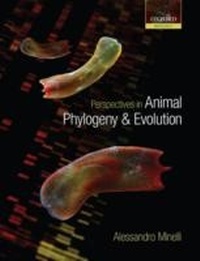
Perspectives in Animal Phylogeny and Evolution
1st Edition
Published on 18. December 2008
360 pages
978-0-19-154646-4 (ISBN)
Description

Animal phylogeny is undergoing a major revolution due to the availability of an exponentially increasing amount of molecular data and the application of novel methods of phylogenetic reconstruction, as well as the many spectacular advances in palaeontology and molecular developmental biology. Traditional views of the relationships among major phyla have been shaken and new, often unexpected, relationships are now being considered. At the same time, the emergingdiscipline of evolutionary developmental biology, or 'evo-devo', has offered new insights into the origin and evolvability of major traits of animal architecture and life cycle. All these developments call for a revised interpretation of the pathways along which animal structure and development hasevolved since the origin of the Metazoa. Perspectives in Animal Phylogeny and Evolution takes on this challenge, successfully integrating morphological, fossil and molecular evidence to produce a novel reinterpretation of animal evolution. Central to the book's approach is an 'evo-devo' perspective on animal evolution (with all the fresh insights this has given into the origin of animal organization and life cycles), complementary to the more traditional perspectives of pattern (cladistics, comparative anatomy andembryology), mechanisms (developmental biology) and adaptation (evolutionary biology). The author advocates the need to approach the study of animal evolution with a critical attitude towards many key concepts of comparative morphology and developmental biology. Particular attention in the book is paid to the evolutionof life cycles and larval forms.
More details
Other editions
Additional editions
Alessandro Minelli
Perspectives in Animal Phylogeny and Evolution
Book
12/2008
Oxford University Press
€164.31
Shipment within 15-20 days
Content
- Intro
- Contents
- Preface
- 1 Reading the history of life
- 1.1 Things and processes
- 1.2 Questions about origins
- 1.2.1 Uncertain origins
- 1.2.2 Independent origins
- 1.2.3 Mixed origins
- 1.3 Idola theatri
- 1.3.1 The ladder of nature
- 1.3.2 Morphoclines and Williston's law
- 1.3.3 Finalism, adultocentrism, and division of labour
- 2 Animal phylogenetics
- 2.1 The hennigian foundations of phylogenetics
- 2.2 Stem group and crown group
- 2.3 Characters
- 2.4 Phylogenetic analysis of molecular data
- 2.4.1 Star phylogenies
- 2.4.2 Gene and genome duplications
- 2.4.3 Horizontal gene transfer
- 2.4.4 Gene loss and genome compactation
- 2.4.5 Mitochondrial genomes
- 2.4.6 The molecular clock
- 2.4.7 Controversial results
- 3 Metazoans enter the stage
- 3.1 Multicellularity
- 3.2 Competition and synergy, or molecules and organelles
- 3.3 Choanoflagellates, the closest relatives of animals
- 3.4 Late Precambrian fossils
- 3.4.1 Vendobionts or Vendian metazoans?
- 3.4.2 Doushantuo embryos
- 3.5 The Cambrian 'explosion'
- 4 Deep branches of the metazoan tree
- 4.1 The metazoa, our largest monophylum
- 4.1.1 Complexity and phylogeny
- 4.1.2 Germ layers and metazoan phylogeny
- 4.1.3 Dating early branchings
- 4.2 Metazoan phylogeny
- 4.2.1 Epitheliozoa and eumetazoa
- 4.2.2 Radiata versus Bilateria? A problem of symmetry and body axes
- 4.2.3 Two versus three germ layers
- 4.2.4 A cnidarian-deuterostome connection?
- 4.2.5 The basal branches of the eumetazoan tree
- 4.3 The sponges: Silicea,Homoscleromorpha,and Calcarea
- 4.3.1 Sponge paraphyly
- 4.3.2 Hexactinellida
- 4.3.3 Homoscleromorpha
- 4.3.4 Calcarea
- 4.4 Placozoa
- 4.5 Ctenophora
- 4.6 Cnidaria
- 5 The entangled phylogeny of the bilateria
- 5.1 The Bilateria
- 5.2 Urbilateria
- 5.3 The Main Branches
- 5.3.1 Nephrozoa
- 5.3.2 Protostomia
- 5.3.3 Platyzoa
- 5.3.4 Gnathifera
- 5.3.5 Spiralia=Trochozoa
- 5.3.6 Mesozoa
- 5.3.7 Lophotrochozoa
- 5.3.8 Eutrochozoa
- 5.3.9 Neotrochozoa
- 5.3.10 Ecdysozoa
- 5.3.11 Introverta=Cycloneuralia sensu Ahlrichs (1995)
- 5.3.12 Scalidophora=Cephalorhyncha
- 5.3.13 Vinctiplicata
- 5.3.14 Nematoida
- 5.3.15 Panarthropoda
- 5.3.16 Deuterostomia
- 5.3.17 Ambulacraria
- 5.4 Other phylogenetic hypotheses
- 5.4.1 Acoelomorpha
- 5.4.2 Plathelminthomorpha
- 5.4.3 Cycloneuralia
- 5.4.4 Parenchymia
- 5.4.5 Vermizoa
- 5.4.6 Schizocoelia=Teloblastica
- 5.4.7 Lophophorata
- 5.4.8 Articulata
- 5.4.9 Cyrtotreta
- 6 A gallery of the major bilaterian clades
- 6.1 Acoela
- 6.2 Nemertodermatida
- 6.3 Gastrotricha
- 6.4 Micrognathozoa
- 6.5 Syndermata
- 6.6 Gnathostomulida
- 6.7 Catenulida and Rhabditophora
- 6.7.1 Catenulida
- 6.7.2 Rhabditophora
- 6.8 Cycliophora
- 6.9 Ectoprocta
- 6.10 Entoprocta
- 6.11 Orthonectida
- 6.12 Rhombozoa
- 6.13 Nemertea
- 6.14 Phoronozoa
- 6.15 Mollusca
- 6.16 Annelida
- 6.17 Sipuncula
- 6.18 Priapulida
- 6.19 Loricifera
- 6.20 Kinorhyncha
- 6.21 Nematoda
- 6.22 Nematomorpha
- 6.23 Tardigrada
- 6.24 Onychophora
- 6.25 Arthropoda
- 6.25.1 Cambrian arthropod-like animals and stem-group Euarthropoda
- 6.25.2 Problems with segments and eyes
- 6.25.3 Pycnogonida
- 6.25.4 The main arthropod clades
- 6.25.5 Pancrustacea=Tetraconata versus Paradoxopoda=Myriochelata
- 6.25.6 Trilobita and Euthycarcinoida
- 6.25.7 Chelicerata
- 6.25.8 Myriapoda
- 6.25.9 Crustacea
- 6.25.10 Hexapoda
- 6.26 Chaetognatha
- 6.27 Xenoturbellida
- 6.28 Echinodermata
- 6.29 Hemichordata
- 6.30 Chordata
- 6.30.1 Cephalochordata
- 6.30.2 Urochordata
- 6.30.3 Vertebrata
- 7 The life cycle and its evolution
- 7.1 Cells and tissues
- 7.1.1 The cell as a building block of the animal body
- 7.1.2 Syncytia
- 7.1.3 Cell division
- 7.1.4 Apoptosis
- 7.1.5 Tissues
- 7.2 Reproduction and sexuality
- 7.2.1 Convergence and co-option
- 7.2.2 The one-cell bottleneck
- 7.2.3 Free cells, or unicellular metazoans
- 7.2.4 Asexual reproduction and regeneration
- 7.2.5 Gametes
- 7.3 Development
- 7.3.1 What is development?
- 7.3.2 Everything everywhere, or a principle of developmental inertia
- 7.3.3 Development for the development
- 7.3.4 Generic mechanisms of development
- 7.3.5 Parent-offspring competition and the developmental origins of individuality
- 7.3.6 Set-aside cells
- 7.3.7 The germ layers
- 7.3.8 Embryonic development
- 7.3.9 Growth
- 7.3.10 Morphogenesis and morphostasis
- 7.3.11 Fusion
- 7.4 The life cycle
- 7.4.1 Plasticity
- 7.4.2 Maximum life-cycle complexity
- 7.4.3 The life cycle as a unit of evolution
- 7.4.4 Periodization
- 7.4.5 The larva
- 7.5 Genes and animal development
- 7.5.1 Genotype-phenotype mapping
- 7.5.2 Developmental genes
- 7.5.3 Gene duplication, co-option, and paramorphism
- 8 The evolution of animal body architecture
- 8.1 The Body
- 8.1.1 The main body axis
- 8.1.2 Symmetry
- 8.1.3 The 'double animal'
- 8.1.4 From one to many axes: appendages and paramorphism
- 8.1.5 Segments
- 8.2 Organs
- 8.2.1 Organogenesis
- 8.2.2 Epithelia and epidermis
- 8.2.3 The cuticle
- 8.2.4 The nervous system
- 8.2.5 The digestive system
- 8.2.6 Body cavities
- 8.2.7 Respiratory organs
- 8.2.8 The circulatory system
- 8.2.9 The muscles
- 8.2.10 Skeletons and biomineralization
- 8.2.11 The excretory system and osmoregulatory devices
- 8.2.12 The immune system
- 8.2.13 Somatic structures involved in reproduction
- 9 The overall picture
- 9.1 Evolutionary novelties
- 9.1.1 Apomorphies versus innovations
- 9.1.2 Factoriality
- 9.1.3 Evolvability and constraints
- 9.2 Evolutionary trends
- 9.2.1 Evolutionary trends: facts or fiction?
- 9.2.2 Miniaturization
- 9.2.3 Ecological trends
- 9.3 Intercalary evolution
- 9.4 Patterned polyphenism
- 9.5 Hierarchies, or not
- 9.6 Summing up
- References
- Author index
- A
- B
- C
- D
- E
- F
- G
- H
- I
- J
- K
- L
- M
- N
- O
- P
- Q
- R
- S
- T
- U
- V
- W
- X
- Y
- Subject index
- A
- B
- C
- D
- E
- F
- G
- H
- I
- J
- K
- L
- M
- N
- O
- P
- Q
- R
- S
- T
- U
- V
- W
- X
- Y
- Z
