

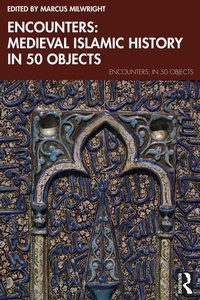
Encounters: Medieval Islamic History in 50 Objects
1st Edition
Published on 13. November 2025
400 pages
978-1-040-44910-3 (ISBN)
Description

This book consists of fifty case studies and offers an innovative approach to the study of Medieval Islamic history, concentrating on the analysis of physical objects from the seventh to the eighteenth centuries and across most of the regions that make up the pre-Modern Islamic world.
These include a wide range of objects from portable items like coins, vessels and books to major constructions, including mosques, tombs, castles, dams, and canal systems. The central argument is that the interdisciplinary study of physical objects provides invaluable perspectives that can deepen or challenge the evidence in the written record. Object-based study can also shed light on the lives of social groups who are seldom discussed in Islamic texts written before the modern period. To demonstrate these points, each case study focusses on a single object or small group of related objects. The case studies combine close analysis of the material and visual characteristics with a discussion of the wider context in which such objects were commissioned, made, used, adapted and exchanged.
The book is intended as an introduction to the historical study of Islamic objects, employing perspectives from the fields of art history, archaeology, numismatics, ethnography, and epigraphy. Written with a minimum of technical language and supported by a critical introduction, an extensive glossary, a timeline and guide for further reading, the book is aimed at students and general readers who are interested in the political, economic, social, cultural, religious and intellectual histories of the Islamic world.
These include a wide range of objects from portable items like coins, vessels and books to major constructions, including mosques, tombs, castles, dams, and canal systems. The central argument is that the interdisciplinary study of physical objects provides invaluable perspectives that can deepen or challenge the evidence in the written record. Object-based study can also shed light on the lives of social groups who are seldom discussed in Islamic texts written before the modern period. To demonstrate these points, each case study focusses on a single object or small group of related objects. The case studies combine close analysis of the material and visual characteristics with a discussion of the wider context in which such objects were commissioned, made, used, adapted and exchanged.
The book is intended as an introduction to the historical study of Islamic objects, employing perspectives from the fields of art history, archaeology, numismatics, ethnography, and epigraphy. Written with a minimum of technical language and supported by a critical introduction, an extensive glossary, a timeline and guide for further reading, the book is aimed at students and general readers who are interested in the political, economic, social, cultural, religious and intellectual histories of the Islamic world.
Reviews / Votes
"Encounters: Medieval Islamic History in 50 Objects offers an insightful and richly illustrated introduction to the history and material cultures of the medieval Muslim world. In a very accessible manner, the book discusses a wide array of intriguing objects-from household utensils, through books, coins and other precious objects, to imperial and religious architecture. It makes that history almost tangible."Dr Jelle Bruning, University Lecturer at the Leiden University Institute for Area Studies
"This thoughtful, erudite collection of essays brings fresh perspectives to a diverse range of medieval Islamic objects and buildings. Rigorously researched and lucidly written, the book's chapters contextualise Islamic material culture in accessible and engaging ways. Compelling reading for students and scholars eager to broaden and deepen their knowledge of this fascinating period of Islamic history."
Cailah Jackson, KRC Research Associate
More details
Series
Edition
1. Auflage
Language
English
Place of publication
London
United Kingdom
Publishing group
Taylor & Francis Ltd
Target group
College/higher education
Illustrations
6 Line drawings, color; 124 Halftones, color; 130 Illustrations, color
File size
339,36 MB
ISBN-13
978-1-040-44910-3 (9781040449103)
Copyright in bibliographic data and cover images is held by Nielsen Book Services Limited or by the publishers or by their respective licensors: all rights reserved.
Schweitzer Classification
Other editions
Additional editions
Marcus Milwright
Encounters: Medieval Islamic History in 50 Objects
Book
10/2025
1st Edition
Routledge
€193.50
Shipment within 10-20 days
Marcus Milwright
Encounters: Medieval Islamic History in 50 Objects
Medieval Islamic History in 50 Objects
Book
10/2025
1st Edition
Routledge
€93.80
Shipment within 10-20 days
Person
Marcus Milwright is a British Academy Global Professor in the Department of History of Art, University of York (UK) and Professor of Islamic art at the University of Victoria (Canada). His research interests include the arts and archaeology of the Islamic world, traditional crafts practices, cross-cultural interaction in the Medieval period, and the history of medicine. Publications include A Story of Islamic Art (2023), The Queen of Sheba's Gift: A History of the True Balsam of Matarea (2022) and The Dome of the Rock and its Umayyad Mosaic Inscriptions (2016).
Content
Section 1: The Formative Phase, c. 650-800
Chapter 1: A Bifolium from a Hijazi Qur?an
Chapter 2: The Shahada Solidus
Chapter 3: The ?Umari Mosque in Busra
Chapter 4: The Mosaic Floor of the Church of St Stephen, Umm al-Rasas
Chapter 5: An Inscription from Qasr al-Hayr al-Gharbi
Section 2: Expanded Horizons, c. 800-1000
Chapter 6: A Tin-Glazed Bowl painted with Cobalt
Chapter 7: The Palace of Balkuwara, Samarra
Chapter 8: A Folio from the Tashkent Qur?an
Chapter 9: The Maqsura of the Congregational Mosque of Qayrawan
Chapter 10: The Leyre Casket
Section 3: Political and Cultural Diversity, c. 1000-1400
Chapter 11: Reused Marble Capitals on the Minaret in Seville
Chapter 12: The Facade of al-Aqmar Mosque, Cairo
Chapter 13: An Inlaid Brass Jug from Mosul
Chapter 14: Wall Painting in the Abu Sa?id Mausoleum, near Mihna
Chapter 15: The Qutb Mosque, Delhi
Section 4: Realignments, c. 1400-1800
Chapter 16: Tombstones from Aceh, Sumatra
Chapter 17: The Emin Minaret, Turfan
Chapter 18: A Deccani Steel ?Alam
Chapter 19: An Ottoman Topographic View of Inebahti (Nafpaktos), Greece
Chapter 20: Clay Tobacco Pipes from a Workshop in Cairo
Section 5: The Rural Environment
Chapter 21: Caliph Mu?awiya's Dam near Ta?if
Chapter 22: The Aflaj of Wadi al-Jizzi, Oman
Chapter 23: Kuh-Qal?ih of Tun
Chapter 24: A Handmade Ceramic Jug from southern Jordan
Chapter 25: A Sugar Refinery at Chichaoua, Morocco
Section 6: Manufacturing and the Economy
Chapter 26: An early Islamic Glass Weight
Chapter 27: A Decorated Albarello
Chapter 28: An illustrated Page from the Mantiq al-Wahsh
Chapter 29: Indian Block-Printed Cotton Textiles
Chapter 30: A Carpet from Late Mamluk Egypt
Section 7: The Movement of Goods and People
Chapter 31: Samanid Dirhams buried at Storr Rock, Orkney
Chapter 32: The Caravanserai of Ribat-i Mahi
Chapter 33: An Iranian Gold Seal Ring
Chapter 34: A Slave Market from the Maqamat of al-Hariri
Chapter 35: The Hajj Fort at Qatrana
Section 8: Faith in Practice
Chapter 36: A Mosque in Shanga
Chapter 37: A Rock-Cut Panel from the Viar (Dash Kassan) Complex
Chapter 38: The Tomb of Mubarak Khan in the Makli Necropolis, Thatta
Chapter 39: A Stucco Mihrab at Zuzan
Chapter 40: A Talismanic shirt
Section 9: The Scholarly Elite
Chapter 41: The Mausoleum of Imam Shafi?i, Cairo
Chapter 42: A Safavid Lacquer Pen Box
Chapter 43: A Page from a Notebook written by al-Maqrizi
Chapter 44: A Fourteenth-century Drawing of a Water Clock
Chapter 45: A Battle Scene from Rashid al-Din's Jami? al-Tawarikh
Section 10: Alternative Perspectives and Marginalised Voices
Chapter 46: A Paper Amulet from Egypt
Chapter 47: The Hospital of Arghun al-Kamili, Aleppo
Chapter 48: A Mughal Portrait of Inayat Khan
Chapter 49: A Painting of Shah ?Abbas and his Page
Chapter 50: A Shadow Puppet from Ottoman Damascus
Chapter 1: A Bifolium from a Hijazi Qur?an
Chapter 2: The Shahada Solidus
Chapter 3: The ?Umari Mosque in Busra
Chapter 4: The Mosaic Floor of the Church of St Stephen, Umm al-Rasas
Chapter 5: An Inscription from Qasr al-Hayr al-Gharbi
Section 2: Expanded Horizons, c. 800-1000
Chapter 6: A Tin-Glazed Bowl painted with Cobalt
Chapter 7: The Palace of Balkuwara, Samarra
Chapter 8: A Folio from the Tashkent Qur?an
Chapter 9: The Maqsura of the Congregational Mosque of Qayrawan
Chapter 10: The Leyre Casket
Section 3: Political and Cultural Diversity, c. 1000-1400
Chapter 11: Reused Marble Capitals on the Minaret in Seville
Chapter 12: The Facade of al-Aqmar Mosque, Cairo
Chapter 13: An Inlaid Brass Jug from Mosul
Chapter 14: Wall Painting in the Abu Sa?id Mausoleum, near Mihna
Chapter 15: The Qutb Mosque, Delhi
Section 4: Realignments, c. 1400-1800
Chapter 16: Tombstones from Aceh, Sumatra
Chapter 17: The Emin Minaret, Turfan
Chapter 18: A Deccani Steel ?Alam
Chapter 19: An Ottoman Topographic View of Inebahti (Nafpaktos), Greece
Chapter 20: Clay Tobacco Pipes from a Workshop in Cairo
Section 5: The Rural Environment
Chapter 21: Caliph Mu?awiya's Dam near Ta?if
Chapter 22: The Aflaj of Wadi al-Jizzi, Oman
Chapter 23: Kuh-Qal?ih of Tun
Chapter 24: A Handmade Ceramic Jug from southern Jordan
Chapter 25: A Sugar Refinery at Chichaoua, Morocco
Section 6: Manufacturing and the Economy
Chapter 26: An early Islamic Glass Weight
Chapter 27: A Decorated Albarello
Chapter 28: An illustrated Page from the Mantiq al-Wahsh
Chapter 29: Indian Block-Printed Cotton Textiles
Chapter 30: A Carpet from Late Mamluk Egypt
Section 7: The Movement of Goods and People
Chapter 31: Samanid Dirhams buried at Storr Rock, Orkney
Chapter 32: The Caravanserai of Ribat-i Mahi
Chapter 33: An Iranian Gold Seal Ring
Chapter 34: A Slave Market from the Maqamat of al-Hariri
Chapter 35: The Hajj Fort at Qatrana
Section 8: Faith in Practice
Chapter 36: A Mosque in Shanga
Chapter 37: A Rock-Cut Panel from the Viar (Dash Kassan) Complex
Chapter 38: The Tomb of Mubarak Khan in the Makli Necropolis, Thatta
Chapter 39: A Stucco Mihrab at Zuzan
Chapter 40: A Talismanic shirt
Section 9: The Scholarly Elite
Chapter 41: The Mausoleum of Imam Shafi?i, Cairo
Chapter 42: A Safavid Lacquer Pen Box
Chapter 43: A Page from a Notebook written by al-Maqrizi
Chapter 44: A Fourteenth-century Drawing of a Water Clock
Chapter 45: A Battle Scene from Rashid al-Din's Jami? al-Tawarikh
Section 10: Alternative Perspectives and Marginalised Voices
Chapter 46: A Paper Amulet from Egypt
Chapter 47: The Hospital of Arghun al-Kamili, Aleppo
Chapter 48: A Mughal Portrait of Inayat Khan
Chapter 49: A Painting of Shah ?Abbas and his Page
Chapter 50: A Shadow Puppet from Ottoman Damascus
