

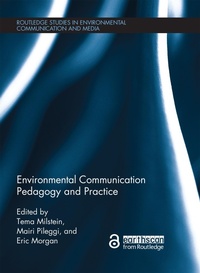
Environmental Communication Pedagogy and Practice
Published on 24. February 2017
298 pages
978-1-317-20347-6 (ISBN)
Description

Given the urgency of environmental problems, how we communicate about our ecological relations is crucial. Environmental Communication Pedagogy and Practice is concerned with ways to help learners effectively navigate and consciously contribute to the communication shaping our environmental present and future.
The book brings together international educators working from a variety of perspectives to engage both theory and application. Contributors address how pedagogy can stimulate ecological wakefulness, support diverse and praxis-based ways of learning, and nurture environmental change agents. Additionally, the volume responds to a practical need to increase teaching effectiveness of environmental communication across disciplines by offering a repertoire of useful learning activities and assignments. Altogether, it provides an impetus for reflection upon and enhancement of our own practice as environmental educators, practitioners, and students.
Environmental Communication Pedagogy and Practice is an essential resource for those working in environmental communication, environmental and sustainability studies, environmental journalism, environmental planning and management, environmental sciences, media studies and cultural studies, as well as communication subfields such as rhetoric, conflict and mediation, and intercultural. The volume is also a valuable resource for environmental communication professionals working with communities and governmental and non-governmental environmental organisations.
The book brings together international educators working from a variety of perspectives to engage both theory and application. Contributors address how pedagogy can stimulate ecological wakefulness, support diverse and praxis-based ways of learning, and nurture environmental change agents. Additionally, the volume responds to a practical need to increase teaching effectiveness of environmental communication across disciplines by offering a repertoire of useful learning activities and assignments. Altogether, it provides an impetus for reflection upon and enhancement of our own practice as environmental educators, practitioners, and students.
Environmental Communication Pedagogy and Practice is an essential resource for those working in environmental communication, environmental and sustainability studies, environmental journalism, environmental planning and management, environmental sciences, media studies and cultural studies, as well as communication subfields such as rhetoric, conflict and mediation, and intercultural. The volume is also a valuable resource for environmental communication professionals working with communities and governmental and non-governmental environmental organisations.
Reviews / Votes
In summary, Environmental Communication Pedagogy and Practice promises to be a welcome resource for both educators and researchers in making accessible first-hand accounts of transformational EC practices and in the heuristic value of these accounts in responding to what its authors rightly believe are exigencies that call for awareness and intervention in public arenas. As such, this volume warrants serious attention from those who are committed to the ideals of 'transformative learning' and the cultivation of 'ecological citizenship'.James Robert Cox, University of North Carolina, Environmental Education Research Journaul
More details
Series
Language
English
Place of publication
London
United Kingdom
Publishing group
Taylor & Francis Ltd
Target group
College/higher education
Illustrations
4 s/w Tabellen
4 Tables, black and white
File size
16,34 MB
ISBN-13
978-1-317-20347-6 (9781317203476)
Copyright in bibliographic data and cover images is held by Nielsen Book Services Limited or by the publishers or by their respective licensors: all rights reserved.
Schweitzer Classification
Other editions
Additional editions
Tema Milstein | Mairi Pileggi | Eric L. Morgan
Environmental Communication Pedagogy and Practice
Book
09/2018
1st Edition
Routledge
€71.80
Shipment within 10-20 days
Tema Milstein | Mairi Pileggi | Eric L. Morgan
Environmental Communication Pedagogy and Practice
Book
01/2017
1st Edition
Routledge
€226.50
Shipment within 10-20 days
Persons
Tema Milstein is Presidential Teaching Fellow at the University of New Mexico, USA. She is an Associate Professor in the Department of Communication and Journalism, and Affiliate Faculty in the Geography and Environmental Studies Department, as well as the Sustainability Studies Program.
Mairi Pileggi is an Associate Professor in the Department of Communication and Media Studies, and Director of the Gender Studies Program at Dominican University of California, USA.
Eric Morgan is an Associate Professor in the Department of Communication Studies at New Mexico State University, USA.
Mairi Pileggi is an Associate Professor in the Department of Communication and Media Studies, and Director of the Gender Studies Program at Dominican University of California, USA.
Eric Morgan is an Associate Professor in the Department of Communication Studies at New Mexico State University, USA.
Content
Introducing Environmental Communication Pedagogy and Practice
Section One: (Re)conceptualizing the Environmental Communication Classroom
Chapter 1. From Negotiation to Advocacy: Linking Two Approaches to Teaching Environmental Rhetoric.
Chapter 2. Pedagogy as Environmental Communication: The Rhetorical Situations of the Classroom.
Chapter 3. Environmental Communication Pedagogy: A Survey of the Field.
Chapter 4. Breathing Life into Learning: Ecocultural Pedagogy and the Inside-Out Classroom.
Section Two: Diverse Practices in Teaching Environmental Communication
Chapter 5. The Role of Social Constructionism as a Reflexive Tool in Environmental Communication Education.
Chapter 6. "Deep Impressions": The Promise and Possibilities of Intercultural Experiential Learning for Environmental Literacy and Language Attitudes.
Chapter 7. Further Afield: Performance Pedagogy, Fieldwork, and Distance Learning in Environmental Communication Courses.
Chapter 8. Arts-Based Research in the Pedagogy of Environmental Communication.
Chapter 9. Developing Visual Literacy Skills for Environmental Communication.
Chapter 10. Teaching Environmental Journalism Though Distance Education.
Section Three: Transformative Practice: Nurturing Change Agents
Chapter 11. Changing Our Environmental Future: Student Praxis Through Community Inquiry.
Chapter 12. Storytelling as Action.
Chapter 13. Insider Windows in Nepal: A Critical Pedagogy for Empowering Environmental Change Agents.
Chapter 14. Repair Cafes - Reflecting on Materiality and Consumption in Environmental Communication.
Chapter 15. Cultivating Pride: Transformative Leadership and Capacity Building in the Rare-UTEP Partnership.
Section Four: Environmental Communication Pedagogy and Practice Toolbox
Chapter 16. "Moral Vision Statement" Writing Assignment Instructions for Students.
Chapter 17. Environmental Privilege Walk: Unpacking the Invisible Knapsack.
Chapter 18. An Experiential Approach to Environmental Communication.
Chapter 19. Greening Epideictic Speech.
Chapter 20. Praxis-based environmental communication training: Innovative activities for building core capacities.
Chapter 21. Image(ination) and Motivation: Challenging Definitions and Inspiring Environmental Stakeholders.
Chapter 22. Using Infographics.
Chapter 23. News Media Analysis.
Chapter 24. Newschart Assignment.
Chapter 25. Speaking for/to/as Nature.
Chapter 26. Creating Emotional Proximity with Environment.
Chapter 27. Growing up with Animals (on screens).
Chapter 28. The Student-Run Environmental Communication Blog.
Section One: (Re)conceptualizing the Environmental Communication Classroom
Chapter 1. From Negotiation to Advocacy: Linking Two Approaches to Teaching Environmental Rhetoric.
Chapter 2. Pedagogy as Environmental Communication: The Rhetorical Situations of the Classroom.
Chapter 3. Environmental Communication Pedagogy: A Survey of the Field.
Chapter 4. Breathing Life into Learning: Ecocultural Pedagogy and the Inside-Out Classroom.
Section Two: Diverse Practices in Teaching Environmental Communication
Chapter 5. The Role of Social Constructionism as a Reflexive Tool in Environmental Communication Education.
Chapter 6. "Deep Impressions": The Promise and Possibilities of Intercultural Experiential Learning for Environmental Literacy and Language Attitudes.
Chapter 7. Further Afield: Performance Pedagogy, Fieldwork, and Distance Learning in Environmental Communication Courses.
Chapter 8. Arts-Based Research in the Pedagogy of Environmental Communication.
Chapter 9. Developing Visual Literacy Skills for Environmental Communication.
Chapter 10. Teaching Environmental Journalism Though Distance Education.
Section Three: Transformative Practice: Nurturing Change Agents
Chapter 11. Changing Our Environmental Future: Student Praxis Through Community Inquiry.
Chapter 12. Storytelling as Action.
Chapter 13. Insider Windows in Nepal: A Critical Pedagogy for Empowering Environmental Change Agents.
Chapter 14. Repair Cafes - Reflecting on Materiality and Consumption in Environmental Communication.
Chapter 15. Cultivating Pride: Transformative Leadership and Capacity Building in the Rare-UTEP Partnership.
Section Four: Environmental Communication Pedagogy and Practice Toolbox
Chapter 16. "Moral Vision Statement" Writing Assignment Instructions for Students.
Chapter 17. Environmental Privilege Walk: Unpacking the Invisible Knapsack.
Chapter 18. An Experiential Approach to Environmental Communication.
Chapter 19. Greening Epideictic Speech.
Chapter 20. Praxis-based environmental communication training: Innovative activities for building core capacities.
Chapter 21. Image(ination) and Motivation: Challenging Definitions and Inspiring Environmental Stakeholders.
Chapter 22. Using Infographics.
Chapter 23. News Media Analysis.
Chapter 24. Newschart Assignment.
Chapter 25. Speaking for/to/as Nature.
Chapter 26. Creating Emotional Proximity with Environment.
Chapter 27. Growing up with Animals (on screens).
Chapter 28. The Student-Run Environmental Communication Blog.
