

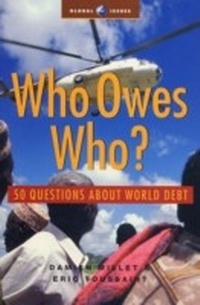
Who Owes Who
50 Questions About World Debt
1st Edition
Published on 4. April 2013
214 pages
978-1-84813-802-5 (ISBN)
Description

Using 50 questions and answers, this book explains the debt impasse for developing countries in a simple but precise manner. It details the roles of the various actors involved, the mesh in which indebted countries are caught, the possible scenarios for getting out of the impasse, and the various alternatives to future indebtedness. It also sets out the various arguments - moral, political, economic, legal and environmental - on which the case for a wholesale cancellation of developing countries' external debt rests. It replies to the range of possible objections and proposes new ways of financing development at both local and international level.
Reviews / Votes
The authors try to explain how the debt has come about. In detail, the roles of various players are discussed, as well as the mesh in which the developing countries are now caught and possible ways of escaping it. * Development and Environment * As this fine study demonstrates, lucidly and persuasively, the debt that is strangling much of the world is largely a "scam". In significant measure, it is an ideological fiction, devised in the service of wealth and power, with no legitimacy or moral force. With skill and precision, the authors unravel the layers of deceit and distortion that conceal the ugly reality, and provide an important tool for liberating the great mass of suffering people who are caught in these shackles. It is a very important achievement. * Noam Chomsky *More details
Series
Edition
1. Auflage
Language
English
Place of publication
United Kingdom
Publishing group
Bloomsbury Publishing PLC
Target group
College/higher education
Professional and scholarly
ISBN-13
978-1-84813-802-5 (9781848138025)
Copyright in bibliographic data and cover images is held by Nielsen Book Services Limited or by the publishers or by their respective licensors: all rights reserved.
Schweitzer Classification
Other editions
Additional editions
Book
09/2004
Zed Books Ltd
€33.70
Shipment within 3-4 weeks
Persons
Damien Millet is a secretary general of The Committee for the Cancellation of Third World Debt (CADTM), a member of ATTAC in France, and a contributor to the journal Alternative.
Eric Toussaint is a historian and political scientist, president of CADTM, member of the International Council of the World Social Forum, and of the scientific committee of ATTAC in France.
Eric Toussaint is a historian and political scientist, president of CADTM, member of the International Council of the World Social Forum, and of the scientific committee of ATTAC in France.
Content
Q1. What is meant by the Third World?
Q2. Are the living conditions of the poorest populations improving?
Q3. What are the different kinds of debt?
Q4. What impact does the external debt have on human development?
Q5. What were the main factors leading to the indebtedness of the DCs?
Q6. What is the geopolitical context of the over-indebtedness of the DCs?
Q7. Who were the leading actors in the indebtedness of the countries of the South, and how have the loans been used?
Q8. How can the debt crisis be explained?
Q9. How has the external debt of the DCs evolved over the last 30 years?
Q10. How have the creditors responded to the debt crisis?
Q11. Who is the main actor in the management of the debt crisis?
Q12. What does the IMF do?
Q13. How does the World Bank operate?
Q14. What is the logic behind the IMF's and the World Bank's economic policy?
Q15. What are the short-term shock measures imposed by structural adjustment, and what are their consequences?
Q16. What are the long-term shock measures imposed by structural adjustment, and what are their consequences?
Q17. What is the role of the Paris Club?
Q18. Are all the DCs in the same boat?
Q19. What does the external debt of the DCs consist of?
Q20. Who are the main creditors of the different DCs?
Q21. How have the roles of the different creditors evolved over the last 30 years?
Q22. Do the DCs repay their debts?
Q23. How are the debt-related financial flows managed?
Q24. How did the debt-reduction initiative come about?
Q25. What is the Heavily Indebted Poor Countries (HPIC) initiative?
Q26. What are the results of the HIPC initiative?
Q27. What are the limitations of the HIPC initiative?
Q28. What is the New Partnership for African Development (NEPAD)?
Q29. What are vulture-funds?
Q30. Have there ever been debt cancellations in the past?
Q31. Why do the governments of the South continue to repay the debt?
Q32. Will debt cancellation be enough to ensure the development of the DCs?
Q33. What are the moral arguments in favour of cancelling the DCs' debts?
Q34. What are the political arguments in favour of cancelling the DCs' debts?
Q35. What are the economic arguments in favour of cancelling the DCs' debts?
Q36. What are the legal arguments in favour of cancelling the DCs' debts?
Q37. What are the environmental arguments in favour of cancelling the DCs' debts?
Q38. What are the religious arguments in favour of cancelling the DCs' debts?
Q39. Who owes what to whom?
Q40. Should there be conditions attached to debt cancellation?
Q41. If the creditors decided to cancel the debt, would it cause a global financial crisis?
Q42. Could cancelling the debt cause an impoverishment of the North, particularly for tax payers?
Q43. How can alternative funding be found for the development of the DCs?
Q44. Won't the dictatorial regimes currently in office benefit most from debt cancellation?
Q45. If and when the debt is cancelled, how can a new round of indebtedness be avoided?
Q46. Should recourse to borrowing be avoided at all costs?
Q47. Can the DCs' external debt be compared to the public debt of the North?
Q48. How can we achieve cancellation of the DCs' debt and a general improvement of the human condition?
Q49. How did the international campaign for the cancellation of the debt start?
Q50. How was the CADTM founded?
Q2. Are the living conditions of the poorest populations improving?
Q3. What are the different kinds of debt?
Q4. What impact does the external debt have on human development?
Q5. What were the main factors leading to the indebtedness of the DCs?
Q6. What is the geopolitical context of the over-indebtedness of the DCs?
Q7. Who were the leading actors in the indebtedness of the countries of the South, and how have the loans been used?
Q8. How can the debt crisis be explained?
Q9. How has the external debt of the DCs evolved over the last 30 years?
Q10. How have the creditors responded to the debt crisis?
Q11. Who is the main actor in the management of the debt crisis?
Q12. What does the IMF do?
Q13. How does the World Bank operate?
Q14. What is the logic behind the IMF's and the World Bank's economic policy?
Q15. What are the short-term shock measures imposed by structural adjustment, and what are their consequences?
Q16. What are the long-term shock measures imposed by structural adjustment, and what are their consequences?
Q17. What is the role of the Paris Club?
Q18. Are all the DCs in the same boat?
Q19. What does the external debt of the DCs consist of?
Q20. Who are the main creditors of the different DCs?
Q21. How have the roles of the different creditors evolved over the last 30 years?
Q22. Do the DCs repay their debts?
Q23. How are the debt-related financial flows managed?
Q24. How did the debt-reduction initiative come about?
Q25. What is the Heavily Indebted Poor Countries (HPIC) initiative?
Q26. What are the results of the HIPC initiative?
Q27. What are the limitations of the HIPC initiative?
Q28. What is the New Partnership for African Development (NEPAD)?
Q29. What are vulture-funds?
Q30. Have there ever been debt cancellations in the past?
Q31. Why do the governments of the South continue to repay the debt?
Q32. Will debt cancellation be enough to ensure the development of the DCs?
Q33. What are the moral arguments in favour of cancelling the DCs' debts?
Q34. What are the political arguments in favour of cancelling the DCs' debts?
Q35. What are the economic arguments in favour of cancelling the DCs' debts?
Q36. What are the legal arguments in favour of cancelling the DCs' debts?
Q37. What are the environmental arguments in favour of cancelling the DCs' debts?
Q38. What are the religious arguments in favour of cancelling the DCs' debts?
Q39. Who owes what to whom?
Q40. Should there be conditions attached to debt cancellation?
Q41. If the creditors decided to cancel the debt, would it cause a global financial crisis?
Q42. Could cancelling the debt cause an impoverishment of the North, particularly for tax payers?
Q43. How can alternative funding be found for the development of the DCs?
Q44. Won't the dictatorial regimes currently in office benefit most from debt cancellation?
Q45. If and when the debt is cancelled, how can a new round of indebtedness be avoided?
Q46. Should recourse to borrowing be avoided at all costs?
Q47. Can the DCs' external debt be compared to the public debt of the North?
Q48. How can we achieve cancellation of the DCs' debt and a general improvement of the human condition?
Q49. How did the international campaign for the cancellation of the debt start?
Q50. How was the CADTM founded?
