


Images on the Page
A Fashion Iconography
1st Edition
Published on 26. August 2021
296 pages
978-1-350-11534-7 (ISBN)
Description

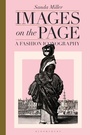
Fashion imagery has existed for hundreds of years and yet the methods used by scholars to understand it have remained mostly historical and descriptive. The belief informing these approaches may be that fashion imagery is designed for one purpose: to depict a garment and how to wear it. In this interdisciplinary book, Sanda Miller suggests a radical alternative to these well-practiced approaches, proposing that fashion imagery has stories to tell and meanings to uncover. The methodology she has developed is an iconography of fashion imagery, based on the same theory which has been key to the History of Art for centuries.
Applying Panofsky's theory of iconography to illustrations from books, magazines and fashion plates, as well as fashion photography and even live fashion events, Miller uncovers three levels of meaning: descriptive, secondary (or conventional) and tertiary or 'symbolic'. In doing so, she answers questions such as who is the model; what did people wear and why; and how did people live? She proves that fashion imagery, far from being purely descriptive, is ripe with meaning and can be used to shed light on society, class, culture and the history of dress.
Applying Panofsky's theory of iconography to illustrations from books, magazines and fashion plates, as well as fashion photography and even live fashion events, Miller uncovers three levels of meaning: descriptive, secondary (or conventional) and tertiary or 'symbolic'. In doing so, she answers questions such as who is the model; what did people wear and why; and how did people live? She proves that fashion imagery, far from being purely descriptive, is ripe with meaning and can be used to shed light on society, class, culture and the history of dress.
More details
Edition
1. Auflage
Language
English
Place of publication
London
United Kingdom
Publishing group
Bloomsbury Publishing PLC
Target group
College/higher education
Illustrations
52 bw illus
ISBN-13
978-1-350-11534-7 (9781350115347)
Copyright in bibliographic data and cover images is held by Nielsen Book Services Limited or by the publishers or by their respective licensors: all rights reserved.
Schweitzer Classification
Other editions
Additional editions
Book
05/2023
Bloomsbury Visual Arts
€66.30
Shipment within 15-20 days
Person
Sanda Miller was, until her untimely death in 2020, a research fellow at Southampton Solent University, UK and visiting lecturer at the Marangoni Institute, London, UK and the Milan Fashion Institute, Italy. She is the co-author, with Peter McNeil, of Fashion Journalism (Bloomsbury, 2018) and Fashion Writing and Criticism (Bloomsbury, 2014).
Content
List of Illustrations
Foreword, by Peter McNeil
Acknowledgements
1: Introduction: (A new tool for the fashion image: iconography)
2: Renaissance books of clothes
3: The seventeenth century: A new profession: the gentleman journalist writing for Le Mercure galant
4: The eighteenth century: from the fashion doll to the fashion plate
5: Capturing modernity in nineteenth century France and England
6: Modernism
- Fashion and art; is fashion art?
- The photographed image on the page
- The fashion show: fashion as 'spectacle'
Conclusion
Notes
Bibliography
Index
Foreword, by Peter McNeil
Acknowledgements
1: Introduction: (A new tool for the fashion image: iconography)
2: Renaissance books of clothes
3: The seventeenth century: A new profession: the gentleman journalist writing for Le Mercure galant
4: The eighteenth century: from the fashion doll to the fashion plate
5: Capturing modernity in nineteenth century France and England
6: Modernism
- Fashion and art; is fashion art?
- The photographed image on the page
- The fashion show: fashion as 'spectacle'
Conclusion
Notes
Bibliography
Index
