

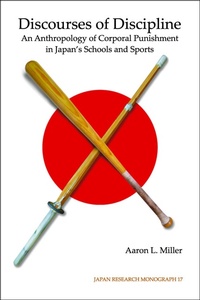
Discourses of Discipline
Description

More details
Other editions
Additional editions
Person
Content
Introduction - 1
Three Stories of Taibatsu
What Is Taibatsu?
Why We Should Study Taibatsu in Japanese Schools and Sports
Thesis and Chapter Summaries
1. Anthropology and Corporal Punishment - 31
Corporal Punishment (Research) Today
How Anthropology Can Help Us Better Understand Corporal Punishment
2. Histories - 47
"Taibatsu" Before the Term "Taibatsu" Existed
Prewar Legal Prohibitions of Taibatsu
Postwar Legal Prohibitions of Taibatsu
The Postwar Construction of Taibatsu as "Solution," "Problem," and "Non-Issue"
3. Contexts - 82
The Importance of Context
The Forms of Discipline
The Genders of Discipline
The Spaces of Discipline
The Inflictors of Discipline
The "Languages" of Discipline
4. Ethics - 98
Conflicting Sports and Classroom Pedagogies
Arguments of Right and Wrong
Arguments in Favor
Arguments Against
5. Purported Causes and Plural Cultures - 125
Causal Interpretations of Corporal Punishment Worldwide
Structural "Causes" of Taibatsu in Japanese Schools and Sports
Cultural "Causes" of Taibatsu in Japanese Schools and Sports
Beyond Culturalism
6. Discourses of Power and the Power of Discourse - 154
The Importance of Historical and Cross-Cultural Analysis
Theories of Power, Violence, and the Body
Silence, Words, and Actions: How Discourses of Discipline Are "Powerful" in Their Own Right
Epilogue - 164
Beyond the "Violent Culture" Myth
Appendices - 171
Bibliography - 203
Index - 235
