

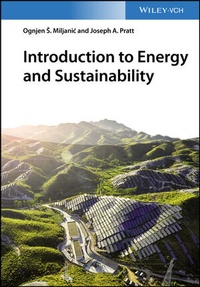
Introduction to Energy and Sustainability
1st Edition
Published on 14. September 2021
608 pages
978-3-527-81861-7 (ISBN)
Description

Offers a comprehensive review of the currently existing energy production and consumption technologies
Offering unique perspectives from one social and one natural scientist and combining them with the view of an industry expert, this book covers definitions and ways of quantifying energy and sustainability, and examines today's energy production and consumption technologies paying particular attention to the environmental, historic, and regulatory aspects of each introduced energy technology. It also deals with alternative and future energy technologies, as well as examples of sustainable approaches to everyday issues of transportation, urban planning, and home construction.
Introduction to Energy and Sustainability starts with a section on introductory concepts and covers such things as the history of our relationship with energy; defining and quantifying both energy and sustainability; flows and conversions of energy and matter; and the laws of thermodynamics energy production today. It examines how energy is produced and consumed in our modern world and looks at what types of energy exist and how we use it. The book also discusses the future of energy and how we will provide and utilize our current and forthcoming sources of power as our world changes.
-Balances the treatment of hard science and engineering concepts of energy and sustainability with a thorough discussion of their socioeconomic and geopolitical implications
-Offers a unique perspective of one social and one natural scientist, combined with the view of an industry expert
-Filled with chapters that feature practice questions and solutions
-Relevant to students in energy fields and environmentalists
Introduction to Energy and Sustainability is an ideal text for post-graduate level students of energy fields. It will also greatly benefit environmentalists, engineers, power engineers, and chemists in industry.
Offering unique perspectives from one social and one natural scientist and combining them with the view of an industry expert, this book covers definitions and ways of quantifying energy and sustainability, and examines today's energy production and consumption technologies paying particular attention to the environmental, historic, and regulatory aspects of each introduced energy technology. It also deals with alternative and future energy technologies, as well as examples of sustainable approaches to everyday issues of transportation, urban planning, and home construction.
Introduction to Energy and Sustainability starts with a section on introductory concepts and covers such things as the history of our relationship with energy; defining and quantifying both energy and sustainability; flows and conversions of energy and matter; and the laws of thermodynamics energy production today. It examines how energy is produced and consumed in our modern world and looks at what types of energy exist and how we use it. The book also discusses the future of energy and how we will provide and utilize our current and forthcoming sources of power as our world changes.
-Balances the treatment of hard science and engineering concepts of energy and sustainability with a thorough discussion of their socioeconomic and geopolitical implications
-Offers a unique perspective of one social and one natural scientist, combined with the view of an industry expert
-Filled with chapters that feature practice questions and solutions
-Relevant to students in energy fields and environmentalists
Introduction to Energy and Sustainability is an ideal text for post-graduate level students of energy fields. It will also greatly benefit environmentalists, engineers, power engineers, and chemists in industry.
More details
Other editions
Additional editions

Ognjen S. Miljanic | Joseph A. Pratt
Introduction to Energy and Sustainability
Book
10/2021
1st Edition
Wiley-VCH
€115.00
Available immediately
Persons
Ognjen S. Miljanic, PhD, is an Associate Professor of Chemistry at the University of Houston. His research focuses on the use of porous materials to capture greenhouse gases.
He has been teaching energy and sustainability to diverse student audience for more than 10 years.
Joseph Pratt earned a PhD in economic history from Johns Hopkins University (1976). He taught at UC Berkeley, the Harvard Business School (as a visitor), and Texas A&M University before accepting a chaired position in history and business at the University of Houston, where he retired as an emeritus professor in 2016. With Ognjen S. Miljanic, he helped create a minor in Energy and Sustainability at the University of Houston.
Joseph Pratt earned a PhD in economic history from Johns Hopkins University (1976). He taught at UC Berkeley, the Harvard Business School (as a visitor), and Texas A&M University before accepting a chaired position in history and business at the University of Houston, where he retired as an emeritus professor in 2016. With Ognjen S. Miljanic, he helped create a minor in Energy and Sustainability at the University of Houston.
Content
Introductory Concepts
1. Brief History of Our Relationship with Energy
2. Defining and Quantifying Energy
3. Flows and Conversions of Energy and Matter
4. Defining and Quantifying Sustainability
5. Laws of Thermodynamics
Energy Production Today
6. Fossil Fuels and Pollution
7. Coal
8. Oil
9. Natural Gas
10. Unconventional Sources of Fossil Fuels
11. Nuclear Energy
12. Hydroelectric Power
13. Production and Storage of Electricity
Energy Consumption Today
14. Energy Use in Transportation
15. Agricultural Energy Use
16. Energy Use in Buildings: Residential and Commercial Consumption
17. Industrial Energy Consumption
Energy Transitions
18. Sustainability Transition: Why, When, How Long?
19. Climate Change
Energy Production Tomorrow
20. Biomass as a Source of Energy
21. Wind Energy
22. Solar Energy
23. Hydrogen as a Fuel
24. Geothermal Energy
Energy Consumption Tomorrow
25. Changes in Global Energy Consumption Patterns
26. Energy Conservation
27. Future of Cars
28. Energy Conservation in Architectural Design and Urban Planning
1. Brief History of Our Relationship with Energy
2. Defining and Quantifying Energy
3. Flows and Conversions of Energy and Matter
4. Defining and Quantifying Sustainability
5. Laws of Thermodynamics
Energy Production Today
6. Fossil Fuels and Pollution
7. Coal
8. Oil
9. Natural Gas
10. Unconventional Sources of Fossil Fuels
11. Nuclear Energy
12. Hydroelectric Power
13. Production and Storage of Electricity
Energy Consumption Today
14. Energy Use in Transportation
15. Agricultural Energy Use
16. Energy Use in Buildings: Residential and Commercial Consumption
17. Industrial Energy Consumption
Energy Transitions
18. Sustainability Transition: Why, When, How Long?
19. Climate Change
Energy Production Tomorrow
20. Biomass as a Source of Energy
21. Wind Energy
22. Solar Energy
23. Hydrogen as a Fuel
24. Geothermal Energy
Energy Consumption Tomorrow
25. Changes in Global Energy Consumption Patterns
26. Energy Conservation
27. Future of Cars
28. Energy Conservation in Architectural Design and Urban Planning
