

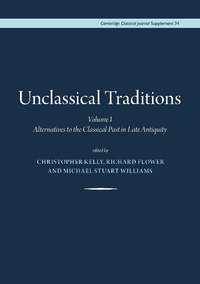
Unclassical Traditions,
Volume I - Alternatives to the Classical Past in Late Antiquity
Published on 30. June 2020
192 pages
978-1-913701-05-5 (ISBN)
Description

Unclassical Traditions: Alternatives to the Classical Past in Late Antiquity is the first of two collections of essays by leading scholars discussing the nature and extent of the late-antique engagement with its classical heritage. This issue has long been at the heart of modern historical debate and, as this volume demonstrates, it was no less a matter of concern among authors and audiences in the period itself.
From the Chronological Tables of Eusebius of Caesarea to the Brevarium of Festus and from the imperial panegyric to the Byzantine liturgy, eight papers explore how the persistence, dominance and normative nature of the classical tradition in its various forms could be negotiated, undermined, ironized or even flatly denied. Whether in the hands of Christian bishops such as Ambrose of Milan or Basil of Caesarea, or in the poetry of Ausonius or in the lives of the saints, many central aspects of late-antique culture here emerge as the product of a combination of authoritatively classical and avowedly unclassical traditions.
From the Chronological Tables of Eusebius of Caesarea to the Brevarium of Festus and from the imperial panegyric to the Byzantine liturgy, eight papers explore how the persistence, dominance and normative nature of the classical tradition in its various forms could be negotiated, undermined, ironized or even flatly denied. Whether in the hands of Christian bishops such as Ambrose of Milan or Basil of Caesarea, or in the poetry of Ausonius or in the lives of the saints, many central aspects of late-antique culture here emerge as the product of a combination of authoritatively classical and avowedly unclassical traditions.
More details
Other editions
Additional editions
Michael Stuart Williams | Christopher Kelly | Richard Flower
Unclassical Traditions Volume 1
Volume I, Alternatives to the Classical Past in Late Antiquity
Book
09/2010
Cambridge Philological Society
€75.71
Shipment within 3-4 weeks
Content
- Intro
- Table of Contents
- Introduction
- 1 The shape of the past: Eusebius of Caesarea and Old Testament history
- 2 The emperor's new past: re-enactment and inversion in Christian invectives against Constantius II
- 3 'gog is the goth': biblical barbarians in Ambrose of Milan's De fide
- 4 The liturgical creation of a Christian past: identity and community in anaphoral prayers
- 5 The Roman world of Festus' Breviarium
- 6 sine numine nomina: Ausonius and the Oulipo
- The Manna from Uncle: Basil of Caesarea's Address to Young Men
- 8 The origins of hagiography and the literature of early monasticism: purpose and genre between tradition and innovation
- Bibliography
- Index
