

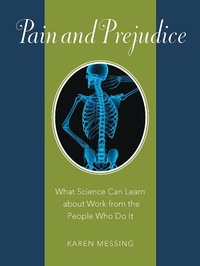
Pain and Prejudice
Description

In 1978, when workers at a nearby phosphate refinery learned that the ore they processed was contaminated with radioactive dust, Karen Messing, then a new professor of molecular genetics, was called in to help. Unsure of what to do with her discovery that exposure to the radiation was harming the workers and their families, Messing contacted senior colleagues but they wouldn't help. Neither the refinery company nor the scientific community was interested in the scary results of her chromosome studies.
Over the next decades Messing encountered many more cases of workers around the world-factory workers, cleaners, checkout clerks, bank tellers, food servers, nurses, teachers-suffering and in pain without any help from the very scientists and occupational health experts whose work was supposed to make their lives easier. Arguing that rules for scientific practice can make it hard to see what really makes workers sick, in Pain and Prejudice Messing tells the story of how she went from looking at test tubes to listening to workers.
More details
Other editions
Additional editions
Person
Karen Messing is an award-winning (including a Governor General of Canada award and YWCA (Montreal) Women of Distinction) and internationally recognized expert on occupational health. She is the author of more than 130 peer-reviewed scientific articles and the book One-eyed Science: Occupational Health and Working Women. She is also the editor of Integrating Gender in Ergonomic Analysis, which has been translated into six languages.
Content
- Preface
- Chapter 1: Factory workers
- Chapter 2: The invisible world of cleaning
- Chapter 3: Standing still
- Chapter 4: The brains of low-paid workers
- Chapter 5: Invisible teamwork
- Chapter 6: Home invasion: When workers lose control over their schedules
- Chapter 7: Teachers and numbers
- Chapter 8: Becoming a scientist
- Chapter 9: Crabs, pain and skeptical scientists
- Chapter 10: A statistician's toes and the empathy gap in scientific articles
- Chapter 11: Can scientists care?
