

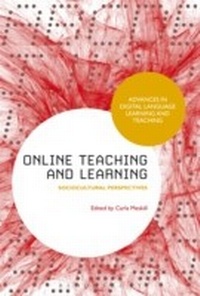
Online Teaching and Learning
Sociocultural Perspectives
1st Edition
Published on 15. August 2013
256 pages
978-1-4411-7578-6 (ISBN)
Description

Online Teaching and Learning shows how learning through the internet depends on complex human interactions for success.
The text uses sociocultural theory as its foundational stance to empirically examine the dynamics of these interactions. It seeks to understand meaning making in all of its social, linguistic and cultural complexity. Each chapter examines how it is that culturally and historically situated meanings get negotiated through social mediation in online instructional venues. It extends the ways we think and talk about online teaching and learning.
The text uses sociocultural theory as its foundational stance to empirically examine the dynamics of these interactions. It seeks to understand meaning making in all of its social, linguistic and cultural complexity. Each chapter examines how it is that culturally and historically situated meanings get negotiated through social mediation in online instructional venues. It extends the ways we think and talk about online teaching and learning.
Reviews / Votes
This edited volume is a welcome contribution to the body of scholarship on online learning -- and in particular to language learning, which is heavily represented across the chapters. Meskill has brought together a collection of studies that highlight the role that agency, environment and social practices play in the learning process. Covering technologies ranging from Second Life to wikis, and discursive elements ranging from introductions to humor, these studies are engaging and highlight the diverse ways in which discussion-based learning may occur. What is so appealing about this new volume edited by Carla Meskill is its willingness to engage with the complexities of learning and teaching online. Thus, broad generalizations about effectiveness and value are replaced by rigorous research studies that chart the participant experience over time and in detail, within a sociocultural view of learning. The result is a collection full of wisdom and insight reflecting the knowledge and experience of the contributors. The four parts of the book facilitate a breadth and depth of treatment that is especially effective in providing more complete descriptions of the learner experience and practical suggestions for the reflective online teacher.More details
Series
Edition
1. Auflage
Language
English
Place of publication
New York
United States
Publishing group
Bloomsbury Publishing PLC (Digital)
Target group
Professional and scholarly
ISBN-13
978-1-4411-7578-6 (9781441175786)
Copyright in bibliographic data and cover images is held by Nielsen Book Services Limited or by the publishers or by their respective licensors: all rights reserved.
Schweitzer Classification
Other editions
Additional editions
Book
02/2015
Bloomsbury Academic
€56.20
Shipment within 15-20 days
Book
08/2013
Bloomsbury Academic USA
€222.60
Shipment within 15-20 days
Person
Carla Meskill is Professor, Department of Education Theory and Practice at the University of Albany, State University of New York, USA.
Content
Introduction: Sociocultural Research Perspectives for Online Teaching and Learning, Carla Meskill
Part 1: Diversity/Identity Online
1. Balancing Multiple Discourses in the U.S. Distance Learning Context:A Case of a Chinese Student, Gulnara Sadykova
2. Projection of Teacher Identity in Introductory Posts: a Critical Discourse Analysis of Strategies of Online Self-Presentation, Denis Samburskiy
Part 2: Shifts in Practice
3. An Exploration of Three-Dimensional Virtual Worlds through ESL/EFL Teachers' Perspectives in Second Life, Ozan Varli
4. Collaboration Unpacked: Tasks, Tools, and Activities, Andreas Lund
5. Synchronous Online Language Teaching: Strategies to Support Learner Development, Iryna Kozlova and Evon Zundel
Part 3: Shifts in Participation
6. The Educational Value of Student Talk in Online Discussions, Sedef Uzuner and Ruchi Mehta
7. Focusing on the social: Research into the distributed knowledge of novice teachers in online exchange, Melinda Dooly
8. Perceptions of Humor in Oral Synchronous Online Environments, Natasha Anthony
9. Face-to-face and Online ELL Writing Tutorials: A Comparison, Jason Vickers
Part 4: Informal Online Learning
10. Rapport Management and Online Learning: L2 Socialization in Livemocha, Adrienne Gonzalez
11. "We don't have to always post stuff to help us learn": Informal Learning Through Social Networking in a Beginners' Chinese group, Marie-Noelle Lamy
Index
Part 1: Diversity/Identity Online
1. Balancing Multiple Discourses in the U.S. Distance Learning Context:A Case of a Chinese Student, Gulnara Sadykova
2. Projection of Teacher Identity in Introductory Posts: a Critical Discourse Analysis of Strategies of Online Self-Presentation, Denis Samburskiy
Part 2: Shifts in Practice
3. An Exploration of Three-Dimensional Virtual Worlds through ESL/EFL Teachers' Perspectives in Second Life, Ozan Varli
4. Collaboration Unpacked: Tasks, Tools, and Activities, Andreas Lund
5. Synchronous Online Language Teaching: Strategies to Support Learner Development, Iryna Kozlova and Evon Zundel
Part 3: Shifts in Participation
6. The Educational Value of Student Talk in Online Discussions, Sedef Uzuner and Ruchi Mehta
7. Focusing on the social: Research into the distributed knowledge of novice teachers in online exchange, Melinda Dooly
8. Perceptions of Humor in Oral Synchronous Online Environments, Natasha Anthony
9. Face-to-face and Online ELL Writing Tutorials: A Comparison, Jason Vickers
Part 4: Informal Online Learning
10. Rapport Management and Online Learning: L2 Socialization in Livemocha, Adrienne Gonzalez
11. "We don't have to always post stuff to help us learn": Informal Learning Through Social Networking in a Beginners' Chinese group, Marie-Noelle Lamy
Index
