

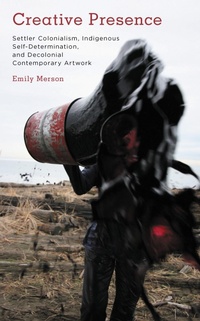
Creative Presence
Settler Colonialism, Indigenous Self-Determination and Decolonial Contemporary Artwork
1st Edition
Published on 11. September 2020
230 pages
978-1-78552-322-9 (ISBN)
Description

Historically, artwork has played a powerful role in shaping settler colonial subjectivity and the political imagination of Westphalian sovereignty through the canonization of particular visual artworks, aesthetic theories, and art institutions' methods of display. Creative Presence contributes a transnational feminist intersectional analysis of visual and performance artwork by Indigenous contemporary artists who directly engage with colonialism and decolonization. This book makes the case that decolonial aesthetics is a form of labour and knowledge production that calls attention to the foundational violence of settler colonialism in the formation of the world order of sovereign states.
Creative Presence analyzes how artists' purposeful selection of materials, media forms, and place-making in the exhibitions and performances of their work reveals the limits of conventional International Relations theories, methods, and debates on sovereignty and participates in Indigenous reclamations of lands and waterways in world politics. Brian Jungen's sculpture series Prototypes for New Understanding and Rebecca Belmore's filmed performances Vigil and Fountain exhibit how colonial power has been imagined, visualized and institutionalized historically and in contemporary settler visual culture. These contemporary visual and performance artworks by Indigenous artists that name the political violence of settler colonial claims to exclusive territorial sovereignty introduce possibilities for decolonizing audiences' sensibilities and political imagination of lands and waterways.
Creative Presence analyzes how artists' purposeful selection of materials, media forms, and place-making in the exhibitions and performances of their work reveals the limits of conventional International Relations theories, methods, and debates on sovereignty and participates in Indigenous reclamations of lands and waterways in world politics. Brian Jungen's sculpture series Prototypes for New Understanding and Rebecca Belmore's filmed performances Vigil and Fountain exhibit how colonial power has been imagined, visualized and institutionalized historically and in contemporary settler visual culture. These contemporary visual and performance artworks by Indigenous artists that name the political violence of settler colonial claims to exclusive territorial sovereignty introduce possibilities for decolonizing audiences' sensibilities and political imagination of lands and waterways.
Reviews / Votes
Taking artwork to be a powerful force in (un)making world politics, Emily Merson's Creative Presence is a major contribution to our understanding not only of sites and practices of decolonial resistance but also of International Relations and where else we ought to look in theorizing relations between political communities. This important book reveals how failing to inquire beyond disciplinary convention sustains our implication in colonial violence. Creative Presence centres contemporary Indigenous arts in relation to ongoing global struggles for justice. Emily Merson's careful reading of decolonial and transnational art works by two of Canada's best-known Indigenous artists, Rebecca Belmore and Brian Jungen, lays a groundwork for a transformative and fresh aesthetic method that situates decolonizing Indigenous arts within world politics. For International Relations scholars and others seeking interpretive methods beyond established but universalizing western aesthetic frames, Merson expertly channels an embodiment of practices of Indigenous sovereignty to disrupt settler colonial imaginary. Emily Merson's Creative Presence is itself a much needed "creative presence" for a discipline that is only recently waking up to the important political interventions of the visual arts. Conceptually acute, wide ranging in focus, and compellingly argued, her investigation discloses a world of creative work that will lastingly unsettle the one that IR scholars have been inhabiting.More details
Series
Edition
1. Auflage
Language
English
Place of publication
London
United Kingdom
Illustrations
32 b/w photos;
ISBN-13
978-1-78552-322-9 (9781785523229)
Copyright in bibliographic data and cover images is held by Nielsen Book Services Limited or by the publishers or by their respective licensors: all rights reserved.
Schweitzer Classification
Other editions
Additional editions
Emily Merson
Creative Presence
Settler Colonialism, Indigenous Self-Determination and Decolonial Contemporary Artwork
Book
09/2020
Rowman & Littlefield International
€144.40
Shipment within 15-20 days
Emily Merson
Creative Presence
Settler Colonialism, Indigenous Self-Determination and Decolonial Contemporary Artwork
Book
09/2020
Rowman & Littlefield International
€52.70
Shipment within 15-20 days
Person
Emily Merson is an Assistant Professor in the Department of Politics and International Studies at the University of Regina (2019 - 2020).
Content
Chapter 1. Introduction: Settler Colonial Claims to Sovereignty and Decolonial Contemporary Artwork
Chapter 2. Creative Presence: Tracing the Coloniality of Global Power and Decolonial World Politics Through the Materials, Media Forms and Place-Making of Contemporary Artwork
Chapter 3. Unsettling International Relations: Decolonizing International Relations Theories of Global Power and Settler Colonial Claims to Exclusive Sovereignty
Chapter 4. Decolonizing Settler Colonial Art Institutions: Brian Jungen's Visual Exhibition Methods of Prototypes for New Understanding
Chapter 5. Materializing Indigenous Self-Determination: Brian Jungen's Materials and Sculptural Methods in Prototypes for New Understanding
Chapter 6. The Scenario of Naming Power: Remembering Traumas of Canadian Settler Colonialism in Rebecca Belmore's filmed performance installation The Named and the Unnamed
Chapter 7. International Art World and Transnational Artwork: Creative Presence in Rebecca Belmore's Fountain at the Venice Bienna
Chapter 2. Creative Presence: Tracing the Coloniality of Global Power and Decolonial World Politics Through the Materials, Media Forms and Place-Making of Contemporary Artwork
Chapter 3. Unsettling International Relations: Decolonizing International Relations Theories of Global Power and Settler Colonial Claims to Exclusive Sovereignty
Chapter 4. Decolonizing Settler Colonial Art Institutions: Brian Jungen's Visual Exhibition Methods of Prototypes for New Understanding
Chapter 5. Materializing Indigenous Self-Determination: Brian Jungen's Materials and Sculptural Methods in Prototypes for New Understanding
Chapter 6. The Scenario of Naming Power: Remembering Traumas of Canadian Settler Colonialism in Rebecca Belmore's filmed performance installation The Named and the Unnamed
Chapter 7. International Art World and Transnational Artwork: Creative Presence in Rebecca Belmore's Fountain at the Venice Bienna
