

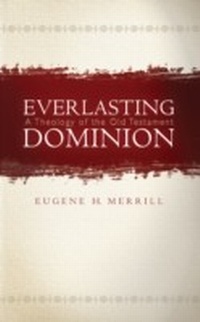
Everlasting Dominion
A Theology of the Old Testament
1st Edition
Published on 1. September 2006
672 pages
978-1-4336-7048-0 (ISBN)
Description

Taking a high view of Scripture as the inspired, authoritative Word of God, esteemed seminary professor Merrill offers this thoroughly in-depth theology of the Old Testament after decades of study.
More details
Other editions
Additional editions
Book
09/2006
Broadman & Holman Publishers
€68.35
Shipment within 10-20 days
Person
Dr. Eugene Merrill is distinguished professor of Old Testament studies at Dallas Theological Seminary and distinguished professor of Old Testament interpretation at the Southern Baptist Theological Seminary in Louisville, Kentucky. With degrees from Bob Jones University (Old Testament studies), New York University (Jewish studies), and Columbia University (Middle Eastern studies), Merrill is considered among the most outstanding Old Testament scholars in the United States today.
Content
- Intro
- Titlepage
- Copyright
- Preface
- Acknowledgments
- Chapter 1: Introduction: The Origins, Nature, and Present State of Old Testament Theology
- History of the Biblical Theology Movement
- Defense of a New Biblical Theology
- Statement of Presuppositions
- Theological Method
- Part 1: God: His Person and Work
- Chapter 2: The Autobiography of God
- The Setting of the Narrative
- The Nature of God
- The Sovereignty of God
- The Omnipotence of God
- The Omniscience of God
- The Eternality of God
- The Character of God
- The Holiness of God
- The Righteousness of God
- The Justice of God
- The Love of God
- The Pity of God
- The Grace of God
- The Compassion of God
- The Covenant Fidelity of God
- The Dependability of God
- The Patience of God
- The Anger/Wrath of God
- The Forgiveness of God
- Chapter 3: The Revelation of God
- Revelation by Word
- Revelation by Visions and Dreams
- Revelation through the Angel of Yahweh
- Revelation through the Divine Names
- Revelation through the Prophets
- Revelation through Signs
- Revelation through Lots
- Chapter 4: The Works of God
- Creation
- Judgment
- Salvation and Deliverance
- Redemption
- Chapter 5: The Purposes of God
- Israel and the Purposes of God
- The Reigning of God
- Creation and Divine Sovereignty
- History and Divine Sovereignty
- The Territory of Divine Sovereignty
- The Hierarchy of Divine Sovereignty
- God's Fellowship with Mankind
- Fellowship as a Creation Motif
- Fellowship in the Wake of the Fall
- Fellowship through Human Government
- Fellowship through a Chosen People
- Part 2: Mankind: The Image of God
- Chapter 6: The Creation of Mankind
- The Creation and Purpose of Mankind
- The Creation Narratives
- The Image of God
- The Fashioning of Man
- The Nature of Mankind
- The Theology of the Individual
- The Theology of the Community
- The Theology of the Clan
- The Theology of the Tribe
- The Theology of the Nations
- The Theology of Mankind
- Chapter 7: The Fall of Mankind
- The Narrative of the Fall
- The Possibility of a Fall
- The Result of the Fall
- The Identity of the Tempter
- Death and the Hereafter
- The Fall and Human Sinfulness
- The Alienation of Sin
- The Technical Terms for Sin
- Sin and Competing Dominions
- Chapter 8: The Redemption of Mankind
- The Principle and Practice of Sacrifice
- The Material of Sacrifice
- Covenant and Redemption
- The Protevangelium
- Conclusion
- Chapter 9: The Creation of a Nation
- The Promise of a Special People
- The Founding of the Nation
- The Deliverance of the Nation
- The Significance of the Plagues
- The Covenant at Sinai
- Part 3: The Kingdom of God
- Chapter 10: God and the World
- The Concept of the Kingdom
- The Concept of Sacred Space
- The Garden of Eden
- Eviction from Sacred Space
- Eschatological Renewal of Sacred Space
- Altars and Shrines as Sacred Space
- The Temple as Sacred Space
- The Mediation of the Kingdom
- The Concept of Covenant
- Resistance to the Kingdom by the Nations
- The Kingdoms of the World
- The Prophets and the Nations
- Amos
- Isaiah
- Nahum
- Jeremiah
- Zephaniah
- Ezekiel
- Daniel
- Reinstitution of the Kingdom
- The Psalms of Yahweh's Kingship
- The Royal Psalms
- Conclusion
- Chapter 11: God and Israel
- The Mosaic Covenant
- The Ten Commandments
- The First Commandment
- The Second Commandment
- The Third Commandment
- The Fourth Commandment
- The Fifth Commandment
- The Sixth Commandment
- The Seventh Commandment
- The Eighth Commandment
- The Ninth Commandment
- The Tenth Commandment
- The Book of the Covenant
- The Altar Law
- Other Laws
- The Covenant Ceremony
- Israel as a Cultic Community
- Sacred Space
- Sacred Persons
- Sacred Times
- The Sabbath
- The Passover and Unleavened Bread
- The Festival of Harvest
- The Festival of Ingathering
- The Festival of Trumpets
- The Day of Atonement
- The Sabbatical and Jubilee Years
- Sacred Acts
- Ritual and Liturgy
- Liturgy and Holiness
- The Categories of Sacrifice
- Miscellaneous Sacred Acts
- Chapter 12: Deuteronomy and Covenant Renewal
- The Pre-Deuteronomic History
- Deuteronomy as a Covenant Text
- The Background of Its Stipulations
- The Deuteronomic Decalogue
- General Covenant Stipulations
- Specific Covenant Stipulations
- Implementation of the Covenant
- Chapter 13: The Deuteronomistic History
- The Book of Joshua
- Preparations for Conquest
- Holy War
- Covenant Renewal in the Land of Promise
- The Books of Judges and Ruth
- The Character of the Times
- Yearnings for a King
- Anticipation of Monarchy
- The Books of First and Second Samuel
- The Prophet Samuel: Preparation for Monarchy
- Saul: Failed Monarchy
- David: The Realization of True Monarchy
- The Davidic Covenant
- The Books of Kings
- The Succession of Solomon
- The Establishment of the Temple
- The Dedication of the Temple
- Royal Priesthood
- The Temple and Sacred Space
- Elijah and Elisha: Prophetic Confrontation
- Jeopardy of the Kingdom Ideal
- Chapter 14: The Books of Chronicles, Ezra-Nehemiah, and Esther
- The Books of Chronicles
- Genealogies and Tribal Histories
- The Reign of David
- The Reign of Solomon
- The Nature and Purpose of Sacred History
- The Divided Monarchy
- The Book of Ezra-Nehemiah
- The Book of Esther
- Part 4: The Prophets and the Kingdom
- Chapter 15: The Theology of the Eighth-Century Canonical Prophets
- The Prophet Amos
- The Prophet Hosea
- The Prophet Jonah
- The Prophet Isaiah
- The Rebellion of Judah
- The Judgment of Judah
- The Restoration of Judah
- The Messianic Servant and Savior
- Oracles against the Nations
- The Establishment of God's Kingdom
- The Prophet Micah
- Chapter 16: The Theology of the Later Preexilic and Exilic Prophets
- The Prophet Jeremiah
- Judah's Covenant Unfaithfulness
- The Judgment of Judah
- The Judgment of the Nations
- Restoration and Deliverance
- The Prophet Nahum
- The Prophet Habakkuk
- The Prophet Zephaniah
- The Prophet Ezekiel
- The Disobedience of Israel
- Judgment on the Nations
- The Restoration of Israel
- Chapter 17: The Theology of the Postexilic Prophets
- The Prophet Daniel
- The Contest for Sovereignty
- The Kingdoms of the World
- The Kingdom of Heaven
- God as Sovereign
- The Prophet Joel
- The Prophet Obadiah
- The Prophet Haggai
- The Prophet Zechariah
- The Disobedience of Israel
- The Judgment of Israel
- The Restoration of Israel
- The Judgment of the Nations
- The Salvation of the Nations
- The Coming Messiah
- The Sovereignty of Yahweh
- The Prophet Malachi
- Part 5: Human Reflection on the Ways of God
- Chapter 18: The Theology of the Psalms
- God as King
- Mankind as God's Viceroy
- The Messianic King
- The Kingdom Role of Zion
- Life in the Kingdom
- Difficulties in Kingdom Life
- Hostility to the Kingdom
- Yahweh's Faithfulness to the Kingdom
- Chapter 19: The Theology of the Wisdom Literature
- Introductory Observations
- The Theology of the Book of Job
- The Problem of the Human Predicament
- God and the Human Predicament
- The Resolution of the Human Predicament
- The Theology of Proverbs
- The Essence of Wisdom
- The Expression of Wisdom
- The Function of Wisdom
- The Manifestations of Wisdom
- Accessibility to Wisdom
- The Theology of Ecclesiastes
- The Theology of the Book of the Song of Songs
- Chapter 20: Conclusion
- Theological Premises
- Theological Method
- The Theological Center
- The Old Testament and the New Testament
- Name Index
- Subject Index
- Scripture Index
