

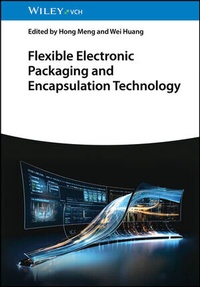
Flexible Electronic Packaging and Encapsulation Technology
1st Edition
Published on 20. March 2024
384 pages
978-3-527-84570-5 (ISBN)
Description

Systematically introduces and summarizes the fundamental and experimental research results of recent progress on flexible electronic packaging and encapsulation technology.
More details
Other editions
Additional editions
Hong Meng | Wei Huang
Flexible Electronic Packaging and Encapsulation Technology
Book
04/2024
1st Edition
Wiley-VCH
€155.00
Shipment within 5-7 days
Persons
Prof. Hong Meng received his Ph.D. from University of California Los Angeles (UCLA) in 2002. He has been working in the field of organic electronics for more than 30 years. His career experiences including working at the Institute of Materials Science and Engineering (IMRE) in Singapore, Lucent Technologies Bell Labs, DuPont Experimental Station. In 2014, he moved to School of Advanced Materials at Peking University Shenzhen Graduate School. He has contributed over 230 peer-reviewed papers (citation: 11000) in chemistry and materials science fields, filed over 46 US patents, 140 Chinese patents.
Professor Wei Huang obtained his BSc, MSc and PhD from the Department of Chemistry, Peking University in 1983, 1988, and 1992, respectively. After teaching Physical Chemistry in Peking University from 1992 to 1993, he began his postdoctoral research with National University of Singapore (NUS) since 1995. In November 2011, he was elected as Academician of the Chinese Academy of Sciences (CAS). In April 2017, he was appointed as Deputy President & Provost of Northwestern Polytechnical University, China.
Professor Wei Huang obtained his BSc, MSc and PhD from the Department of Chemistry, Peking University in 1983, 1988, and 1992, respectively. After teaching Physical Chemistry in Peking University from 1992 to 1993, he began his postdoctoral research with National University of Singapore (NUS) since 1995. In November 2011, he was elected as Academician of the Chinese Academy of Sciences (CAS). In April 2017, he was appointed as Deputy President & Provost of Northwestern Polytechnical University, China.
Content
1 OVERVIEW OF FLEXIBLE ELECTRONIC ENCAPSULATING TECHNOLOGY
1.1 Flexible electronics overview
1.2 Development of flexible electronic encapsulating technology
1.3 Encapsulating technology of several important flexible electronic devices
1.4 Flexible electronic encapsulating materials
1.5 Overview of the development of flexible electronic packaging at home and abroad
2 BASIC CONCEPTS RELATED TO FLEXIBLE ELECTRONIC PACKAGING
2.1 Composition of Flexible Electronic Packaging
2.2 Flexible Electronic Packaging Structure
2.3 Encapsulation Principle
2.4 Packaging Technology
2.5 Packaging Stability
2.6 Encapsulated Products
2.7 Chapter Summary
3 FLEXIBLE SUBSTRATES
3.1 Concept and connotation of flexible substrates
3.2 Development history of flexible substrates
3.3 Flexible substrate materials
3.4 Molding technology of flexible substrate
3.5 Performance evaluation of flexible substrates
3.6 Application of flexible substrates
3.7 Development trend of flexible substrates
4 TEST METHODS
4.1 Sealing test
4.2 Bending test
4.3 Mechanical performance testing
4.4 Stability testing
5 FLEXIBLE ELECTRONIC ENCAPSULATION
5.1 Inorganic encapsulating material
5.2 Organic encapsulating material
5.3 Organic-inorganic hybrid encapsulating material
6 DEVELOPMENT OF FLEXIBLE ELECTRONICS PACKAGING TECHNOLOGY
6.1 Flexible Electronics Packaging
6.2 Thin Film Packaging Technology
7 APPLICATION OF FLEXIBLE ELECTRONICS PACKAGING
7.1 Industry chain analysis of flexible electronics packaging
7.2 Packaging applications of flexible OLED devices
7.3 Packaging applications for flexible solar cells
7.4 Packaging applications for flexible electronic devices
7.5 Packaging applications for flexible electronics sensors
8 TESTING STANDARDS
8.1 Terminology and alphabetic symbols
8.2 Mechanical test method (deformation test)
8.3 Environmental test methods
8.4 Mechanical test methods (impact and hardness tests)
9 ANALYSIS OF FLEXIBLE ELECTRONIC PACKAGING ENTERPRISE
9.1 Flexible Electronic Packaging Enterprise
9.2 Analysis of Flexible Electronic Packaging Enterprises
10 FLEXIBLE ELECTRONICS PACKAGING DEVELOPMENT TRENDS
10.1 Flexible electronics packaging trends overview
10.2 Introduction of three packaging technologies for flexible electronic devices
10.3 Flexible electronics packaging development trend summary
1.1 Flexible electronics overview
1.2 Development of flexible electronic encapsulating technology
1.3 Encapsulating technology of several important flexible electronic devices
1.4 Flexible electronic encapsulating materials
1.5 Overview of the development of flexible electronic packaging at home and abroad
2 BASIC CONCEPTS RELATED TO FLEXIBLE ELECTRONIC PACKAGING
2.1 Composition of Flexible Electronic Packaging
2.2 Flexible Electronic Packaging Structure
2.3 Encapsulation Principle
2.4 Packaging Technology
2.5 Packaging Stability
2.6 Encapsulated Products
2.7 Chapter Summary
3 FLEXIBLE SUBSTRATES
3.1 Concept and connotation of flexible substrates
3.2 Development history of flexible substrates
3.3 Flexible substrate materials
3.4 Molding technology of flexible substrate
3.5 Performance evaluation of flexible substrates
3.6 Application of flexible substrates
3.7 Development trend of flexible substrates
4 TEST METHODS
4.1 Sealing test
4.2 Bending test
4.3 Mechanical performance testing
4.4 Stability testing
5 FLEXIBLE ELECTRONIC ENCAPSULATION
5.1 Inorganic encapsulating material
5.2 Organic encapsulating material
5.3 Organic-inorganic hybrid encapsulating material
6 DEVELOPMENT OF FLEXIBLE ELECTRONICS PACKAGING TECHNOLOGY
6.1 Flexible Electronics Packaging
6.2 Thin Film Packaging Technology
7 APPLICATION OF FLEXIBLE ELECTRONICS PACKAGING
7.1 Industry chain analysis of flexible electronics packaging
7.2 Packaging applications of flexible OLED devices
7.3 Packaging applications for flexible solar cells
7.4 Packaging applications for flexible electronic devices
7.5 Packaging applications for flexible electronics sensors
8 TESTING STANDARDS
8.1 Terminology and alphabetic symbols
8.2 Mechanical test method (deformation test)
8.3 Environmental test methods
8.4 Mechanical test methods (impact and hardness tests)
9 ANALYSIS OF FLEXIBLE ELECTRONIC PACKAGING ENTERPRISE
9.1 Flexible Electronic Packaging Enterprise
9.2 Analysis of Flexible Electronic Packaging Enterprises
10 FLEXIBLE ELECTRONICS PACKAGING DEVELOPMENT TRENDS
10.1 Flexible electronics packaging trends overview
10.2 Introduction of three packaging technologies for flexible electronic devices
10.3 Flexible electronics packaging development trend summary
