

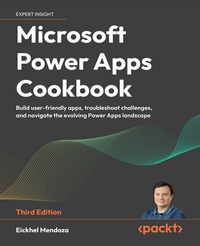
Microsoft Power Apps Cookbook
Description

- Accelerate development with the AI-powered Microsoft Copilot as your virtual app making partner
- Create intuitive and responsive interfaces with canvas app UI elements
Book DescriptionIn the rapidly evolving world of low-code development, Microsoft Power Apps stands out as a powerful platform for building custom business solutions. Microsoft Power Apps Cookbook, 3rd Edition, is your hands-on guide to mastering this platform. Through a collection of step-by-step recipes, this updated edition helps you navigate the latest features, such as AI-powered Microsoft Copilot and custom UI elements while empowering you to build efficient and scalable apps. This book emphasizes practical solutions, guiding app makers through building everything from canvas apps to complex data integrations. You will learn how to streamline repetitive tasks using Robotic Process Automation (RPA) and explore how to create external-facing websites using Microsoft Power Pages while handling data management with Dataverse and extending app functionality with the Power Apps Component Framework. Whether you're extending your app's capabilities with custom components or integrating advanced AI features, Microsoft Power Apps Cookbook equips you with the knowledge and skills to take your app development to the next level. *Email sign-up and proof of purchase requiredWhat you will learn - Develop responsive apps with Canvas and Model-Driven frameworks
- Leverage AI-powered Copilot to accelerate your app development
- Automate business processes with Power Automate cloud flows
- Build custom UI components with the Power Apps Component Framework
- Implement data integration strategies using Dataverse
- Optimize your app for performance and smooth user experiences
- Integrate Robotic Process Automation (RPA) and Desktop flows
- Build secure, scalable, external-facing websites using Microsoft Power Pages
Who this book is forThis book is targeted at information workers and app makers wanting to develop custom applications for their organizations or the projects they are undertaking. Traditional app developers will also find this book useful by discovering how to use a rapid application development environment with increased productivity and speed. Readers are expected to have prior exposure to the Microsoft Power Platform ecosystem.
All prices
More details
Other editions
Additional editions
Previous edition
Person
Eickhel Mendoza is a Microsoft Business Applications MVP with many years of experience in project management, Microsoft Azure development, and Microsoft Power Platform technologies. He is a team lead of the Business Apps department and oversees all Microsoft 365 and Power Platform projects. He has contributed to significant community events such as the Power Platform World Tour, Global Azure Bootcamp, Microsoft 365 Developer Bootcamp, and Dynamics 365 Saturdays. He coordinates the TenerifeDev and Power Platform Canarias user groups with a group of like-minded developers eager to share their knowledge in different technologies. Eickhel is also a member of the organizing committee of the Business Applications Summit Spain.
Content
- Cover
- Copyright
- Contributors
- Table of Contents
- Preface
- Chapter 1: App Maker Basics
- Technical requirements
- How to build a Power Platform solution
- Getting ready
- How to do it.
- How it works.
- Preparing tables in Dataverse
- Getting ready
- Team players
- How to do it.
- How it works.
- Building metadata-enabled storage - SharePoint lists and libraries
- Getting ready
- Player documents
- How to do it.
- How it works.
- Gathering information with Microsoft Forms
- Getting ready
- Summer basketball camp registration
- How to do it.
- How it works.
- Setting up a cloud data source - Azure SQL Database
- Getting ready
- How to do it.
- How it works.
- Chapter 2: Building Pixel-Perfect Solutions with Canvas Apps
- Discovering best practices when building canvas apps
- Variable naming
- Control usage
- Coding methodology
- Copilot assistance
- There's more.
- Creating an incident tracking solution - setting up the data source
- Getting ready
- How to do it.
- How it works.
- Creating an incident tracking solution - building the user interface
- Getting ready
- How to do it.
- How it works.
- There's more.
- Improving SharePoint list forms with the help of Power Apps
- Getting ready
- How to do it.
- How it works.
- There's more.
- Creating a canvas app from existing data
- Getting ready
- How to do it.
- How it works.
- There's more.
- Chapter 3: Building from Data with Model-Driven Apps
- Technical requirements
- Licensing requirements
- Exploring Dataverse
- Configuring your environment
- Getting ready
- How to do it.
- How it works.
- Building a Power Platform solution
- Getting ready
- How to do it.
- How it works.
- Defining data structures
- Getting ready
- Ticket
- Ticket operation
- Project
- Account
- How to do it.
- How it works.
- There's more.
- Building the model-driven app
- Getting ready
- How to do it.
- How it works.
- Setting up business process logic
- Getting ready
- How to do it.
- How it works.
- Designing dashboards to visualize data
- How to do it.
- How it works.
- There's more.
- Integrating canvas apps inside model-driven apps
- How to do it.
- How it works.
- Improving model-driven apps with custom pages
- Getting ready
- How to do it.
- How it works.
- There's more.
- Deploying your solution to your production environment
- Getting ready
- How to do it.
- How it works.
- There's more.
- Discovering the Copilot experience when building model-driven apps
- Getting ready
- How to do it.
- How it works.
- Chapter 4: Choosing the Right Data Source for Your Applications
- Technical requirements
- Data sources and the licensing model
- Power Apps/Power Automate for Microsoft 365
- Choosing the right data source - real-world tests
- Getting ready
- How to do it.
- How it works.
- There's more.
- SharePoint Online performance considerations
- Reducing your application complexity by using Azure SQL database views
- Getting ready
- How to do it.
- Provisioning the data source
- How it works.
- There's more.
- Integrating on-premises data with canvas apps
- Getting ready
- How to do it.
- How it works.
- Improving application speed and responsiveness by using static data
- Getting ready
- How to do it.
- How it works.
- There's more.
- Consuming external data by using Dataflows
- Getting ready
- How to do it.
- How it works.
- There's more.
- Chapter 5: Automating Processes with Power Automate
- Technical requirements
- The different types of flows
- Automated cloud flow
- Instant cloud flow
- Scheduled cloud flow
- Business process flow
- Desktop flow
- Creating a sales survey solution with Microsoft Forms
- Getting ready
- How to do it.
- How it works.
- There's more.
- Building a file processing automation for SharePoint libraries
- Getting ready
- How to do it.
- How it works.
- There's more.
- Overcoming Power Apps delegation with Power Automate
- Getting ready
- How to do it.
- How it works.
- There's more.
- Creating a modular solution with Power Automate
- Getting ready
- How to do it.
- How it works.
- There's more.
- Automating applications using desktop flows
- Getting ready
- How to do it.
- How it works.
- There's more.
- Integrating Google Forms with Dataverse using cloud flows
- Getting ready
- How to do it.
- How it works.
- There's more.
- Chapter 6: Extending the Platform
- Technical requirements
- User interface guidelines
- Setting up your first canvas app component
- Getting ready
- How to do it.
- How it works...
- There's more.
- Building a floating action button component
- How to do it...
- How it works...
- There's more.
- Creating a vertical navigation component
- How to do it...
- How it works...
- There's more.
- Using Power Apps component libraries
- Getting ready
- How to do it...
- How it works...
- There's more.
- Expanding communications with custom connectors
- Getting ready
- How to do it...
- How it works...
- There's more.
- Integrating map capabilities into canvas apps
- Getting ready
- How to do it...
- How it works...
- There's more.
- Extending canvas solutions using mixed reality
- Getting ready
- How to do it.
- How it works...
- There's more.
- Chapter 7: Improving User Experience
- Technical requirements
- Enhancing the design of our application interfaces
- Getting ready
- How to do it.
- Improving the Browse screen
- Refining the Detail screen
- Finishing touches for the Edit screen
- How it works.
- There's more.
- Building a responsive password manager in Power Apps - setting up the Azure Key Vault service
- Getting ready
- How to do it.
- How it works.
- Building a responsive password manager in Power Apps - designing an adaptive application
- Getting ready
- How to do it.
- How it works.
- There's more.
- Chapter 8: Power Apps Everywhere
- Technical requirements
- Discovering applications through Power Apps mobile
- How to do it.
- How it works.
- There's more.
- Leveraging modern browsers for Power Apps
- Getting ready
- How to do it.
- Microsoft Edge
- Google Chrome
- On both browsers
- How it works.
- There's more.
- Improving SharePoint document libraries with Power Apps
- Getting ready
- How to do it.
- How it works.
- There's more.
- Embedding Power Apps in SharePoint pages
- Getting ready
- How to do it.
- How it works.
- There's more.
- Making Power BI reports interactive with embedded Power Apps
- Getting ready
- How to do it.
- Installing and configuring Power BI Desktop
- Building the Power App
- How it works.
- Working with Power Apps in Microsoft Teams channels
- Getting ready
- How to do it.
- Building the canvas app
- Microsoft Teams integration
- How it works.
- There's more.
- Integrating Power Apps inside Teams
- Getting ready
- How to do it.
- Getting application identifier
- Configuring Microsoft Teams policies
- Building a secure app registration
- Automatic deployment of Teams
- How it works.
- There's more.
- Building apps with Dataverse for Teams
- Getting ready
- How to do it.
- How it works.
- There's more.
- Chapter 9: Empowering your Applications with AI Builder
- Technical requirements
- Creating a customer success solution using sentiment analysis
- Getting ready
- How to do it.
- Creating the SharePoint list
- Building the complaints form
- Building the cloud flow
- Building the canvas app
- How it works.
- Building a text recognition system using canvas apps
- Getting ready
- How to do it.
- Building the app
- How it works.
- Gathering insights from data with the Copilot Answer component
- Getting ready
- How to do it.
- How it works.
- There's more.
- Using Power Automate to create an invoice classification system
- Getting ready
- How to do it.
- Configuring the AI model
- Building the cloud flow
- How it works.
- There's more.
- Chapter 10: Discovering the Power Platform Admin Center
- Technical requirements
- Managing Power Platform environments
- How to do it.
- Creating an environment without a database
- Creating an environment with a database
- How it works.
- There's more.
- Gathering Power Platform analytics
- Getting ready
- How to do it.
- Power Platform admin center
- Power Apps maker portal
- SharePoint list Power Apps
- Power Automate
- How it works.
- There's more.
- Handling connectors through data policies
- Getting ready
- How to do it.
- How it works.
- There's more.
- Chapter 11: Tips, Tricks, and Workarounds
- Technical requirements
- Sharing OneDrive data between tenants
- Getting ready
- How to do it.
- Uploading the data
- Building the cloud flow to get Excel data
- Building the cloud flow to communicate with Power Apps
- Building the app
- How it works.
- Playing with vectors - SVG in canvas apps
- How to do it.
- How it works.
- There's more.
- Transferring SharePoint list apps from one site to another
- Getting ready
- How to do it.
- Building and customizing the list on the source site
- Exporting the app
- Configuring the destination site
- Transforming the exported package
- Importing the new package
- How it works.
- There's more.
- Troubleshooting using Power Apps Monitor
- Getting ready
- How to do it.
- Provisioning the SharePoint list
- Building the app
- How it works.
- There's more.
- Extending screen real estate using the canvas control
- Getting ready
- How to do it.
- How it works.
- Updating Azure SQL Server connections in Power Apps
- Getting ready
- Azure SQL databases
- How to do it.
- Creating the environments
- Building the app
- Transforming the exported package
- How it works.
- There's more...
- Renaming files in SharePoint document libraries
- Getting ready
- How to do it.
- Creating the SharePoint document library
- Building the cloud flow
- Configuring the document library
- How it works.
- Chapter 12: Advanced Techniques with the Power Apps Component Framework
- Technical requirements
- Configuring your development environment
- Getting ready
- How to do it.
- Node.js/npm
- Editor - VS Code
- Editor - Visual Studio 2017 or later
- Microsoft Power Platform CLI
- Configuring the Power Platform environment
- How it works.
- There's more.
- Setting up Font Awesome
- How to do it.
- How it works.
- Creating the project
- Getting ready
- How to do it.
- How it works.
- Building the application logic
- How to do it.
- How it works.
- There's more.
- Deploying the solution
- How to do it.
- Building the solution
- Deploying to the environment
- How it works.
- Testing the component on a canvas app
- How to do it.
- How it works.
- There's more.
- Chapter 13: Reaching Beyond the Organization with Power Pages
- Technical requirements
- Setting up Power Pages
- Getting ready
- How to do it.
- How it works.
- There's more.
- Extending the Dataverse solution
- Getting ready
- How to do it.
- How it works.
- Building the help desk interface
- Getting ready
- How to do it.
- How it works.
- There's more.
- Configuring user access and security
- Getting ready
- How to do it.
- Setting up permissions
- Securing page access
- How it works.
- There's more.
- Automating record attributes
- Getting ready
- How to do it.
- How it works.
- There's more.
- Adding custom fonts to the portal
- Getting ready
- How to do it.
- Preparing the local version of the portal
- Using preinstalled fonts
- Using fonts from the Google Fonts repository
- How it works.
- There's more.
- Packt Page
- Other Books You May Enjoy
- Index
Preface
Power Apps is a low-code platform for building applications from Microsoft. With this platform, you can create solutions to your business needs while integrating with other components of the Power Platform, such as Power Automate and Power BI.
Quite different from the complete online documentation, you will find that this is not your regular reference book. Instead, this book exposes real-world scenarios and experiences to help you get a headstart in your Power Apps projects.
By exploring a carefully selected collection of chapters, you will delve into various aspects of Power Apps. This includes learning the fundamentals of creating canvas apps, designing model-driven solutions, enhancing apps with custom connectors, and integrating with other platforms. You will also gain insight into the pro-developer aspects, such as the Power Apps Component Framework and developing website experiences for external users with Power Pages.
Who this book is for
Since we cover practical use cases, basic knowledge of building applications using Power Apps is required to take advantage of the solutions explored in this book. You will get a step-by-step tutorial on building the recipes crafted for each chapter.
What this book covers
Chapter 1, App Maker Basics, serves as the base instructions for building the subsequent recipes. Instead of repeating these steps in each recipe, we concentrate them in to one chapter for tasks such as creating a Dataverse solution or building a SharePoint list.
Chapter 2, Building Pixel-Perfect Solutions with Canvas Apps, starts with the best practices for building canvas apps and continues with creating sample solutions, including coverage of the data source handling.
Chapter 3, Building from Data with Model-Driven Apps, continues our journey by following a collection of recipes joined together to create an all-around help desk solution. We will also explore the Entity Relationship Diagram capabilities from the maker Copilot in Power Apps.
Chapter 4, Choosing the Right Data Source for your Applications, will help you to make a sound decision when determining the data source of your applications. This chapter also explains the importance of the licensing model on this platform.
Chapter 5, Automating Processes with Power Automate, focuses on several use cases, from inside and outside the Microsoft ecosystem, to improve business processes using this component of the Power Platform.
Chapter 6, Extending the Platform, builds upon the concept of enhancing the application-building process by using components. We will also learn how to extend the platform by creating custom connectors, using geospatial capabilities, and integrating mixed reality.
Chapter 7, Improving User Experience, looks at how to enrich your user interfaces to make your applications more appealing to end users. This chapter will also cover how to create a responsive application using the latest techniques available in Power Apps.
Chapter 8, Power Apps Everywhere, explains all the possible ways to use and integrate Power Apps on many platforms, from mobile device consumption to embedding scenarios on SharePoint and Power BI, without forgetting the latest on Microsoft Teams development, including Dataverse for Teams.
Chapter 9, Empowering Your Applications with AI Builder, focuses on using AI Builder solutions to improve our applications and processes by bringing artificial intelligence into the mix, including Copilot.
Chapter 10, Discovering the Power Platform Admin Center, is about learning how to manage the Power Platform using the tools and settings available in this admin center.
Chapter 11, Tips, Tricks, and Workarounds, offers a collection of hints from the application-building experience in Power Apps with a set of topics that will help solve or improve a wide variety of scenarios.
Chapter 12, Advanced Techniques with Power Apps Component Framework, tackles the pro-developer side by building a Power Apps Component Framework component from scratch. We will look at setting up our development environment, deploying the component to an environment, and using it on a canvas app.
Chapter 13, Reaching Beyond the Organization with Power Pages, introduces the Power Pages component. It offers a solution to allow external users to interact with our Dataverse data. This chapter will extend the help desk solution built in previous chapters.
To get the most out of this book
Before diving into building solutions with Power Apps, you are going to need a Microsoft 365 subscription.
You might have one already from your organization, but if you want to have a playground to build apps, I'm going to give you two suggestions:
- Microsoft 365 Developer Program
This program allows you to have a Microsoft 365 subscription with many features available: 25 E5 user licenses, apps such as SharePoint, learning resources, and more. It's the perfect sandbox environment to create your apps, not only to build Power Apps but also to learn other technologies from the whole Microsoft 365 ecosystem. This subscription renews automatically every three months as long as you actively use it.
To get more information, please refer to https://developer.microsoft.com/en-us/microsoft-365/dev-program.
- Power Apps Developer Plan
This option is ideal if you want a more focused approach to the Power Platform. It offers a free environment for individual use with the same advantages as a paid plan, including premium connectors. However, some restrictions exist, such as app sharing and the need for a Microsoft organizational account.
This subscription has no renewal process; it's perpetual. For more information, please visit https://www.microsoft.com/en-us/power-platform/products/power-apps/free.
Power Platform licensing requirements
Power Apps paid plans
The licensing model on this platform depends on the type of connector needed for your data sources. Standard connectors, such as the one used for SharePoint, don't require an additional license besides Microsoft 365, but premium or custom connectors do require a Power Apps license:
- Per app plan
Allows running one app (canvas or model-driven) or portal per user.
- Per user plan
Allows building and using unlimited apps and portals (within service limits).
- Pay-as-you-go plan
Allows a per user plan that charges for the number of apps or portals runs by a user each month (note that this plan requires an Azure subscription).
To get more insight into the licensing model, please visit https://www.microsoft.com/en-us/power-platform/products/power-apps/pricing/.
Power Automate paid plans
In Power Automate, three licensing plans allow access to data using premium connectors, custom connectors, and on-premises data. The difference lies in the capacity of these plans and who will be the end-user of them:
- There are two user plans: the Power Automate Premium and the Power Automate Hosted Process. Both let you create unlimited flows, including AI builder service credits, but the latter adds unattended robotic process automation in a hosted virtual machine.
- On the other hand, the Power Automate Process licenses a bot that runs unattended robotic process automation.
Using either of these options depends entirely on the analysis of the business process that requires automation. For detailed information about the pricing of these plans, please refer to https://www.microsoft.com/en-us/power-platform/products/power-automate/pricing.
Download the example code files
The code bundle for the book is hosted on GitHub at https://github.com/PacktPublishing/Microsoft-Power-Apps-Cookbook-Third-Edition. We also have other code bundles from our rich catalog of books and videos available at https://github.com/PacktPublishing/. Check them out!
Download the color images
We also provide a PDF file with color images of the screenshots/diagrams used in this book. You can download it here: https://packt.link/gbp/9781835465158.
Conventions used
There are a number of text conventions used throughout this book.
Code in text: Indicates code words in text, database table names, folder names, filenames, file extensions, pathnames, dummy URLs, and user input. Here is an example: "Repeat step 9 for the Ticket Priority column, using the following choices: Low, Medium, and High."
A block of code is set as follows:
Filter( vw_TicketData, customer_id = CustomersCbx.Selected.id ) Any command-line input or output is written as follows:
Set-ExecutionPolicy -ExecutionPolicy Bypass Bold: Indicates a new term, an important word, or words you see onscreen. For example, words...
