

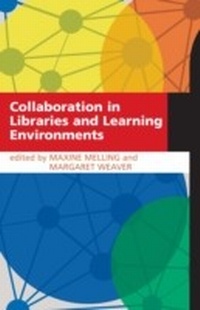
Collaboration in Libraries and Learning Environments
Description

The changing environment in higher education requires different approaches to be taken to the provision of professional support services. This may result in the development of outsourced shared services, the convergence of many different student-facing services or the development of more active collaborative networks. This collection of essays considers the changing context and broad principles affecting the ways in which we need to manage and provide services and offers case studies of changes that have already taken place.
This book recognizes and uncovers the innovations that leaders and practitioners are implementing to transform and develop the provision of sustainable and creative support services. Such innovations are resulting in diverse models of service delivery and the development of more active collaborative networks and commercial partnerships. The essays are drawn from a broad spectrum of professionals working inside and outside library and information services as well as those responsible for leading multiply converged or joint service teams.
Key topics include:
- The changing higher education context and how to build service success in uncertain times
- Connecting with the student perspective
- Working with professional associations
- Culture, values and change: observations from three consortia in Canada
- Managing complex change collaboratively and creatively
- Leaders and influencing skills of the future
- The role of technology in enabling collaboration and the role of shared data in extending the library's value
- Space: changing the boundaries and the communal nature of the academic library
- Collaborative service provision through super-convergence
- Joint use libraries and transformational change.
Readership: Library leaders and practitioners and students of LIS.
All prices
More details
Other editions
Additional editions
Persons
Maxine Melling is Director of Library and Student Support at Liverpool John Moores University
Margaret Weaver is Head of Learning, Information and Student Services at the University of Cumbria
Content
1. The changing higher education context - Rebecca Davies, Aberystwyth University, UK
2. Connecting with the student perspective - Craig Gaskell, University of Hull, UK
3. Working with professional associations - Andrew West, University of Sheffield, UK and Raegan Hiles, AMOSSHE, UK
4. Culture, values and change: observations from three consortia in Canada - Michael Ridley
5. Managing complex change collaboratively - Margaret Weaver, University of Cumbria, UK
6. Leadership skills for collaboration: future needs and challenges - Sue Roberts, State Library of Victoria, Melbourne, Australia, and Rachel Esson,Victoria University of Wellington, New Zealand
7. Knowing me...knowing you: the role of technology in enabling collaboration - Graham Stone and Dave Pattern, both at University of Huddersfield, UK
8. Space: changing the boundaries - Liz Jolly, Teesside University, UK
9. Collaborative service provision through super-convergence - Maxine Melling, University of Gloucestershire, UK
10. Joint-use libraries and transformational change - Ruth Kifer, University Library, San José State University, USA
