

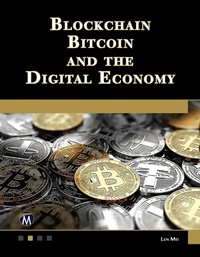
Blockchain, Bitcoin, and the Digital Economy
1st Edition
Published on 25. July 2022
252 pages
978-1-68392-834-8 (ISBN)
Description

This book discusses fundamentals of blockchain technology, the issues in its development, potential applications, and its use in cryptocurrency. It also covers fintech, its status and applications, and the concepts related to a digital economy. Because this subject is vast and quickly changing, the book serves as a comprehensive introduction and background to anyone who is interested in blockchain technology and cryptocurrency. It has numerous references for anyone who is interested in further research.
Features:
- Discusses basic concepts of blockchain technology, the issues in its development, potential applications, and its use in cryptocurrency
- Covers Bitcoin issues, altcoins, MDLs, industrial applications, payment, regulations, and more
More details
Language
English
Place of publication
Berlin
United States
Target group
Professional and scholarly
US School Grade: College Graduate Student
File size
5,91 MB
ISBN-13
978-1-68392-834-8 (9781683928348)
Copyright in bibliographic data and cover images is held by Nielsen Book Services Limited or by the publishers or by their respective licensors: all rights reserved.
Schweitzer Classification
Other editions
Additional editions
Book
09/2022
1st Edition
Mercury Learning & Information
€59.95
Article not available at the moment
E-Book
07/2022
1st Edition
Mercury Learning and Information
€67.49
Available for download
Content
- Cover
- Half-Title
- Title
- Copyright
- Contents
- Preface
- Chapter 1: What is Blockchain?
- 1.1 Introduction
- 1.2 Distributed Computing
- 1.3 Centralization vs. Decentralization
- 1.4 Permissioned vs. Permissionless
- 1.5 Bitcoin
- 1.6 Proliferation of Blockchain Technology
- 1.7 Initial Coin Offering (ICO)
- 1.8 Blockchain Platforms
- References
- Chapter 2: Bitcoin
- 2.1 Bitcoin Mining
- 2.2 How Does Bitcoin Work?
- 2.3 Digital Signature
- 2.4 Multisig
- 2.5 Bitcoin Wallets
- 2.6 Two-factor Authentication (2FA)
- 2.7 Hash
- 2.8 Merkle Tree and Block Header
- 2.9 Nonce
- 2.10 Bitcoin Supply
- 2.11 Bitcoin Addresses
- 2.12 Zero Knowledge Proof
- 2.13 Divisible Bitcoin
- References
- Chapter 3: Bitcoin Issues
- 3.1 Bitcoin Block Size
- 3.2 SegWit and the Change of Block Size
- 3.3 Bitcoin Split
- 3.4 Keep Your Coins Safe During Forking
- 3.5 Bitcoin and Decentralization
- 3.6 The Mt. Gox Incident
- 3.7 Full Nodes vs. Partial Nodes
- 3.8 Is Bitcoin Truly Anonymous?
- 3.9 Transaction Fees
- 3.10 Transaction Malleability
- 3.11 BIPs, Hard Forks, and Soft Forks
- 3.12 UASF and UAHF
- 3.13 Other Proposed Fixes
- 3.14 Government Attitude
- 3.15 The Future of Bitcoin
- References
- Chapter 4: Consensus Mechanisms
- 4.1 Proof of Work vs. Proof of Stake
- 4.2 PoW and PoS Hybrid
- 4.3 dBFT, an Alternative to PoW, and PoS
- 4.4 Paxos and Raft: Consensus Protocols for Distributed Systems
- 4.5 Proof of Concept
- References
- Chapter 5: Altcoins
- 5.1 Litecoins - A Lighter Version of Bitcoin
- 5.2 Zcash - A Token with Privacy
- 5.3 Ripple - A Digital Equivalent of SWIFT
- 5.4 Ethereum: The Smart Contract Blockchain
- 5.5 DAO Hacks and Ethereum Forks
- 5.6 Legal Issues
- 5.7 Dapps - Decentralized Apps
- 5.8 Create Your Own Coins Out of Bitcoin
- 5.9 Antshares or NEO - A Multi-Use Token
- 5.10 Bridging Bitcoin & EVM
- 5.11 Asset Digitization
- 5.12 Stablecoins
- References
- Chapter 6: Mutual Distributed Ledgers and Digital Currency
- 6.1 Identity, Transaction, and Content MDLs
- 6.2 Identity MDLs
- 6.3 Tokenless MDLs
- 6.4 Building MDLs for Financial Services
- 6.5 Digital Currencies
- 6.6 The Indian Digital Currency Project
- 6.7 Chinese Digital Currency - DCEP
- 6.8 Facebook Libra/Diem
- 6.9 Non-Fungible Tokens (NFTs)
- References
- Chapter 7: Blockchain Beyond Cryptocurrency
- 7.1 BigchainDB
- 7.2 Lightning Network
- 7.3 Corda
- 7.4 HydraChain
- 7.5 MultiChain
- 7.6 Quorum
- 7.7 Hyperledger
- 7.8 Decentralized Internet
- 7.9 Other Blockchain Platforms
- 7.10 Beyond Blockchain
- References
- Chapter 8: Industrial Applications for Blockchain
- 8.1 Insurance
- 8.2 Wealth Management
- 8.3 Defense
- 8.4 Healthcare
- 8.5 Food
- 8.6 Credit Rating
- 8.7 Data Management
- 8.8 Internet Security
- 8.9 Logistics
- 8.10 Global Trade, Supply Chains, and Other Areas
- References
- Chapter 9: Payment and Lending
- 9.1 Banking and Payment
- 9.2 Third-Party Payment Market
- 9.3 Mobile Wallets and Payment Transfers
- 9.4 Credit Cards and Loan Applications
- 9.5 Peer-to-Peer Lending
- 9.6 Online Lending
- 9.7 Microlending and SME Lending
- References
- Chapter 10: Governance and Regulation
- 10.1 Governance and Voting
- 10.2 Regulatory and Compliance Applications
- 10.3 Land Title Registration and Real Estate
- 10.4 Law and Blockchain
- 10.5 Protection of Intellectual Property
- 10.6 Conclusion
- References
- Chapter 11: A Glimpse of the Future
- 11.1 The Foundation of Future Technology
- 11.2 The Sharing Economy
- 11.3 Fintech and AI
- 11.4 Fintech Regulation
- 11.5 Data-Driven Fintech
- 11.6 Communication-Driven Fintech
- 11.7 Conclusion
- References
- Index
