

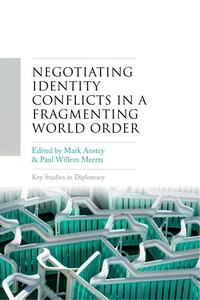
Negotiating Identity Conflicts in a Fragmenting World Order
Published on 31. March 2026
328 pages
978-1-5261-9514-2 (ISBN)
Description

Rapid systemic change within and across nations disrupts traditional identity formation processes, and how identity groups manage their differences. Fragmentation - a breakdown at many levels along many divides - is the consequence of a world now of multiple identity groups making maximalist claims on their governments and each other. At an international level a new tripolar imperialism is in evidence, globalisation is fading in the face of US tariffs and the capacity of the United Nations to deliver to its mission has been fundamentally eroded. At the level of individual states after a brief surge, democracy has been in retreat for two decades. Some states are building physical and cyber walls to keep 'others' out; some are actively pushing vulnerable groups out; some are refusing minorities autonomy; some minorities resist majority governance. Many governments struggle to achieve policy coherence as a divided citizenry competes for sectional recognition. Traditional religions are torn by questions of sexual orientation, the role of women in churches and over human rights. Both traditionally dominant groups and minorities claim discrimination and feel under threat. Intolerance reduces interest in mutual accommodation ... and negotiation. Some relearning, and rethinking is needed about diplomacy, the design of political systems and identity accommodation in a world being reshaped by cyber communications and AI. -- .
More details
Series
Language
English
Place of publication
United Kingdom
Target group
College/higher education
Professional and scholarly
File size
0,96 MB
ISBN-13
978-1-5261-9514-2 (9781526195142)
Copyright in bibliographic data and cover images is held by Nielsen Book Services Limited or by the publishers or by their respective licensors: all rights reserved.
Schweitzer Classification
Other editions
Additional editions
Paul Willem Meerts | Mark Anstey
Negotiating Identity Conflicts in a Fragmenting World Order
Book
approx. 03/2026
Manchester University Press
€156.70
Not yet published
Persons
Mark Anstey is a professor emeritus of Nelson Mandela University in South Africa
Paul Meerts is deputy general-director emeritus of Clingendael Institute in The Hague
The editors are members of the Processes of International Negotiations (PIN) Steering Committee at the Geneva Centre for Security Policy (GCSP: www.pin-negotiation.org) -- .
Paul Meerts is deputy general-director emeritus of Clingendael Institute in The Hague
The editors are members of the Processes of International Negotiations (PIN) Steering Committee at the Geneva Centre for Security Policy (GCSP: www.pin-negotiation.org) -- .
Content
Chapter 1. Introduction - Mark Anstey
Part One: Identity, fragmentation and negotiation
Chapter 2. Negotiating Identity: cohesion and fragmentation - I William Zartman
Chapter 3. Identity in Diplomatic Negotiation: A Double-Edged Sword - Paul Meerts
Chapter 4. Negotiating problems of fragmentation at the levels of states - Mark Anstey
Part Two: Two bloody conflicts: failures in identity negotiations
Chapter 5. Fading Signals. How Fastened Identities Undermined Strategic Stability in the Post-Cold War Era - Mikhail Troitskiy
Chapter 6. Israel and Palestine: Identity, Fragmentation and Negotiation at the Navel of the World - Mark Anstey and Paul Meerts
Part Three: The European Union: coherence dilemmas in a multi-identity association of states
Chapter 7. Identification processes and cultures of negotiation in EU policy making - Alain Guggenbuhl
Chapter 8. Political Identity, Nondomination and the European Union - Rudolf Schuessler
Chapter 9. Winning a Battle, Losing the War: Bulgaria's Veto to the EU accession of North Macedonia - Ida Manton
Part Four: Experiences in developing countries
Chapter 10. Transitioning Identities: the Colombian Peace Negotiations 2010-2016 - Paula Garzon and Frans Schram
Chapter 11. The Normative Dance: the use of mediation in Mali as a Space of Norm Contestation between a regional organisation and a member state - Brown Odigie and Jose Pascal da Rocha
Part Five: Detoxifying relations
Chapter 12. Decoding the New Geopolitics of Cyberspace, Hybrid Operations and Emerging Technologies and Their Impact on States and Society - Christina Schori Liang
Chapter 13. In Conclusion - Mark Anstey
Appendix 1. Secretary General's Address to the General Assembly 19th September 2023. -- .
Part One: Identity, fragmentation and negotiation
Chapter 2. Negotiating Identity: cohesion and fragmentation - I William Zartman
Chapter 3. Identity in Diplomatic Negotiation: A Double-Edged Sword - Paul Meerts
Chapter 4. Negotiating problems of fragmentation at the levels of states - Mark Anstey
Part Two: Two bloody conflicts: failures in identity negotiations
Chapter 5. Fading Signals. How Fastened Identities Undermined Strategic Stability in the Post-Cold War Era - Mikhail Troitskiy
Chapter 6. Israel and Palestine: Identity, Fragmentation and Negotiation at the Navel of the World - Mark Anstey and Paul Meerts
Part Three: The European Union: coherence dilemmas in a multi-identity association of states
Chapter 7. Identification processes and cultures of negotiation in EU policy making - Alain Guggenbuhl
Chapter 8. Political Identity, Nondomination and the European Union - Rudolf Schuessler
Chapter 9. Winning a Battle, Losing the War: Bulgaria's Veto to the EU accession of North Macedonia - Ida Manton
Part Four: Experiences in developing countries
Chapter 10. Transitioning Identities: the Colombian Peace Negotiations 2010-2016 - Paula Garzon and Frans Schram
Chapter 11. The Normative Dance: the use of mediation in Mali as a Space of Norm Contestation between a regional organisation and a member state - Brown Odigie and Jose Pascal da Rocha
Part Five: Detoxifying relations
Chapter 12. Decoding the New Geopolitics of Cyberspace, Hybrid Operations and Emerging Technologies and Their Impact on States and Society - Christina Schori Liang
Chapter 13. In Conclusion - Mark Anstey
Appendix 1. Secretary General's Address to the General Assembly 19th September 2023. -- .
