

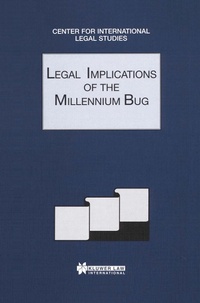
Legal Implications of the Millenium Bug
Legal 1999
Published on 1. December 1999
480 pages
978-90-411-7164-1 (ISBN)
Description

In the event that damage is caused as a result of the year 2000 problem, who will be responsible for compensating the victims of such damage? Should the developers, vendors or licensors of non-compliant software be held liable if their products do not continue to function correctly through the change in the millennium? Should those who provide "fixes" to the Bug which do not work properly be accountable for damage caused? Do end-users have a duty to ensure that their software is Year 2000 compliant? These questions, among others, will not be fully answered until the courts have had an opportunity to rule upon disputes which will no doubt arise.
Other matters to be considered include the type of agreement that has been entered into between the parties, which rules will therefore apply and what defenses, if any, may be available to the defendant. Insurance is also a big issue. Many insurance companies are stating that damage resulting from the Millennium Bug will not be covered by existing policies, and defenses such as force majeure and act of God have been raised. What will happen when these issues come to litigation remains to be seen.
This special issue of the Comparative Law Yearbook of International Business discusses the legal implications of the Millennium Bug in various countries. It describes the way in which agreements relating to software are viewed by different jurisdictions and the possible attribution of liability for damage caused by the Bug.
Other matters to be considered include the type of agreement that has been entered into between the parties, which rules will therefore apply and what defenses, if any, may be available to the defendant. Insurance is also a big issue. Many insurance companies are stating that damage resulting from the Millennium Bug will not be covered by existing policies, and defenses such as force majeure and act of God have been raised. What will happen when these issues come to litigation remains to be seen.
This special issue of the Comparative Law Yearbook of International Business discusses the legal implications of the Millennium Bug in various countries. It describes the way in which agreements relating to software are viewed by different jurisdictions and the possible attribution of liability for damage caused by the Bug.
More details
Other editions
Additional editions
Book
12/1999
1st Edition
Kluwer Law International
€176.55
Shipment within 10-20 days
Persons
Content
- Cover
- Half Title Page
- Half Title
- Copyright Page
- Table of Contents
- Editor's Note
- Australia
- Introduction
- Main Provisions of the Australian Act
- Legal Immunity and Inadmissibility of Evidence
- Key Definitions
- Protection from Civil Liability
- Inadmissibility of Year 2000 Disclosure Statements
- Other Features of the Australian Act
- Year 2000 Disclosure Statements
- Negligently Made Year 2000 Disclosure Statements
- Different Legal Consequences for the Same Statement
- False Statements about Another's Year 2000 Readiness
- Republished Year 2000 Disclosure Statements
- Makers of Year 2000 Disclosure Statements
- Recipients of Year 2000 Disclosure Statements
- Conclusion
- Austria
- Introduction
- The Problem
- The Consequences
- The Legal Question
- Liability of Developer, Licensor or Vendor of Non-Compliant Components
- Legal Background
- Remedies
- Liability of Developers
- Liability of Vendors
- Licensor
- Software Maintenance
- Year 2000 Repair
- Vendor
- Developer
- Service Contract
- Liability of Directors, Employees and Advisers
- Directors
- Advisers
- Miscellaneous
- Insurance
- Tax Issues
- Practical Aspects
- Conclusion
- Belgium
- Introduction
- Arguments Drawn from the Pre-Contractual Stage
- Obligations to Advise and Cooperate
- The Difficult Application of Principles
- Specific Case of the Year 2000 Bug
- Application of Theory by the Creteil Court of Commerce
- Penalty for a Fault
- Conclusions
- Arguments Drawn from the Contract's Conclusion
- Reminder of Applicable Principles
- Imbalance in the Contractual Provisions
- Intentional Fault
- Error
- Penalty for Defects of Consent
- Arguments Drawn from the Object of the Contract
- Introduction
- Obligation to Furnish a Product that Conforms
- Warranty against Hidden Defects
- Arguments Drawn from the Contract's Execution
- Introduction
- Definition and Classification of Maintenance Contracts
- Use of Maintenance Contracts in View of the Year 2000 Bug
- Clauses Exempting or Limiting Liability
- Validity
- Limits to Validity and Scope
- Force Majeure
- Conclusion and Measures to Be Taken
- The Show Must Go On
- Payment of Expenses
- Canada
- Introduction
- Year 2000 Compliance Issues
- Persons Liable for Year 2000 Problems
- How Liability Will Arise
- How Liability Can Be Avoided
- Denmark
- Introduction
- Directors and Officers
- Legal Theory
- Licensor, Developer or Vendor of Non-Compliant Software
- Legal Theory
- Defective Performance under Danish Law
- Remedies for Breach and Liability
- Limitation of Liability
- Limitation of Actions
- Software Maintenance Contractors
- Maintenance Contracts
- Facilities Management and Outsourcing
- Defenses
- Liability and Upstreaming and Downstreaming
- Legal Theory
- Product Liability
- Recourse to a Prior Party
- Liability of Year 2000 Fix Vendors
- Copyright
- Liability
- Miscellaneous
- Accounting and Auditing Standards
- Securities Laws Disclosure
- Due Diligence
- Insurance
- Tax Issues
- Conclusion
- England and Wales
- Introduction
- The Millennium Bug
- The Importance of Avoiding a System Failure
- Misrepresentations
- The Law of Misrepresentation
- The Importance of Misrepresentation
- Relevant Legislation
- Relevant Case Law Examples
- Application of the Law of Misrepresentations to the Millennium Bug
- Contract Law
- Introduction
- Express Warranties
- Implied Warranties
- Implied Warranties and Millennium Compliance
- Negligence and Product Liability
- Negligence
- Introduction to Product Liability
- The Defenses
- Relevance of Product Liability
- Exclusions of Liability
- Unfair Contract Terms Act 1977
- Tactics for Existing Contracts
- Introduction
- Tactics Where There Is No Promise for Millennium Compliance
- Buying a New System
- Obtaining a New Promise
- New Promises and Consideration
- The Meaning of Millennium Compliance
- Litigation
- Introduction
- Limitation Periods
- Insurance
- Conclusion
- Annex A DISC PD2000-1 A Definition of Year 2000 Conformity Requirements
- Finland
- Introduction
- Directors and Officers
- Licensors, Developers and Vendors of Non-Compliant Software
- Developers of Non-Year 2000 Compliant Software
- Licensors or Vendors of Non-Year 2000 Compliant Software
- Software Maintenance Contractors
- Upstream and Downstream Liability
- Lia bility of Year 2000 Fix Vendors
- Miscellaneous
- France
- Introduction
- Corporate and Management Liability
- General Management Status under French Company Law
- Specific Year 2000 Liability Issues
- Licensor, Developer or Vendor of Non-Compliant Software
- Nullity of Contract and the Doctrine of Defect of Consent
- Contractual Obligations of Software Sellers, Licensors and Developers
- Breach of Contractual Obligations
- Limitation of Software and Service Providers' Liability
- Criminal Liability of Software Suppliers for Misrepresentation
- Software Maintenance Contractors
- Year 2000 Fix Sellers
- Other Concerned Parties
- Stock Market Regulatory Authorities
- Tax Administration
- Insurance Companies
- Conclusion
- Germany
- Introduction
- Directors and Officers
- Due Diligence of a Prudent Businessman
- Defenses
- Licensor, Developer and Vendor of Non-Compliant Software
- Introduction
- Statutory Warranty
- Liability for Consequential Damage
- Failure to Issue Warning Regarding Non-Compliant Software
- Product Liability
- Defenses
- Software Maintenance Contractor
- Legal Theory
- Defenses
- Liability to Upstream or Downstream for Failing to Be Compliant
- Legal Theories and Remedies
- Defenses
- Liability of Year 2000 Fix Vendors
- Legal Theories and Remedies
- Defenses
- Miscellaneous
- Accounting and Auditing Standards
- Securities Laws Disclosures
- Due Diligence in Acquisition Context
- Insurance Issues
- Tax Issues
- Italy
- Introduction
- Directors and Officers
- Licensor, Developer or Vendor of Non-Compliant Software
- Software Maintenance Contractors
- Liability for Failing to Be Compliant
- Insurance Coverage
- Conclusion
- Luxembourg
- Introduction
- General Liability Issues under Luxembourg Law
- Law of Torts
- Contractual Liability
- Sale or Licensing of a Computer Program
- Act of God or Force Majeure
- Directors and Officers
- Employee of a Company
- Director Stricto Sensu
- Licensor, Developer or Vendor of Non-Compliant Software
- Maintenance Contractor
- Year 2000 Fix Vendor
- Liability to Customers, Vendors, Suppliers or Distributors
- Miscellaneous
- Accounting and Auditing Standards
- Securities Laws Disclosures
- Due Diligence
- Modification of Source Code
- Crimes
- The Netherlands
- Introduction
- Importance of Defining Millennium Compliance
- National Millennium Platform Definition
- Definition in Standard Conditions of Information Technology Industry
- British Standards Institution Definition
- Conclusions
- Liability of Directors and Company Officers
- Internal Directors' Liability
- External Directors' Liability
- Directors' Liability in the Course of Bankruptcy
- Conclusions
- Contractual Liability
- Contract Theory
- Types of Contractual Damage under Dutch Law
- Conformity Requirement under Civil Code Sale of Goods Provisions
- Conclusions
- Contractual Disclaimers and Limitations of Liability
- Notice of Default
- Statute of Limitations
- Conclusions
- Extra-Contractual Liability
- The Notion of Torts
- Product Liability
- Conclusions
- Parties Hired to Advise on the Solving of Millennium Problems
- Obligations of the Service Provider
- Conclusions
- Millennium Problem and Copyright
- User's Right to Study, Test and Solve Millennium Issues
- User's Right to Outsource
- General Issues Related to the Millennium Bug
- Insurance
- Accountants
- Tax
- Due Diligence
- Conclusion
- Portugal
- Introduction
- The Two-Digit Problem
- Portuguese Approach to the Problem
- Liability in Connection with the Millennium Bug
- Directors and Officers
- Supplier, Licensor, Developer or Vendor of Non-Compliant Software
- Software Maintenance Contractors
- Liability and Upstreaming and Downstreaming
- Liability of Year 2000 Fix Vendors
- Miscellaneous
- Insurance
- Tax Issues
- Conclusion
- Spain
- Introduction
- Those Who Might Be Affected by the Year 2000
- Direct Liability
- Indirect Liability
- Special Reference to Directors' Duties
- Fields in Which the Year 2000 May Be Considered
- The Year 2000 and Accounting Obligations
- The Year 2000 and Public Authorities
- Contractual Analysis of the Year 2000
- Measures Taken in Spain
- Enacted Measures
- Future Measures
- Measures for Reducing Liability
- Conclusion
- Sweden
- Directors and Officers
- Licensor, Developer or Vendor of Non-Compliant Software
- In-House Developed Systems
- Life Expectancy of Systems
- Software and Hardware Problems
- Relatively Old Systems from Outside Suppliers
- General Regulations
- Supplementary Systems to Relatively Old Systems: Patchworks
- Circumstances of Significance
- Licensing Agreements
- Software Maintenance Contractors
- Support and Maintenance Agreements
- Outsourcing
- Liability
- Liability of Year 2000 Fix Vendors and New Agreements
- Safe (Säker) 2000
- Miscellaneous
- Responsibility of Accountants
- Securities Laws and Listing Requirements
- Due Diligence in an Acquisitions Context
- Insurance
- Tax
- Additional Selected Comments on the Millennium Bug Issue
- Practical Aspects of the Millennium Bug Problem
- Upgrading, Replacements or Outsourcing
- Escrow of Source Code
- The European Monetary Union and the Leap Year Problem
- Inquiries, Disputes and Lawsuits
- Product Liability
- Conclusion
- Switzerland
- Introduction
- Corporate Liability
- Directors and Officers
- Contractual Liability
- Sale, Work and License Agreements
- Maintenance, Outsourcing and Service Agreements
- Tort Law Liability
- Liability uuder the Product Liability Act
- Further Potential Liability in Tort
- Liability of the Issuer of Shares or Bonds
- Miscellaneous
- Accounting and Auditing Standards
- Disclosures under Securities Laws
- Due Diligence in the Acquisitions Context
- Insurance of Liabilities
- Tax Issues
- United States
- Introduction
- Fortuity Requirement and Year 2000 Insurance Litigation
- Division Among the Courts
- The Traditional View
- The Modern View
- Conclusion
- Index
- Back Cover
