

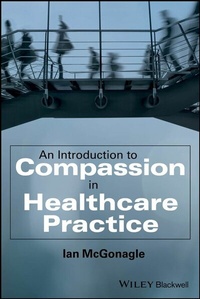
An Introduction to Compassion in Healthcare Practice
Description

Explore the concept of compassion as it applies to the field of healthcare and improving patient outcomes
An Introduction to Compassion in Healthcare Practice identifies the core components of being compassionate and self-compassionate, so that we may be in a better position to attend to our health and to engage in helping others. The foundation of this book is that if we have an intention to help, we are best served by understanding what 'helping' really means. This is addressed by reviewing compassion in a range of contexts and environments, including through an evolutionary science perspective. In this view, we are 'programmed' to be compassionate-but social forces may throw challenges or obstacles in our way. Also covered in this text are the challenges associated with being compassionate to the self, as well as care encounters with individuals in a clinical context and working in a clinical team.
Some of the ideas explored in An Introduction to Compassion in Healthcare Practice include:
- Artificial intelligence (AI) and compassion, covering ethical theories for AI alongside considerations surrounding consent and the role of touch
- The role of mindfulness in self-compassion, the challenges and benefits of self-compassion, perfectionism, our "inner critic", and shame
- Complex Adaptive Systems (CAS) in teamwork, lessons in developing compassionate teams, and the theory of Values-Based Practice
- Components of compassion-focused leadership and supervision, and the development of self-efficacy and competence
Providing a core conceptual framework for compassion in healthcare with guidance on how to explore various topics in greater depth, An Introduction to Compassion in Healthcare Practice is an essential reference for undergraduate nurses, midwives, allied health professionals, medical practitioners, and students in related programs of study.
More details
Other editions
Additional editions
Person
Dr. Ian McGonagle qualified as a Mental Health Nurse in 1986 and focused his clinical work on people with long-term mental health problems. He has since worked for the National Institute of Mental Health in England (NIMHE), the Centre for Clinical and Academic Workforce Innovation (CCAWI), and the Department of Health's Mental Health - 'New Ways of Working' team. He is currently an Associate Professor at the University of Lincoln.
Content
Preface xi
Biography xv
Acknowledgments xvii
Chapter 1 A Compassion Primer 1
Introduction 1
What is Compassion? 3
Compassion as an Emotion 4
Compassion as a State or a Trait? 5
Compassion as a Motivation 5
The Threat System 6
The Drive System 6
Safeness System 6
Attributes of Compassion 8
Care for Wellbeing 9
Sensitivity 9
Sympathy 10
Empathy 10
Approaching People in a Non-judgemental Manner 11
Tolerance of Distress 12
Engaging with Compassionate Attributes 12
Our Evolutionary Biology 13
The Biological Basis of Compassion 14
Evolution of the Brain 15
The Science of Compassion 15
Compassion in the Arts 17
What Is the Price of Experience? 17
Summary 18
References 20
Chapter 2 Compassion for the Environment: The Consequences for Health Workers and Patients (with Jess Bunn) 25
Complexity and Complex Adaptive Systems 26
Exercise 27
Compassion at the Macro Level: The Global Environment 29
What Are the Compassionate Responses We Can Take? 30
Compassion for the Environment 31
Compassion at the Meso Level: The Ward/ Team/Practice Environment 32
The IoM Core Competencies 36
Compassion at the Micro Level: The Person Orientated Practice Environment 36
Interoception and Neuroception 36
Digging Deeper Into Polyvagal Theory 38
How Does This Play Out in the Nervous System? 38
Developing our Compassionate Practice Environment 39
Case Studies 40
References 42
Chapter 3 Artificial Intelligence (AI) and Compassion - Can You Have Compassionate AI? (with Dr Michael Rowe) 47
Introduction 47
What is the Role of Compassion in AI? 49
Ethics and AI 50
An Overview of Ethical Theories for AI 50
Utilitarianism 50
Deontology 51
Principle Ethics 51
Autonomy 52
Beneficence 52
Nonmaleficence 52
Justice 52
Virtue Ethics 52
Care Ethics 53
Consent for Care Provided by AI Technology 54
Can AI Robotics Deliver 'Care'? 54
The Role of Touch in Care Giving 55
Case Study: What if AI Was More Compassionate than a Person? 57
Conclusion 59
Our Thoughts on Potential Benefits and Risks of AI in the Case Scenario 59
References 63
Chapter 4 Compassion, Self-compassion and Being Mindful 65
Introduction 65
Developing Self-Compassion 66
Narcissism and Self-Compassion 66
Self-Compassion 67
The Benefits of Being Self-Compassionate 69
The Challenges of Self-Compassion 70
Perfectionism 70
Our 'Inner Critic' 71
Shame 72
How to Develop Self-Compassion 73
Practicing Self-Compassion 75
Exercise 75
Resilience 76
Burnout 76
References 80
Chapter 5 Compassionate Encounters with Individuals 83
Introduction 83
Developing an Evolutionary Understanding of Compassion 84
Pro-Sociality 86
Working with Individuals - Empathy and Compassion 87
Attributes when Working Compassionately: A Focus on Motivation 91
What Is Motivation? 92
Case Study: 'Going for a Drink with Dave' 94
References 97
Chapter 6 Encounters with Groups: The Compassionate Team 103
Introduction 103
Professional Values 104
Developing Values-Based Practice 105
Values Based Practice 106
What Is VBP? 106
VIII Contents the Importance of Values in the Practice of Health and Social Care Workers 108
The Theory of Values- Based Practice 109
Compassion and Team Working 113
Complex Adaptive Systems (CAS) in Teamworking 114
What Are the Implications for Compassionate Practice? 115
The 'Meitheal' as a Cultural Expression of Compassionate Teamworking 116
Compassionate Teams: Lessons from Project Aristotle 117
Case Study 119
The Compassion Focused Multi-Disciplinary Team (CF MDT) 120
Meditation Content 120
Post Meditation Discussion 121
Questions 121
References 121
Chapter 7 Compassionate Support for People: The Role of Supervision 127
Introduction 127
What is Practice Supervision? 128
Developing Self-Efficacy and Competence 129
Supervision and the Issue of Identity 130
A Model of Supervision 132
Schwartz Rounds and Compassion 134
A Revised Approach to Compassionate Supervision 135
The Components of Compassion-Focused Supervision 138
Promoting Courage Through Supervision 139
Leadership and Supervision 139
Case Study Exercise 141
References 141
Chapter 8 Compassionate Leadership 147
Introduction 147
An Overview of Leadership in Health and Social Care 148
The Context of Healthcare Leadership 149
A Review of Existing Literature on Leadership Style 153
A Word on The 'Alpha' Narrative on Leadership 153
Compassionate Leadership 154
Leadership From an Evolutionary Perspective 154
Compassion, Resilience and Leadership 155
Is Personal Resilience the Answer? 156
'Real-World' Leadership 158
Compassionate Leadership and Social Relationships 159
Safety 160
Trustworthiness and Transparency 161
Peer Support 161
Collaboration and Mutuality 161
Team-Based Approach 162
Empowerment and Choice 162
Cultural, Historical and Gender Issues 162
Case Scenario: Compassionate Leadership in Healthcare 163
Background 163
Questions to Consider 164
References 166
Chapter 9 Teaching Compassion (with Lyndsay Khan) 171
Introduction 171
Courage 172
Wisdom 174
Can Compassion be Taught? 176
The Compassionate Educator 178
An Overview of Training in Compassion 179
Compassion and Caring 181
Teaching Mindfulness 182
Strategies for Teaching Compassion 182
Case Study 184
Teaching Compassion 184
Introduction 184
Case Study Scenario 184
Learning Objectives 184
Areas for Discussion 185
Learning Activities 185
Teaching Compassion: Case Study 2 185
Introduction 185
Case Study Scenario 186
Learning Objectives 186
Discussion Questions 186
Learning Activities 187
Conclusion 187
References 187
Index 193
CHAPTER 1
A Compassion Primer
INTRODUCTION
Being 'compassionate' is at the core of healthcare work, isn't it? There seems no place in our services for non-compassionate people. How could anyone possibly function in a hospital or any care giving setting, where their care was not based on the basic tenet of being 'compassionate'?
However, and sadly, we have too many cases (that continue to grow) where care has been found to be lacking in compassion. How can this happen? How can a healthcare worker go to work with the desire or the intention to be non-compassionate to patients? I don't believe they do. Yes, there have been professionals who have been found to act criminally and murderously. But while always regrettable and unfathomable, they are rare.
What is sadly less rare, is routine practice that is found to be uncaring.
Consider the following:
Mrs H was a dignified woman who lived in her own home until the age of 88, needing relatively little support. She was deaf and partially sighted and although she could still read large print, communicated through British Sign Language and deaf-blind manual.
Following a fall at home, Mrs H was admitted to the Elderly Care Assessment Unit with acute confusion. Whilst Mrs H was in hospital she had a number of falls, one of which broke her collar bone, but her niece was not informed. Several additional injuries and falls were not included on her discharge summary. Poor nursing records were kept and no personalised plans for her non-medical needs were developed and although at low risk of malnutrition at admission, Mrs H lost about 11 lbs during her first three months in hospital.
Communication with Mrs H was difficult, and her specific needs were not met. No activities or stimulation were provided for her. The discharge arrangements for this lady were confused and no effective handover to the care home was completed.
When Mrs H arrived at the care home, the Manager noted that she had numerous injuries, was soaked with urine and was dressed in clothing that did not belong to her which was held up with large paper clips. She had with her several bags of dirty clothing, (most of which did not belong to her), and few possessions of her own. Mrs H was bruised, dishevelled and confused. She was highly distressed and agitated and the following day was admitted to a local hospital due to concerns about her mental state and her physical condition.
Sadly, Mrs H died soon after in August 2010.
Source: Parliamentary and Health Service Ombudsman (2011).
The above is clearly shocking, but this desperate situation needs to be understood at a deeper level. To achieve this, we need to reflect on the reasons why there was seemingly, a lack of compassion or care. Do I believe those involved in the care of this poor lady wanted to be unkind and careless? No, I don't. I do however, think we, as workers for health, may fail to seek what lies behind the experiences of Mrs H. This book seeks to create opportunities for discussion and deeper understanding of how such care can result and to promote compassionate responses to minimise their future occurrence.
The Chief Nursing Officer (Department of Health/Chief Nursing Officer 2012) instigated the 6C's which eventually formed a direct response to the Francis Inquiry into care and treatment at Mid Staffordshire NHS Trust (Francis 2013). These 6C's (Care; Communication; Courage; Commitment; Competence and Compassion) have formed the basis of many healthcare student assignments ever since. They are drilled into the minds of nurses to form part of their value set (and by extension the value set of all healthcare providers, since there is nothing particular to the nursing profession in any of these C's). Following many conversations with nurses and students about the 6C's, I have asked 'what is "Compassion?"' I am returned with statements that liken compassion to being kind and being caring. In a general sense, these answers are not wrong - but maybe they are not right either.
We need clarity on what we mean by compassion in nursing and healthcare practice. A clearer expression on this critical concept is essential if we are to be the kind of workers we want to be - that is, (I assume) morally engaged, workers for health (Seedhouse 2009).
This book provides an introduction to a perspective on compassion. It is written in the full knowledge that there are many other texts that offer a comprehensive overview of the science of compassion (see Seppälä et al. 2017) and therapeutic approaches (e.g. Gilbert and Simos (2022)). I am particularly indebted to Paul Gilbert, from the Compassionate Mind Foundation (www.compassionatemind.co.uk) for many years of inspiration in cognitive approaches to helping people, most recently through his work on Compassion Focused Therapy (Gilbert and Simos 2022). I would urge those readers seeking deeper scholarship on compassion, to seek out writers and researchers such as these if you wish to sharpen your understanding of what this seemingly simple (but really rather challenging) word means for your practice.
WHAT IS COMPASSION?
Compassion can be considered to be 'a state of concern for suffering or unmet need of another, coupled with a desire to alleviate that suffering' (or need) (Goetz et al. 2010). Therefore, an individual must be aware of suffering (or a need) and engage a range of processes (psychological, biological and social) in order to respond. The biological processes (from an evolutionary perspective) are those that promote care giving and affiliation.
- Alternatively, Compassionate Mind Training (CMT) (Gilbert and Choden 2015) identifies compassion as 'a sensitivity to the suffering of the self and others with a commitment to relieve or prevent it'. What unites these two definitions is that being compassionate consists of: being aware of the need for compassionate care and
- the desire to do something about it.
COMPASSION AS AN EMOTION
Health and social care workers are required to enact compassion as per the asserted moral architecture of the NHS. The published NHS Values expressly point to the requirement for compassion to be displayed.
'We ensure that compassion is central to the care we provide and respond with humanity and kindness to each person's pain, distress, anxiety or need. We search for the things we can do, however small, to give comfort and relieve suffering. We find time for patients, their families and carers, as well as those we work alongside. We do not wait to be asked, because we care.'
Source: Taken from the NHS Constitution: Department of Health 2023 (Available at: The NHS Constitution for England - GOV.UK (www.gov.uk)
The central premise of this introduction to compassion is based on an understanding that saying we are compassionate and 'being' compassionate may be different and challenging. Gilbert (2010) has written that humans are a major source of suffering to self and others and indeed other life forms. Human history is replete with the horrors of torture, holocausts, slavery, sexual violence and much else. Compassion is the motivation that stands against this harmful side of us because it's focused on our understanding of the causes of suffering and seeking to alleviate and prevent it. Of course, in the health and social care services, patient suffering is rarely deliberate, but more typically arises from the failure to provide what individuals need for their relief of suffering. Here the inhibitors of compassion can be linked to broader problems of individual providers having a lack of insight and knowledge of what to do, how to employ empathy and prevent burnout. However, evidence suggests that many inhibitors of compassion are organisational and relate to poor management and overburdening services. Hence here compassion requires us to think about how we can operate within contexts that are highly pressurising commonly frustrating and sometimes unsupportive.
Because compassion moves towards suffering, towards the causes of suffering, then it means we are moving towards things that may be painful, distressing or sometimes stimulating rage in ourselves in the face of perceived (or actual) injustice. Engagement with suffering therefore, is not about stimulating a positive emotion, although positive emotions can arise when compassion has been successful. So, compassion may not always be a kind and pleasant emotion. The world is full of evidence where the suffering of people and circumstances are viewed in the abstract. People in need are called 'scroungers; bed blockers; attention seekers', our language can be less than compassionate. People claiming benefits, refugees fleeing persecution or in search of a better future for their family, or people in need of social housing may be on the receiving end of negative discourse from politicians, the media and the general public. We may be in a position to direct our help towards such people, but fail to do so (for a great many reasons).
COMPASSION AS A STATE OR A TRAIT?
A state of compassion is a response to another person at a particular moment in time. This would be true for any disposition such as empathy or kindness. This suggests that we can turn...
