

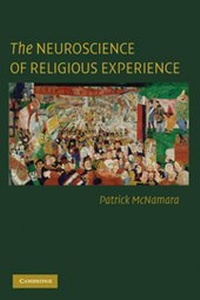
The Neuroscience of Religious Experience
1st Edition
Published on 1. November 2009
978-0-511-60200-9 (ISBN)
Description

Technical advances in the life and medical sciences have revolutionised our understanding of the brain, while the emerging disciplines of social, cognitive, and affective neuroscience continue to reveal the connections of the higher cognitive functions and emotional states associated with religious experience to underlying brain states. At the same time, a host of developing theories in psychology and anthropology posit evolutionary explanations for the ubiquity and persistence of religious beliefs and the reports of religious experiences across human cultures, while gesturing toward physical bases for these behaviours. What is missing from this literature is a strong voice speaking to these behavioural and social scientists - as well as to the intellectually curious in the religious studies community - from the perspective of a brain scientist.
Reviews / Votes
'... for anyone interested in the interface between science, religion and theology, especially the biological aspect of science, this book is a 'must read'.' ESSSAT News 'An authoritative and up-to-date resource on the neurobiology of the human spirit. McNamara has led the way in developing the new science of the biology of religion, a field that blends evolutionary biology with cultural anthropology, religious studies, neurocognition and neurochemistry. Scientists, clinicians, religious scholars, and the public will all profit from the cutting-edge findings contained within. McNamara does not commit the error of reducing religion to 'nothing-but' brain processes, but rather does justice to the richness and complexity of the human spirit. If you read one book on religion and the brain, it should be this one.' Robert A. Emmons, University of California, Davis 'The Neuroscience of Religious Experience is a stunning achievement and is essential reading for anyone interested in the scientific study of religion. Not only does it offer the most comprehensive synthesis of neurological, biological, and cognitive research on religion to date, but McNamara provides us with a novel and compelling theory that can make sense of this massive literature. McNamara tackles challenging questions with clarity, fresh insight, and uncompromising rigor. His broad interdisciplinary approach will be welcomed by all scholars. McNamara shows great respect for his subject and he is a worthy heir to William James.' Richard Sosis, University of Connecticut 'An excellent treatise on the relationship between the self, the brain, and religion. Clear, well written, and highly engaging. Necessary reading for anyone interested in the field of science and religion.' Andrew Newberg, University of Pennsylvania 'McNamara's book is must reading for everyone interested in the dialogue between religion and brain science.' Ilkka Pyysiaeinen, Helsinki Collegium for Advanced Studies 'Dr McNamara has provided the clearest account yet of the underlying neurological circuits and chemistry that are bound with religious experiences. Yet he has moved the field of neurotheology forwards by uniting this with an understanding of the neuroanatomy of the sense of self. He explains how religion itself has been a driving force for the development of human consciousness, which is a fascinating hypothesis.' Michael Trimble, University College London, Institute of Neurology 'Patrick McNamara shows the power of the neurosciences, evolutionary biology, and cognitive sciences to cast important new light on religion through a wide range of religious phenomena, interpreted with sympathetic objectivity and reserve. No scholar of religion, from any of the disciplines of religious studies, should ignore this accessible but scientifically detailed tour de force of creative analysis.' Robert Cummings Neville, Boston University, Past President of the American Academy of ReligionMore details
Language
English
Place of publication
Cambridge
United Kingdom
Publishing group
Cambridge University Press
Target group
Professional and scholarly
Illustrations
5 Tables, unspecified; 4 Line drawings, unspecified
File size
1,03 MB
ISBN-13
978-0-511-60200-9 (9780511602009)
Copyright in bibliographic data and cover images is held by Nielsen Book Services Limited or by the publishers or by their respective licensors: all rights reserved.
Schweitzer Classification
Other editions
Additional editions
Patrick McNamara
The Neuroscience of Religious Experience
Book
11/2009
Cambridge University Press
€90.51
Article exhausted; check for reprint
Person
Dr Patrick McNamara is an Associate Professor of Neurology at Boston University School of Medicine. He has previously edited the three-volume series on religion and the brain entitled Where God and Science Meet: How Brain and Evolutionary Studies Alter our Understanding of Religion. He is the recipient of a VA Merit Review Award for the study of Parkinson's Disease and several National Institutes of Health awards for the study of sleep mechanisms. Dr McNamara is a member of the American Psychological Association, Division 36, Psychology of Religion; the Society for the Scientific Study of Religion; the International Association for the Cognitive Science of Religion; and the Human Behavior and Evolution Society.
Content
1. Religion as seen through the eyes of the self; 2. On the self and the divided self; 3. Mechanisms and dynamics of decentering; 4. Neurology of the self; 5. Neurology of religious experiences; 6. Neurochemistry of religiosity; 7. Self-transformation as a key function of performance of religious practices; 8. Self-transformation through spirit possession; 9. God concepts and religious language; 10. Ritual; 11. Lifespan development of religiosity and the self; 12. The evolution of self and religion.
