

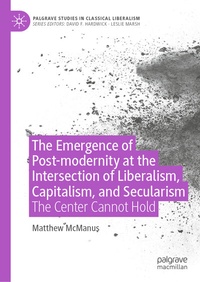
The Emergence of Post-modernity at the Intersection of Liberalism, Capitalism, and Secularism
Description

This book is a systematic and thorough analysis of what post-modernity is and how it emerged. It distinguishes between those who regard post-modernity as a theoretical approach and those who regard it as a culture, and argues that interpreting post-modernity as a culture is more fruitful. It discusses the three factors which led to its emergence, namely liberalism, capitalism, and secularism, highlighting their respective influence in generating the culture of post-modernity within neoliberal societies.
The volume provides a lengthy analysis of neoliberal post-modernity in practice, arguing that post-modernism is the cultural condition of neoliberal societies in the late 20 th and early 21 st centuries. Until recently it seemed that neoliberal post-modernity was here to stay, framed by relationship to freedom and time which stressed individual agency but precluded the possibility of historical change at the political level. However, the Great Recession of2008 opened new spaces for agitation and transformation which has resulted in the discordant politics of the last decade. This book will be of interest to scholars working in a number of fields, including economic policy, cultural analysis, political theory, and social critique.
Reviews / Votes
This book provides a very rich and detailed reading of the historical background to postmodernism and the philosophy of post-modernity. McManus takes us on an unexpected journey through the rise of liberalism and secularism to teach us about the philosophical underpinnings of post-modernity, offering us a surprising political conclusion that is sure to intrigue followers and critics alike. A truly remarkable book!-Matthew Flisfeder, associate professor of Rhetoric and Communications, The University of WinnipegMore details
Other editions
Additional editions
Person
Content
Chapter One: Distinguishing Post-Modern Philosophy and Post-Modern Culture.- Chapter Two: The Roots of Post-Modernity in Liberalism.- Chapter Three: The Roots of Post-Modernity in the Emergence of Capitalism.- Chapter Four: The Roots of Post-Modernity in Secularization.- Chapter Five: The Time Consciousness of Secular Post-Modernity.- Chapter Six : The Characteristics of Neoliberal Post-Modernity.
