

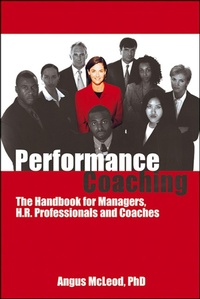
Performance Coaching
The Handbook for Managers, HR Professionals and Coaches
Published on 24. March 2003
312 pages
978-1-84590-633-7 (ISBN)
Description

Fast, accessible and clearly written, Performance Coaching is comprehensive and rich in real examples of real executives achieving real success in real-life situations. Even experienced coaches can find key tips and tools that will enhance their performance. " A practical book with wonderful tips, ideas and perspectives." Kriss Akabusi MBE MA
More details
Language
English
Place of publication
Carmarthen
United Kingdom
Target group
College/higher education
Professional and scholarly
File size
0,51 MB
ISBN-13
978-1-84590-633-7 (9781845906337)
Copyright in bibliographic data and cover images is held by Nielsen Book Services Limited or by the publishers or by their respective licensors: all rights reserved.
Schweitzer Classification
Other editions
Additional editions
Book
03/2003
Crown House Publishing
€26.90
Shipment within 3-4 weeks
Person
Professor Angus McLeod is pre-eminent in coaching technology and practice. His company Angus McLeod Associates trains coaching-skills for managers, leadership and management development 'learning journeys' and e-learning solutions as well as supplying 1-2-1 coaching. They also supply 'ASK MAX', the world's first e-mentoring service, a cost-effective way of getting top coaches into organizations for a whole day at a time, where they coach several people during each day. He is also Principal of the Coaching Foundation, an e-learning platform for practical learning of coaching skills. They cover both life- and executive-coaching as well as business development programmes for coaches as well. A wide range of blended-learning is offered including video-tutorials, webinars, series of small-group tutorials (online) and an e-learners community with monitoring and tutoring by professional coaches. Angus is also Visiting Professor of Coaching at Birmingham City University and a supervisor of PhD applied research in coaching and leadership.
Content
- Intro
- CONTENTS
- Acknowledgments
- Preface
- Chapter One Introduction
- Sources of inspiration
- Defining coaching
- Principal instruments of the coach
- Definitions of coaching
- Chapter Two Coaching Issues-New Skills
- Communication
- Who's the boss?
- Feedback
- Presenting
- Interpersonal conflict
- Stuck in a corner
- Inner conflicts
- Influencing
- Chapter Three Drivers for Change
- Internal dialogue and self-judgments
- Emotions
- Authenticity
- Negativity
- Limiting beliefs and rules
- Lacking compulsion to change
- Hierarchy of logical levels
- Walking the logical levels
- Motivation
- Chapter Four Coaching Contract and Practice
- Freelance coaching
- Employing external coaches: strengths and weaknesses
- Internal coaching provision
- To whom is the coach responsible?
- Selling coaching internally
- Letting coachees know what to expect before sessions
- First meeting: preparing for work
- Scene setting and recapping expectations
- Logistical needs for coaching sessions
- Behaviors during coaching sessions
- Neutrality
- Empathetic projection and expressed sympathy
- Pacing and leading
- Breathing
- Exquisite attention
- Sensing
- Instinct
- Reflecting back issues and language
- Ending sessions
- Out-of-session work for the coachee
- Subsequent sessions work for the coach
- Chapter Five Developmental Models
- Flexibility of coaching approach in organizations
- Clean language
- Symbolic modeling
- Trance
- Conversational coaching
- Provocative coaching
- The STEPPPA coaching method
- A footnote on personality profiling models
- Thinking preferences: filters on our world
- Chapter Six Coaching Development
- Mindsets for the coach
- Inner-game coaching
- Mindsets
- Underpinning values and beliefs
- Servant leadership
- People whispering
- Facilitation
- Coaching in groups
- Self-coaching
- Coach as coachee and observer
- Changing coaching parameters
- Two on one
- Practice groups
- Inspiration
- Academic resources
- Chapter Seven Other Coaching Tools and Interventions
- Questioning
- Context-free questioning
- Virtual timelines
- Metaphor and symbols
- Storytelling
- Chapter Eight Coaching Pitfalls and How to Avoid Them
- Psychological projection
- Countertransference and inspiration
- Separateness
- Interpretation
- Transference
- Coachee attraction
- Other issues in the coaching dynamic
- Ethics
- Keen beginnings
- Pressing on
- Chapter Nine Mentoring and E-Mentoring
- Mentoring
- E-Mentoring
- Glossary of Terms
- Appendix One A Brief History of Coaching by Steve Breibart
- Appendix Two Mindsets for the Coachee
- Appendix Three Mentee Feedback to Ask Max
- Appendix Four Code of Conduct and Methods for E-Mentors
- Appendix Five E-Mentor Questionnaire: An Example
- Appendix Six Web Resources
- Bibliography
- Further reading
- About the author
- Indexes
- 1. Linguistic tips
- 2. Tools
- 3. Main index
