

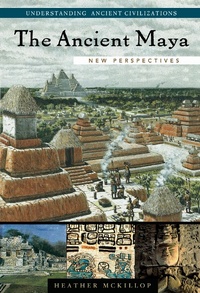
The Ancient Maya
New Perspectives
Published on 19. August 2004
472 pages
978-1-57607-697-2 (ISBN)
Description

Thanks to powerful innovations in archaeology and other types of historical research, we now have a picture of everyday life in the Mayan empire that turns the long-accepted conventional wisdom on its head.
Ranging from the end of the Ice Age to the flourishing of Mayan culture in the first millennium to the Spanish conquest in the 16th century, The Ancient Maya takes a fresh look at a culture that has long held the public's imagination. Originally thought to be peaceful and spiritual, the Mayans are now also known to have been worldly, bureaucratic, and violent. Debates and unanswered questions linger.
Mayan expert Heather McKillop shows our current understanding of the Maya, explaining how interpretations of "dirt archaeology," hieroglyphic inscriptions, and pictorial pottery are used to reconstruct the lives of royalty, artisans, priests, and common folk. She also describes the innovative focus on the interplay of the people with their environments that has helped further unravel the mystery of the Mayans' rise and fall.
Ranging from the end of the Ice Age to the flourishing of Mayan culture in the first millennium to the Spanish conquest in the 16th century, The Ancient Maya takes a fresh look at a culture that has long held the public's imagination. Originally thought to be peaceful and spiritual, the Mayans are now also known to have been worldly, bureaucratic, and violent. Debates and unanswered questions linger.
Mayan expert Heather McKillop shows our current understanding of the Maya, explaining how interpretations of "dirt archaeology," hieroglyphic inscriptions, and pictorial pottery are used to reconstruct the lives of royalty, artisans, priests, and common folk. She also describes the innovative focus on the interplay of the people with their environments that has helped further unravel the mystery of the Mayans' rise and fall.
More details
Series
Language
English
Place of publication
New York
United States
Publishing group
Bloomsbury Publishing Plc
Target group
Interest Age: From 7 to 17 years
Illustrations
65 bw illus
File size
10,91 MB
ISBN-13
978-1-57607-697-2 (9781576076972)
Copyright in bibliographic data and cover images is held by Nielsen Book Services Limited or by the publishers or by their respective licensors: all rights reserved.
Schweitzer Classification
Other editions
Additional editions
Book
08/2004
ABC-CLIO
€93.70
Shipment within 3-4 weeks
Content
- Cover
- Contents
- List of Maps
- Series Editor's Preface
- Preface
- References
- Acknowledgments
- Part 1 Introduction
- 1 Introduction
- Overview of Maya Civilization
- Paleoindian and Archaic Periods
- Preclassic Period
- Classic Period
- Postclassic Period
- Sources of Information on the Maya
- Journals
- Books
- Monographs
- CDs and Videos
- Research Programs
- Internet
- Field Schools
- References
- Part 2 Maya Civilization
- 2 Location of Maya Area and Environmental Setting
- General Natural and Cultural Subdivisions
- Cultural Subareas
- Topography
- Climate
- Flora
- Fauna
- Modern Environmental Changes
- References
- 3 Historical and Chronological Setting
- History of Research
- Nineteenth-Century Explorers
- The Twentieth-Century Institutional Period
- Late Twentieth-Century Sites
- Chronology of the Maya
- The Maya Calendar
- Type-Variety System of Pottery Classification
- Radiocarbon Dating
- Literary or Folkloric Evidence for Interpretation of Maya Civilization
- Mayan Hieroglyphs
- Creation Myth
- Ethnohistoric Accounts
- References
- 4 Origins, Growth, and Decline of the Maya Civilization
- Pre-Maya People: The Paleoindians
- Small Game Hunters of the Archaic
- The Early Preclassic Period
- The Earliest Maya on the Pacific Coast
- Middle Preclassic Expansion of Village Farming
- The Earliest Maya in the Lowlands: The Middle Preclassic (1000-300 b.c.)
- Later Middle Preclassic Period in the Maya Lowlands (700-300 b.c.)
- Antecedents to the Classic Maya Civilization: Olmec and Izapa
- The Rise of Lowland Maya Civilization in the Late Preclassic (300 b.c.-a.d. 300)
- The Origins of Maya Civilization
- Classic Maya Civilization
- Features of Classic Maya Civilization
- Development and Maximum Expansion of Maya Civilization
- Classic Maya Collapse
- Lessons from the Classic Maya Collapse
- The Terminal Classic Florescence in the Northern Maya Lowlands (a.d. 800-1000)
- Chichen Itza
- Mayapan and the Late Postclassic Maya
- The Spanish Conquest
- References
- 5 Economics
- Maya Workshops and Craft Production
- Household Production
- Classic Maya Workshops
- Case Study: Punta Ycacos Salt Works
- Case Study: Stone Tool Workshops at Colha, Belize
- Craft Production for Maya Royalty
- Systems of Subsistence
- Maya Trade
- Obsidian Trade
- Food Trade
- Trade within the Maya Lowlands
- Trade and Civilization
- Summary
- References
- 6 Social Organization and Social Structure
- Settlement Patterns
- Community Patterns
- Caves
- Regional Settlement Patterns
- Pan-Lowland Settlement Patterns
- Marriage and the Family
- Royal Maya Households
- The Common Maya Family
- Social Stratification
- Population Estimates
- Ancient Maya Demography
- Population Data for the Maya Lowlands
- References
- 7 Politics
- Political Structure
- The Preclassic Origins of Maya Kingship
- Politics and the Development of Kingship in the Early Classic Period
- Teotihuacan "Influence"
- Late Classic Politics and Warfare
- Warfare
- Military Organization
- Defensive Walls
- Weapons
- Political Geography
- References
- 8 Religion and Ideology
- Maya Ideology: The Popol Vuh
- Cosmology
- The Ball Game
- How the Ball Game Was Played
- Pantheon of Gods, Goddesses, and Other Supernatural Beings
- Rituals
- Evidence
- References
- 9 Material Culture
- Natural Resources
- Architecture and Urban Planning
- Temples
- Palaces
- Popol Na Council or "Mat" Houses
- Ball Courts
- Sacbes
- Maya Pottery
- Changing Styles of Maya Pottery
- Stone Tools and Other Artifacts
- Ground Stone Artifacts: Manos, Metates, and Jade
- Chipped Stone Artifacts: Obsidian and Chert
- Food Plants
- Minerals
- Mural Painting
- Bonampak Mural Paintings
- Naj Tunich Cave Paintings
- Chichen Itza Mural Painting
- Late Postclassic Murals
- Sculpture
- Paper Books
- Metalwork: Gold and Copper
- Wooden Artifacts
- Bone and Shell Artifacts
- Food Animals
- Death
- References
- 10 Intellectual Accomplishments
- Mathematics
- Calendars
- Reading a Date on a Classic Maya Stela
- Astronomy
- Sun and Moon
- Venus
- Stars
- The Ancient Maya Zodiac
- Astronomy and Maya Architecture
- Language and Writing
- Ancient and Modern Mayan Languages
- Maya Hieroglyphs
- History of Decipherment of Hieroglyphs
- Hieroglyphs on Maya Pottery
- Sample Maya Text with Translation
- References
- Part 3 Current Assessments
- 11 Major Controversies and Future Directions in the Study of the Maya Civilization
- The Classic Maya Collapse
- City-State, Empire, or Chiefdom
- Feeding the Masses
- Illegal Trade in Maya Antiquities
- Future Directions in Maya Archaeology
- References
- Glossary
- Chronology
- Resources for Further Study
- Internet References
- Index
- About the Author
