

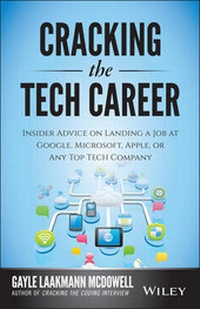
Cracking the Tech Career
Insider Advice on Landing a Job at Google, Microsoft, Apple, or any Top Tech Company
2nd Edition
Published on 2. September 2014
288 pages
978-1-118-96809-3 (ISBN)
Description

Become the applicant Google can't turn down
Cracking the Tech Career is the job seeker's guide tolanding a coveted position at one of the top tech firms. Afollow-up to The Google Resume, this book provides newinformation on what these companies want, and how to show them youhave what it takes to succeed in the role. Early planners willlearn what to study, and established professionals will discoverhow to make their skillset and experience set them apart from thecrowd. Author Gayle Laakmann McDowell worked in engineering atGoogle, and interviewed over 120 candidates as a member of thehiring committee - in this book, she shares her perspectiveson what works and what doesn't, what makes you desirable, and whatgets your resume saved or deleted.
Apple, Microsoft, and Google are the coveted companies in thecurrent job market. They field hundreds of resumes every day, andhave their pick of the cream of the crop when it comes to selectingnew hires. If you think the right alma mater is all it takes, youneed to update your thinking. Top companies, especially in the techsector, are looking for more. This book is the complete guide tobecoming the candidate they just cannot turn away.
* Discover the career paths that run through the top techfirms
* Learn how to craft the prefect resume and prepare for theinterview
* Find ways to make yourself stand out from the hordes of otherapplicants
* Understand what the top companies are looking for, and how todemonstrate that you're it
These companies need certain skillsets, but they also want agreat culture fit. Grades aren't everything, experience matters,and a certain type of applicant tends to succeed. Cracking theTech Career reveals what the hiring committee wants, and showsyou how to get it.
More details
Other editions
Additional editions
Gayle Laakmann McDowell
Cracking the Tech Career
Insider Advice on Landing a Job at Google, Microsoft, Apple, or any Top Tech Company
Book
10/2014
2nd Edition
Wiley
€24.00
Shipment within 15-20 days
Person
GAYLE LAAKMANN MCDOWELL worked as a software engineer forGoogle, Microsoft, and Apple, and has received offers from tenother top tech firms. She was one of Google's most activeinterviewers and served on Google's hiring committee. As thefounder/CEO of CareerCup.com, she now consults with tech companieson their hiring process and coaches candidates through theprocess.
Content
- Cracking the Tech Career: Insider Advice on Landing a Job at Google, Microsoft, Apple, or any Top Tech Company
- Contents
- Chapter 1: Life at the World's Greatest Tech Companies
- Life at Infinite Loop and Microsoft Way
- Youthful
- Perks
- Work/Life Balance
- Moving Up: Individual Contributors
- The Differences
- Big versus Little: Is a Start-Up Right for You?
- The Good
- The Bad
- The Ugly
- The Job Title: What Do You Want to Be When You Grow Up?
- What Do You Need?
- How Do You Enjoy Working?
- What Are You Good At?
- It's Not for Everyone
- Chapter 2: Advanced Positioning and Preparation
- A Positioning Framework
- Relevant Skills
- Prestige/Credibility
- Technical Connection
- Something Special
- University
- Elite Schools: What's in a Name?
- Majors
- Minors
- Learn to Code
- Get Project Experience
- Grade Point Average: Does It Matter and What Can You Do?
- Doctor Who? Getting to Know Professors
- Graduate School
- The True Cost of Graduate School
- Career Graduate Degrees
- Preparing Now
- The MBA
- What's an MBA Worth?
- Should You Get an MBA?
- Preparing Now
- Your "Story"
- Part-Time Graduate Programs
- Work Experience
- Make an Impact
- Become a [Half a] Generalist
- Size Matters: Quantify Your Impact
- Part-Time Jobs and Internships
- Extracurriculars
- Volunteering
- Start Something
- Questions and Answers
- Well, There Go the College Hires
- Will Code for Food
- The Un-manager
- Chapter 3: Getting in the Door
- The Black Hole: Online Job Submission
- Making the Best of the Black Hole
- Getting a Personal Referral
- The Informational Interview
- Reach Out to Recruiters
- Alumni Network and Beyond
- Career Fairs
- Professional Recruiters
- When Things Get Ugly: What to Watch Out For
- Additional Avenues
- Start Elsewhere
- Contract Roles
- Get Creative
- Official Groups
- Networking
- Attributes of a Good Network
- How to Build a Great Network
- Where to Network
- Social Networking
- Build an Online Portfolio
- Questions and Answers
- Applying from Afar
- Distant Relations
- Just Following Instructions
- Chapter 4: Resumes
- How Resumes Are Read
- Nine Hallmarks of a Powerful Resume
- 1. Short and Sweet
- 2. Accomplishment Oriented
- 3. Quantifiable Results
- 4. Well Targeted
- 5. Universally Meaningful
- 6. Professional
- 7. Well Formatted
- 8. List Your Projects and Extracurriculars
- 9. Be Different (If You Want)
- The Structure
- The Objective
- Summary (or Key Accomplishments)
- Work Experience
- Projects and Leadership Experience
- Education
- Skills
- Awards and Honors
- How Do I Shorten My Resume?
- Resume Action Words
- Questions and Answers
- It's a Family Matter
- On the Up and Up
- But Seriously
- Chapter 5: Deconstructing the Resume
- Resume #1
- Sample Resume
- Assessment
- Improved Resume
- Resume #2
- Sample Resume
- Assessment
- Improved Resume
- Resume #3
- Sample Resume
- Assessment
- Improved Resume
- Resume #4
- Sample Resume
- Assessment
- Improved Resume
- Chapter 6: Cover Letters
- Why a Cover Letter?
- The Three Types of Cover Letter
- Solicited Cover Letter
- Unsolicited Cover Letter/Cold Call Letter
- Broadcast Letter
- The Structure
- Part 1: Introduction
- Part 2: Who You Are
- Part 3: Why You Want the Position
- Five Traits of a Strong Cover Letter
- 1. Tailored
- 2. Supported with Evidence
- 3. Structured and Concise
- 4. Simple, Direct Writing
- 5. Professional
- The Daring A+ Cover Letter
- The Traditional A+ Cover Letter
- The So-So Cover Letter
- Questions and Answers
- New Form, Same Great Content
- Optional
- Additional Resources
- Chapter 7: References
- How References Are Used
- Whom You Should Select as a Reference
- Make a Good Reference Great
- When Things Go Wrong
- What If Your Bad Reference Is Your Former Boss?
- Questions and Answers
- Full Disclosure
- Chapter 8: Interview Prep and Overview
- Interview Questions
- The Tech Interview Culture
- Do Your Homework
- Company
- Interviewer Research
- Prepare Questions
- Working with Your Recruiter
- Getting the Recruiter on Your Side
- Communication and Behavior
- What Your Interviewer's Attitude Really Means
- Controlling the Interview
- Six Ways to Keep the Interviewer's Attention
- Projecting Confidence
- Special Interview Types
- The Phone Interview
- The Human Resources Screening Interview
- Follow-Up Interviews
- After the Interview
- The "Thank You" Note
- Following Up with Your Recruiter
- Dealing with Rejection
- Questions and Answers
- Run for the Hills
- Too Much Information or Just Enough?
- Playing Hard to Get
- Additional Resources
- Chapter 9: Define Yourself
- The Pitch
- Part 1: Introduction
- Part 2: Chronological Resume Walk-Through
- Part 3: What You're Doing Now
- Part 4: Extracurriculars
- Why Should We Hire You?
- Why Shouldn't We Hire You?
- Why Do You Want to Work Here?
- Why Are You Leaving Your Job?
- Where Do You See Yourself in Five Years?
- What Are Your Strengths?
- What Are Your Weaknesses?
- Layoffs, Firing, and Unemployment
- Layoffs
- Being Fired
- Unemployment
- Questions and Answers
- Barrier to Entry
- Just Joking
- Chapter 10: Behavioral Questions
- Evaluation
- Mastering the Content
- What Interviewers Look For
- Review Your Resume
- Preparation Grid
- Five Key Stories
- Mastering the Communication
- Nugget First
- Situation, Action, Result
- Common Mistakes
- Too Much "We," Not Enough "I"
- Simple Actions
- Where's the "Why"?
- Five Example Questions
- 1. Tell Me About a Time When You Gave a Presentation to a Group of People Who Disagreed with You
- 2. Tell Me About the Biggest Mistake You Made on a Past Project
- 3. Tell Me About a Time When You Had to Deal with a Teammate Who Was Underperforming
- 4. Tell Me About a Time When You had to Make a Controversial Decision
- 5. Tell Me About a Time When You had to Use Emotional Intelligence to Lead
- Questions and Answers
- Misleading Information
- Overly Specific
- Chapter 11: Problem Solving
- Types of Problem-Solving Questions
- Estimation Questions
- What They're Looking For
- How to Approach Estimation Questions
- How Many Books Are Sold Every Year in the United States?
- How Many Basketballs Would It Take to Fill a Basketball Gym?
- Example Questions
- Design Questions
- What They're Looking For
- How to Approach Design Questions
- Example Questions
- Brainteasers
- What They're Looking For
- How to Approach Brainteasers
- Example Questions
- Questions and Answers
- It's a Numbers Game
- The Great Unknown
- Additional Resources
- Chapter 12: The Programming Interview
- What's the Point?
- What's Expected-And What's Not
- How They Differ: Microsoft, Facebook, Google, Amazon, Yahoo, and Apple
- How to Prepare
- What If I Hear a Question I Know?
- Must-Know Data Structures, Algorithms, and Topics
- Memory Usage
- Coding Questions
- Step 1: Understand the Question
- Step 2: Draw an Example
- Step 3: Design a Brute Force Algorithm
- Step 4: Optimize the Brute Force
- Step 5: Understand the Code
- Step 6: Implement the Code
- Step 7: Test
- Algorithm Questions: Four Ways to Create an Algorithm
- Approach 1: Pattern Matching
- Approach 2: Simplify and Generalize
- Approach 3: Base Case and Build
- Approach 4: Data Structure Brainstorm
- Object-Oriented Design
- Scalability Questions
- Preparation
- How to Approach
- Testing Interviews
- Testing a Real-World Object
- Testing a Piece of Software
- Testing a Method
- Questions and Answers
- Too Much Prep, Too Little Time
- Know It All
- Misleading Information
- Additional Resources
- Chapter 13: Getting into Gaming
- The Culture: Is It All Fun and Games?
- Job Positions: What Can You Do?
- Software Engineering
- Production
- Art
- Design
- Other Roles
- College Candidates
- Don't Be Afraid of Entering Low
- Find Your Niche
- Create a Portfolio Website
- Get Out There
- Reaching Out and Getting In
- College and Professional Recruiting
- Online Networks
- Events
- Personality Fit
- Young at Heart
- Likable
- Creative/Imaginative
- Work Ethic
- Strong Communication Skills
- The Gaming Interview-Three Tips to Doing Well
- 1. Play the Game
- 2. Show Confidence (but Not Too Much)
- 3. Be Likable
- Questions and Answers
- Making the Jump
- Value Added
- It's the Little Things That Count
- Chapter 14: Women in Tech
- On Men and Allies
- The Harsh(ish) Reality of Being a Woman in Tech
- Variation Across the Industry
- Advice for Women from Women (and Allies)
- Mentors and Support Networks
- It's Okay to Be You
- It Has a Name: Imposter Syndrome
- Fight the Battles You Want
- Ask for Help
- Ask for More
- Find the Right Culture
- Leverage the Positive
- It's Friction, Not Obstacles
- Questions and Answers
- Misleading Information
- Maternity Leave
- Chapter 15: The Offer
- How to Evaluate an Offer
- Your Career Development
- The Financial Package
- The Happiness Factor
- How Can You Negotiate an Offer?
- Should You Negotiate?
- But What If the Company Hates Me for It?
- What Can You Negotiate?
- Answering Questions about Your Current Salary
- Negotiating the Nonnegotiable
- How to Negotiate
- Tricky Issues: Deadlines, Extensions, and Declining Offers
- Deadlines and Extensions
- Reneging
- Declining an Offer (and Building a Connection)
- Questions and Answers
- Au Revoir, Vacation Days
- Representative Representatives
- Big or Little
- Chapter 16: Crafting Your Career
- Define Your Career Path
- Plan Ahead
- A Little Something on the Side
- Being Great
- Be Great to Your Boss
- Know What the Criteria Are for Success
- Ask for Forgiveness, Not Permission
- Manage the Review Process
- 1. Make Your Successes Known
- 2. Track Your Accomplishments as You Go
- 3. Quantify the Results
- 4. Ask Early for Feedback-and Get It in Writing
- Play a Bit of Politics: Build Strong Relationships
- Identify a Mentor
- Promotions and Raises
- How to Get Promoted
- How to Negotiate a Raise
- How to Handle Rejection
- How and When to Quit
- Leave When It's Not Working
- Leave When You Stop Growing
- Leave When You Want to Quit
- How Soon Is Too Soon to Quit?
- How to Not Burn Bridges
- Should I Find a New Job First?
- Questions and Answers
- Shakespeare Can Write
- In Name Only
- Newbie Wants Out
- Chapter 17: On Luck, Leverage, and You
- Index
- End User License Agreement
