

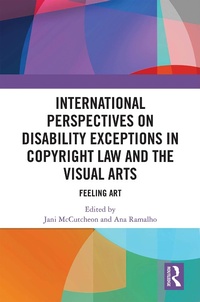
International Perspectives on Disability Exceptions in Copyright Law and the Visual Arts
Feeling Art
1st Edition
Published on 27. September 2020
272 pages
978-1-000-19347-3 (ISBN)
Description

This book provides an overview of disability exceptions to copyright infringement and the international and human rights legal framework for disability rights and exceptions. The focus is on those exceptions as they apply to visual art, while the book presents a comprehensive study of copyright's disability exceptions per se and the international and human rights law framework in which they are situated.
3D printing now allows people with a visual impairment to experience 3D reproductions of paintings, drawings and photographs through touch. At the same time, the uncertain application of existing disability exceptions to these reproductions may generate concerns about legal risk, hampering sensory art projects and reducing inclusivity and equity in cultural engagement by people with a visual impairment. The work adopts an interdisciplinary approach, with contributions from diverse stakeholders, including persons with disabilities, cultural institutions and the 3D printing industry. The book sketches the scene relating to sensory art projects. Experts in intellectual property, human rights, disability and art law then critically analyse the current legal landscape relating to disability access to works of visual art at both international and regional levels, as well as across a broad representative sample of national jurisdictions, and identify where legal reform is required.
This comparative analysis of the laws aims to better inform stakeholders of the applicable legal landscape, the legal risks and opportunities associated with sensory art and the opportunities for reform and best practice guidelines, with the overarching goal of facilitating international harmonisation of the law and enhanced inclusivity.
3D printing now allows people with a visual impairment to experience 3D reproductions of paintings, drawings and photographs through touch. At the same time, the uncertain application of existing disability exceptions to these reproductions may generate concerns about legal risk, hampering sensory art projects and reducing inclusivity and equity in cultural engagement by people with a visual impairment. The work adopts an interdisciplinary approach, with contributions from diverse stakeholders, including persons with disabilities, cultural institutions and the 3D printing industry. The book sketches the scene relating to sensory art projects. Experts in intellectual property, human rights, disability and art law then critically analyse the current legal landscape relating to disability access to works of visual art at both international and regional levels, as well as across a broad representative sample of national jurisdictions, and identify where legal reform is required.
This comparative analysis of the laws aims to better inform stakeholders of the applicable legal landscape, the legal risks and opportunities associated with sensory art and the opportunities for reform and best practice guidelines, with the overarching goal of facilitating international harmonisation of the law and enhanced inclusivity.
More details
Edition
1. Auflage
Language
English
Place of publication
London
United Kingdom
Publishing group
Taylor & Francis Ltd
Target group
College/higher education
Professional and scholarly
ISBN-13
978-1-000-19347-3 (9781000193473)
Copyright in bibliographic data and cover images is held by Nielsen Book Services Limited or by the publishers or by their respective licensors: all rights reserved.
Schweitzer Classification
Other editions
Additional editions
Jani McCutcheon | Ana Ramalho
International Perspectives on Disability Exceptions in Copyright Law and the Visual Arts
Feeling Art
Book
04/2022
1st Edition
Routledge
€65.50
Shipment within 15-20 days
Book
10/2020
Taylor & Francis
Unfortunately, price unknown
Available (delivery time upon request)
Jani McCutcheon | Ana Ramalho
International Perspectives on Disability Exceptions in Copyright Law and the Visual Arts
Feeling Art
Book
09/2020
1st Edition
Routledge
€206.60
Shipment within 15-20 days
Persons
Jani McCutcheon is Associate Professor in the Law School, University of Western Australia.
Ana Ramalho is Copyright Counsel at Google, and Guest Assistant Professor at Leiden University.
Ana Ramalho is Copyright Counsel at Google, and Guest Assistant Professor at Leiden University.
Content
1. Introduction Jani McCutcheon and Ana Ramalho
Part 1 - Social, Cultural and technical challenges of 3D printing 2D art works
2. Sensory Art Projects In Cultural Institutions Ann Blokland and Caine Chennat
3. Accessibility and Open GLAM Andrea Wallace
4. 3D Printing In Arts And Heritage Vivian Saaze
5. Something to Struggle For Fernando Torrente
6. Sensory Art from a 3D Printer's Perspective Noel Daemen
Part 2 - International Framework for Disability Rights and Exceptions
7. Disability Exceptions Under International Law and The International Human Rights Framework Joseph Lelliot and Paul Harpur
Part 3 - The EU Framework for Disability Rights and Exceptions
8. The EU Disability Exceptions Ana Ramalho
9. EU Disability Law and Policy and Access to Art Works through 3D Printing Lisa Waddington;
Part 4 - Mapping and Critiquing the legal Landscape;
10. Australia Jani McCutcheon;
11. United States Peter Karol;
12. Canada Lucie Guibault and Anthony Rosborough;
13. Brazil Sergio Branco;
14. The UK Sabine Jacques;
15. China Tianxiang He;
16. Costa Rica Andres Guadamuz;
17. Japan Simone Schroff;
18. New Zealand Lida Ayoubi;
19. Conclusion and policy recommendations Ana Ramalho and Jani McCutcheon;
Part 1 - Social, Cultural and technical challenges of 3D printing 2D art works
2. Sensory Art Projects In Cultural Institutions Ann Blokland and Caine Chennat
3. Accessibility and Open GLAM Andrea Wallace
4. 3D Printing In Arts And Heritage Vivian Saaze
5. Something to Struggle For Fernando Torrente
6. Sensory Art from a 3D Printer's Perspective Noel Daemen
Part 2 - International Framework for Disability Rights and Exceptions
7. Disability Exceptions Under International Law and The International Human Rights Framework Joseph Lelliot and Paul Harpur
Part 3 - The EU Framework for Disability Rights and Exceptions
8. The EU Disability Exceptions Ana Ramalho
9. EU Disability Law and Policy and Access to Art Works through 3D Printing Lisa Waddington;
Part 4 - Mapping and Critiquing the legal Landscape;
10. Australia Jani McCutcheon;
11. United States Peter Karol;
12. Canada Lucie Guibault and Anthony Rosborough;
13. Brazil Sergio Branco;
14. The UK Sabine Jacques;
15. China Tianxiang He;
16. Costa Rica Andres Guadamuz;
17. Japan Simone Schroff;
18. New Zealand Lida Ayoubi;
19. Conclusion and policy recommendations Ana Ramalho and Jani McCutcheon;
