

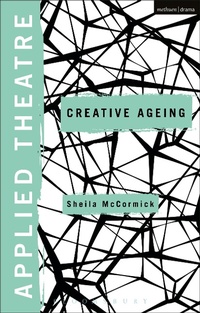
Applied Theatre: Creative Ageing
1st Edition
Published on 10. August 2017
272 pages
978-1-4742-3385-9 (ISBN)
Description

Applied Theatre: Creative Ageing examines the complex social, political and cultural needs of a diverse group in our society and asks how contemporary applied theatre responds to those needs. It allows an examination of innovative national and international practice in applied theatre that responds to the needs of older adults to encourage outcomes such as wellbeing and social inclusion. The book does this while also questioning how we, as a society, wish to respond to the complex needs of older adults and the process of ageing and how applied theatre practices can help us do so in a way that is both positive and inclusive.
In Part One Sheila McCormick reviews and historicises the practice of applied theatre with, for and by the elderly. It argues that pioneering applied theatre strategies are vital if the creative practice is to respond to the growing needs of older members of society, and reflects on particular cultural responses to ageing and the elderly.
The second part of the book is made up of essays and case studies from leading experts and practitioners from Britain, America and Australia, including consideration of applied theatre approaches to dementia, health, wellbeing, social inclusion and Alzheimer's disease.
In Part One Sheila McCormick reviews and historicises the practice of applied theatre with, for and by the elderly. It argues that pioneering applied theatre strategies are vital if the creative practice is to respond to the growing needs of older members of society, and reflects on particular cultural responses to ageing and the elderly.
The second part of the book is made up of essays and case studies from leading experts and practitioners from Britain, America and Australia, including consideration of applied theatre approaches to dementia, health, wellbeing, social inclusion and Alzheimer's disease.
More details
Series
Edition
1. Auflage
Language
English
Place of publication
London
United Kingdom
Publishing group
Bloomsbury Publishing PLC
Target group
Professional and scholarly
Illustrations
7 bw illus
ISBN-13
978-1-4742-3385-9 (9781474233859)
Copyright in bibliographic data and cover images is held by Nielsen Book Services Limited or by the publishers or by their respective licensors: all rights reserved.
Schweitzer Classification
Other editions
Additional editions
Book
02/2019
Methuen Drama
€50.60
Shipment within 15-20 days
Sheila McCormick
Applied Theatre: Creative Ageing
Book
08/2017
Methuen Drama
€148.80
Shipment within 15-20 days
Persons
Sheila McCormick is a lecturer in Performance at Salford University, UK. Her research interests include documentary, applied and political theatre.
Content
Part One
Chapter 1: Applied Theatre and Ageing: an Introduction
Chapter 2: Social engagement and arts practice with the elderly
Part Two
Chapter 3: Playful engagement: exploring the features of applied theatre approaches to engaging Individuals living with dementia, by Professor Michael Balfour, Julie Dunn, Kirsty Martin (Griffith University, Aus)
Chapter 4: Improvisational storytelling and the TimeSlips approach, by Professor Anne D Bastings (Wisconsin-Milwaukee University, USA)
Chapter 5: Creative well-being for people with dementia, by Dr Beth Luxmoore (Project Manager, Non-Pharmaceutical Intervention Project, Alzheimer Society, UK)
Chapter 6: The Care Home as a Creative Space: A Cultural Response to Dementia Care, by Professor Helen Nicholson (Royal Holloway, University of London, UK)
Chapter 7: The artist as change agent, by Clive Parkinson (Director for Arts and Health, Manchester School of Art, Manchester Metropolitan University, UK)
Chapter 8: Interview with Professor Mike Pearson, by Dr Sheila McCormick (Salford University, UK)
Notes on Contributors
Endnotes
Bibliography
Index
Chapter 1: Applied Theatre and Ageing: an Introduction
Chapter 2: Social engagement and arts practice with the elderly
Part Two
Chapter 3: Playful engagement: exploring the features of applied theatre approaches to engaging Individuals living with dementia, by Professor Michael Balfour, Julie Dunn, Kirsty Martin (Griffith University, Aus)
Chapter 4: Improvisational storytelling and the TimeSlips approach, by Professor Anne D Bastings (Wisconsin-Milwaukee University, USA)
Chapter 5: Creative well-being for people with dementia, by Dr Beth Luxmoore (Project Manager, Non-Pharmaceutical Intervention Project, Alzheimer Society, UK)
Chapter 6: The Care Home as a Creative Space: A Cultural Response to Dementia Care, by Professor Helen Nicholson (Royal Holloway, University of London, UK)
Chapter 7: The artist as change agent, by Clive Parkinson (Director for Arts and Health, Manchester School of Art, Manchester Metropolitan University, UK)
Chapter 8: Interview with Professor Mike Pearson, by Dr Sheila McCormick (Salford University, UK)
Notes on Contributors
Endnotes
Bibliography
Index
