

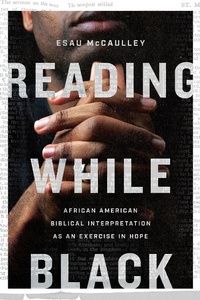
Reading While Black
Description

Outreach Resources of the Year, Christianity Today Book Award, The Gospel Coalition Book Award
Biblical Interpretation from the Black Church Tradition
Growing up inthe American South, Esau McCaulley knew firsthand the ongoing struggle between despair and hope that marks the lives of some in the African American context. A key element in the fight for hope, he discovered, has long been the practice ofBible reading and interpretation that comes out of traditional Black churches. This ecclesial tradition is often disregarded or viewed with suspicion by much of the wider church and academy, but it has something vital to say.
Reading WhileBlack is a personal and scholarly testament to the power and hope of Black biblical interpretation. At a time in which some within the African American community are questioning the place of the Christian faith in the struggle for justice, New Testament scholar McCaulley argues that reading Scripture from the perspective of Black church tradition is invaluable for connecting with a rich faith history and addressing the urgent issues of our times. In Reading While Black, Esau McCaulley:
- Advocates for a model of interpretation that involves an ongoing conversation between the collective Black experience and the Bible,
- Gives pride of place to the particular questions coming out of Black communities,
- Gives the Bible space to respond by affirming, challenging, and at times, reshaping Black concerns, and
- Demonstrates this model with studies on how Scripture speaks to topics often overlooked by white interpreters, such as ethnicity, political protest, policing, and slavery.
Ultimately McCaulley calls the church to a dynamic theological engagement with Scripture, in which Christians of diverse backgrounds dialogue with their own social location as well as the cultures of others.Reading While Black moves the conversation forward.
More details
Other editions
Additional editions
Person
Esau McCaulley (PhD, St. Andrews) is associate professor of New Testament at Wheaton College and a contributing opinion writer for the New York Times. He is the author of Reading While Black and Sharing in the Son's Inheritance, as well as the children's book Josie Johnson's Hair and the Holy Spirit. He lives in Wheaton, Illinois, with his wife and four children.
Content
Acknowledgments 1. The South Got Somethin' to Say: Making Space for Black Ecclesial Interpretation 2. Freedom Is No Fear: The New Testament and a Theology of Policing 3. Tired Feet, Rested Souls: The New Testament and the Political Witness of the Church 4. Reading While Black: The Bible and the Pursuit of Justice 5. Black and Proud: The Bible and Black Identity 6. What Shall We Do With This Rage? The Bible and Black Anger 7. The Freedom of The Slaves: Pennington'sTriumph Conclusion: An Exercise in Hope Bonus Track: Further Notes on the Development of Black Ecclesial Interpretation Discussion Guide Bibliography Author Index Scripture Index
