

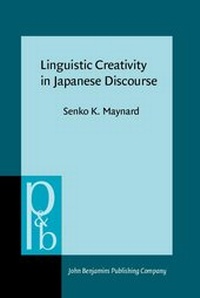
Linguistic Creativity in Japanese Discourse
Exploring the multiplicity of self, perspective, and voice
1st Edition
Published on 13. July 2007
XVI, 356 pages
978-90-272-9228-5 (ISBN)
Description

Using theoretical concepts of self, perspective, and voice as an interpretive guide, and based on the Place of Negotiation theory, this volume explores the phenomenon of linguistic creativity in Japanese discourse, i.e., the use of language in specific ways for foregrounding personalized expressive meanings. Personalized expressive meanings include psychological, emotive, interpersonal, and rhetorical aspects of communication, encompassing broad meanings such as feelings of intimacy or distance, emotion, empathy, humor, playfulness, persona, sense of self, identity, rhetorical effects, and so on. Nine analysis chapters explore the meanings, functions, and effects observable in the indices of linguistic creativity, focusing on discourse creativity (style mixture, borrowing others' styles, genre mixture), rhetorical creativity (puns, metaphors, metaphors in multimodal discourse), and grammatical creativity (negatives, demonstratives, first-person references). Based on the analysis of verbal and visual data drawn from multiple genres of contemporary cultural discourse, this work reveals that by creatively expressing in language we share our worlds from multiple perspectives, we speak in self's and others' many voices, and we endlessly create personalized expressive meanings as testimony to our own sense of being.
More details
Other editions
Additional editions
Senko K. Maynard
Linguistic Creativity in Japanese Discourse
Exploring the multiplicity of self, perspective, and voice
Book
07/2007
John Benjamins Publishing Co
€116.60
Shipment within 10-15 days
Person
Content
- Linguistic Creativity in Japanese Discourse
- Editorial page
- Title page
- LCC data
- Dedication
- Table of contents
- Preface and acknowledgments
- I. Preliminaries
- 1. Introduction
- 1. Introductory remarks: creativity in language and discourse
- 2. Creativity, language, and thought
- 3. Creating personalized expressive meanings
- 4. Theoretical framework: the place of negotiation theory
- 5. Methodology and interpretive approaches
- 6. Data
- 7. Organization of the book
- 2. Background
- 1. Studies on linguistic creativity
- 2. Linguistic creativity in Japanese rhetoric and culture
- 3. Linguistic creativity and rhetorical views toward language and discourse
- 3. Approaches
- 1. Self and multiple selves
- 2. Self and linguistic subjectivity
- 3. Perspective and perspectivization
- 4. Multiple voices and intertextuality
- 5. Linguistic creativity: a source for realizing selves and identities
- II. Discourse creativity: Styles and genres
- 4. Style mixture and the use of rhetorical sentences
- 1 Introduction: creative use of style mixture
- 2 Background
- 3 Basic styles
- 4 Mixing the emotive da style
- 5 Mixing the emotive desu/masu style
- 6 Mixing the supra-polite style
- 7 Mixing rhetorical sentences
- 8 Reflections: Speaking in multiple voices
- 5. Borrowing others' styles and manipulating styles-in-transit
- 1. Introduction
- 2. Background
- 3. Borrowing others' styles
- 4. Styles-in-transit: Concurrent styles and mojiri
- 5. Reflections: Presenting selves through styles
- 6. Genre mixture between conversation and text
- 1. Introduction: Creative use of genre mixture
- 2. Background: quotation and dialogicality
- 3. Sentence-final mitaina: acting out the conversation
- 4. Conversation as a modifier
- 5. Conversational commentary in text
- 6. Reflections: Manipulating multiple voices and selves
- III. Rhetorical creativity: Humor and figures
- 7. Puns and intertextuality
- 1. Introduction: Linguistic creativity and playfulness
- 2. Background: On puns and humor
- 3. Types of puns
- 4. Puns in satire
- 5. Puns in conversation
- 6. Puns in advertising
- 7. Intertextual puns: playing with the prior text
- 8. Reflections: playing with multiple voices and perspectives in and across discourse
- 8. Mitate, futaku, and the macro-metaphor
- 1. Introduction: Metaphors and rhetorical effects
- 2. Background
- 3. Mitate and futaku
- 4. The flower/blossom macro-metaphor as a cultural icon
- 5. The yuusuge flower in a poem
- 6. The theatrical flower in a Noh manual
- 7. The flower in a popular song
- 8. The cherry blossom story in an essay
- 9. Reflections: metaphor, culture, and linguistic creativity
- 9. Metaphors in multimodal discourse
- 1. Introduction
- 2. Background: multimodal approaches to discourse
- 3. Visual images in an essay
- 4. Metaphorical framing of "silence"
- 5. Visual metaphorization of "freedom"
- 6. Multilevel metaphors in a singing spectacle
- 7. Reflections: presenting multiple perspectives in metaphorical discourse
- IV. Grammatical creativity: Sentences and phrases
- 10. Negatives for non-negative effects
- 1. Introduction: negating creatively
- 2. Background: on the use of negatives
- 3. From contrast to denial
- 4. Expressive functions of negatives in advertising and poetry
- 5. Expressive functions of negatives in novels
- 6. Reflections: grammar as a source for linguistic creativity
- 11. Demonstratives and the perspectivizationof discourse worlds
- 1. Introduction: more than physical locations
- 2. Background: on demonstratives in discourse
- 3. Between ko-series demonstratives and so-series demonstratives
- 4. Discourse functions of ko-, so-, and a-series demonstratives
- 5. Ko-series demonstratives: emotive proximity and narrative perspectives
- 6. The world of ko and the world of so
- 7. Anaphora, cataphora, and the boundaries of discourse
- 8. A-series demonstratives: emotivity and the perspectivized appearance
- 9. Reflections: locating discourse worlds in emotive places
- 12. First-person references and the perspectivization of multiple selves
- 1. Introduction: linguistic creativity and the presentation of selves
- 2. Background: first-person references in cognitive approaches
- 3. First-person references in Japanese discourse
- 4. From self as locutionary agent to self-identifying objectified self
- 5. Jibun: The presentation of reflexively projected self
- 6. Reflections: identifying divided and embedded selves
- V. Reflections
- 13. Linguistic creativity in Japanese discourseand beyond
- 1. Linguistic creativity, expressivity, and identity
- 2. Linguistic creativity and cultural context
- 3. Nihonjinron, criticism, and the practice of Japanese discourse
- 4. Linguistic creativity and linguistic theory
- Appendix: Presentation of data in Japanese orthography
- Notes
- References
- Data references
- Author index
- Subject index
- The series Pragmatics & Beyond New Series
