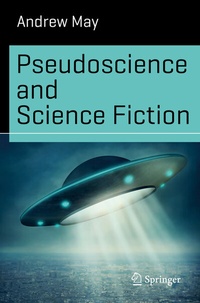
Pseudoscience and Science Fiction
Description

Aliens, flying saucers, ESP, the Bermuda Triangle, antigravity . are we talking about science fiction or pseudoscience? Sometimes it is difficult to tell the difference.
Both pseudoscience and science fiction (SF) are creative endeavours that have little in common with academic science, beyond the superficial trappings of jargon and subject matter. The most obvious difference between the two is that pseudoscience is presented as fact, not fiction. Yet like SF, and unlike real science, pseudoscience is driven by a desire to please an audience - in this case, people who "want to believe". This has led to significant cross-fertilization between the two disciplines. SF authors often draw on "real" pseudoscientific theories to add verisimilitude to their stories, while on other occasions pseudoscience takes its cue from SF - the symbiotic relationship between ufology and Hollywood being a prime example of this.
This engagingly written, well researched and richly illustrated text explores a wide range of intriguing similarities and differences between pseudoscience and the fictional science found in SF.
Andrew May
has a degree in Natural Sciences from Cambridge University and a PhD in astrophysics from Manchester University. After many years in academia and the private sector, he now works as a freelance writer and scientific consultant. He has written pocket biographies of Newton and Einstein, as well as contributing to a number of popular science books. He has a lifelong interest in science fiction, and has had several articles published in Fortean Times magazine
Reviews / Votes
"Pseudoscience and Science Fiction is as engaging as it is informative. May handles his historical subject matter commendably with well-researched, academic prose that remains easily accessible and fun to read. The histories of the two titular fields are explored in depth, and the connections between them are well-illuminated. . recommend it to anyone interested in science fiction, history, pseudoscience, pop culture, or the interplay between these topics." (Eric Cline, AIPT!, adventuresinpoortaste.com, August, 2018)
"In this book Andrew May . examines the influence that 'pseudoscience', i.e. Fortean phenomena and the paranormal, have had on science fiction and vice versa. . it will make a useful introduction to those not familiar with the topics involved and is illustrated with some very striking colour illustrations of book and magazine covers." (Peter Rogerson, The Magonia Blog, pelicanist.blogspot.de, November, 2016)
"May does an excellent job in presenting to us this strange two-way relationship, providing a real service both in understanding some of the roots of science fiction and the nature of pseudoscience. Recommended." (Brian Clegg, Popular Science, popsciencebooks.blogspot.de, October, 2016)
More details
Other editions
Additional editions