

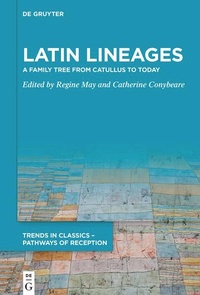
Latin Lineages
Description

This book traces lineages of intertextuality and reception between Latin poets of the first century BC with prose authors of the second century BC and their later reception in English literature.
The authors of each chapter explore how writers like Catullus or Vergil, Horace or Apuleius engage intertextually with each other and are themselves subject to the reception of later periods. Recurring strands like a focus on philosophy (notably Epicureanism) and history (notably Roman history and gender politics) can be traced into more modern periods, where authors as distinctive as Alexander Pope, Italian fascists or queer adaptors of Latin poetry continue to explore the same challenges as their Roman ancestors by returning again and again to these ancient texts and similar themes of reception.
Its readers will be able to track recurring themes through Latin authors who read their predecessors and are themselves objects of reception from antiquity to the modern world. While each chapter is a standalone study of a specific Latin author, the book showcases the shapes and forms in which reception can be studied, ranging from close intertextual readings and learned allusions to playful creative engagements with and homages to these Roman authors.
More details
Other editions
Additional editions
Persons
Regine May , University of Leeds, Leeds, UK; Catherine Conybeare , Bryn Mawr College, Pennsylvania, USA.
