


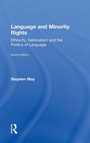
Language and Minority Rights
Ethnicity, Nationalism and the Politics of Language
2nd Edition
Published on 17. June 2013
448 pages
978-1-136-83707-4 (ISBN)
Description

The second edition addresses new theoretical and empirical developments since its initial publication, including the burgeoning influence of globalization and the relentless rise of English as the current world language. May's broad position, however, remains largely unchanged. He argues that the causes of many of the language-based conflicts in the world today still lie with the nation-state and its preoccupation with establishing a 'common' language and culture via mass education. The solution, he suggests, is to rethink nation-states in more culturally and linguistically plural ways while avoiding, at the same time, essentializing the language-identity link. This edition, like the first, adopts a wide interdisciplinary framework, drawing on sociolinguistics, applied linguistics, sociology, political theory, education and law. It also includes new discussions of cosmopolitanism, globalization, the role of English, and language and mobility, highlighting the ongoing difficulties faced by minority language speakers in the world today.
Reviews / Votes
"This is a masterful book-perhaps the most comprehensive, nuanced, and detailed treatment of minority language rights on an international scale in recent years. Clear, balanced, cogently argued, and remarkable in its depth and scope, Stephen May's Language and Minority Rights represents a major contribution to both scholarship and practice in the field."- Teresa McCarty, Alice Wiley Snell Professor of Education Policy Studies, Arizona State University"This interdisciplinary volume presents a provocative, comprehensive analysis of issues related to linguistic pluralism.... May addresses arguments about ethnicity and nationalism, social and political theory, education, law, and history as well as the sociology of language and sociolinguistics. A wealth of examples drawn from communities world-wide illustrates his points. Accessibly written and extensively referenced, Language and Minority Rights is an excellent resource for students, teachers and researchers in the fields of anthropology, sociology, sociolinguistics, political science and education."- Erica McClure Anthropology & Education Quarterly 2003 "This is a very important book and should be required reading for students, scholars, policy makers and others interested in linguistic pluralism." - CHOICE
More details
Edition
2nd edition
Language
English
Place of publication
London
United Kingdom
Publishing group
Taylor & Francis Ltd
Target group
College/higher education
Edition type
Revised edition
File size
1,62 MB
ISBN-13
978-1-136-83707-4 (9781136837074)
Copyright in bibliographic data and cover images is held by Nielsen Book Services Limited or by the publishers or by their respective licensors: all rights reserved.
Schweitzer Classification
Other editions
Additional editions
Book
11/2011
2nd Edition
Routledge
€233.20
Shipment within 10-20 days

Book
11/2011
2nd Edition
Routledge
€78.30
Shipment within 10-20 days
Person
Stephen May is Professor of Education in the School of Critical Studies in Education, Faculty of Education, University of Auckland, New Zealand
Content
CONTENTS
Preface to the 2nd Edition
Preface to the 1st edition
INTRODUCTION
Language ecology
The politics of language
The nation-state model
Linguistic human rights
Critical sociolinguistics
Overview
Prospects for change
Chapter 1: THE DENUNCIATION OF ETHNICITY
Academic denunciations of ethnicity
Resituating ethnicity in the era of globalization
Ethnicity and modernity
Ethnicity as primordial
Ethnicity as constructed
Ethnicity as intentional
Hybridity: the postmodernist politics of identity
Limits to the social construction of ethnicity
Finding common ground - ethnicity, habitus, and field
Ethnies
Chapter 2: NATIONALISM AND ITS DISCONTENTS
Linguistic nationalism
The will to nationhood
The modern (nation-)state
The modernists
Limits of the modernist account
Ethno-symbolic accounts of nationalism
Dominant ethnies
The construction of sociological minorities
Chapter 3: LIBERALISM AND MULTICULTURALISM
The pluralist dilemma
Defending liberal democracy
Critiquing liberal democracy
The cosmopolitan alternative
Rethinking liberal democracy
Chapter 4: LANGUAGE, IDENTITY, RIGHTS, AND REPRESENTATION
Language and identity
Identity in language
Language and culture
Language, culture and politics
Language decline: the death of Irish?
'Resigned language realism': is language revival just flogging a dead horse?
Re-evaluating language shift
Linguistic markets and symbolic violence
Vive la France: the construction of la langue legitime
Legitimating and institutionalizing minority languages
Chapter 5: LANGUAGE, EDUCATION AND MINORITY RIGHTS
Educating for the majority
Educating for the minority
Minority group responses to language education policies
Bridging the gap between policy and practice
Minority language and education rights in international law
Chapter 6: MONOLINGUALISM, MOBILITY AND THE PRE-EMINENCE OF ENGLISH
English as global lingua franca
The normative power of monolingualism
The problem with history
The problem with instrumentalism
The problem with bilingual education
'Doesn't anyone speak English around here?' The US 'English Only' movement
Chapter 7: THE RISE OF REGIONALISM: RE-INSTANTIATING MINORITY LANGUAGES
Quebec: safeguarding French in a sea of English
Catalonia: the quest for political and linguistic autonomy
Wales: the development of a bilingual state in a 'forgotten' nation
Chapter 8: INDIGENOUS RIGHTS: SELF-DETERMINATION, LANGUAGE AND EDUCATION
Indigenous peoples, self-determination, and international law
Indigenous peoples and national law
Indigenous language and education rights
Aotearoa/New Zealand: a tale of two ethnicities
Chapter 9: RE-IMAGINING THE NATION-STATE
Addressing constructivism
Tolerability and the crux of majority opinion
Polyethnic language and education rights: Pasifika in Aotearoa/New Zealand
The challenge of multiculturalism
Towards a more pluralist conception of language rights
BIBLIOGRAPHY
Notes
Preface to the 2nd Edition
Preface to the 1st edition
INTRODUCTION
Language ecology
The politics of language
The nation-state model
Linguistic human rights
Critical sociolinguistics
Overview
Prospects for change
Chapter 1: THE DENUNCIATION OF ETHNICITY
Academic denunciations of ethnicity
Resituating ethnicity in the era of globalization
Ethnicity and modernity
Ethnicity as primordial
Ethnicity as constructed
Ethnicity as intentional
Hybridity: the postmodernist politics of identity
Limits to the social construction of ethnicity
Finding common ground - ethnicity, habitus, and field
Ethnies
Chapter 2: NATIONALISM AND ITS DISCONTENTS
Linguistic nationalism
The will to nationhood
The modern (nation-)state
The modernists
Limits of the modernist account
Ethno-symbolic accounts of nationalism
Dominant ethnies
The construction of sociological minorities
Chapter 3: LIBERALISM AND MULTICULTURALISM
The pluralist dilemma
Defending liberal democracy
Critiquing liberal democracy
The cosmopolitan alternative
Rethinking liberal democracy
Chapter 4: LANGUAGE, IDENTITY, RIGHTS, AND REPRESENTATION
Language and identity
Identity in language
Language and culture
Language, culture and politics
Language decline: the death of Irish?
'Resigned language realism': is language revival just flogging a dead horse?
Re-evaluating language shift
Linguistic markets and symbolic violence
Vive la France: the construction of la langue legitime
Legitimating and institutionalizing minority languages
Chapter 5: LANGUAGE, EDUCATION AND MINORITY RIGHTS
Educating for the majority
Educating for the minority
Minority group responses to language education policies
Bridging the gap between policy and practice
Minority language and education rights in international law
Chapter 6: MONOLINGUALISM, MOBILITY AND THE PRE-EMINENCE OF ENGLISH
English as global lingua franca
The normative power of monolingualism
The problem with history
The problem with instrumentalism
The problem with bilingual education
'Doesn't anyone speak English around here?' The US 'English Only' movement
Chapter 7: THE RISE OF REGIONALISM: RE-INSTANTIATING MINORITY LANGUAGES
Quebec: safeguarding French in a sea of English
Catalonia: the quest for political and linguistic autonomy
Wales: the development of a bilingual state in a 'forgotten' nation
Chapter 8: INDIGENOUS RIGHTS: SELF-DETERMINATION, LANGUAGE AND EDUCATION
Indigenous peoples, self-determination, and international law
Indigenous peoples and national law
Indigenous language and education rights
Aotearoa/New Zealand: a tale of two ethnicities
Chapter 9: RE-IMAGINING THE NATION-STATE
Addressing constructivism
Tolerability and the crux of majority opinion
Polyethnic language and education rights: Pasifika in Aotearoa/New Zealand
The challenge of multiculturalism
Towards a more pluralist conception of language rights
BIBLIOGRAPHY
Notes
