


Comparative Policing Issues
The British and American Experience in International Perspective
1st Edition
Published on 31. March 2023
244 pages
978-1-000-85489-3 (ISBN)
Description

Originally published in 1990, Comparative Policing Issues was the first introductory text to consider key issues in the policing of modern societies from an international, comparative perspective.
The author begins with a discussion of policing itself and considers how the modern police force has emerged. Separate sections then focus on France and the Netherlands as examples of Western European societies: Canada and Hong Kong as influenced by the colonial tradition; Japan as an Eastern capitalist society; and the USSR, China and Cuba as contrasting examples of communist police systems. These and other countries are then considered in terms of the relationship between the police and the communities they 'serve'.
Critical issues addressed include the following: Are communist and capitalist systems of policing significantly different? What lessons are to be learnt from Japan, with its low crime rate? How accountable are the police in different societies, and to whom? To what extent is the 'character' of the police in any society determined by the wider culture, and social and political structure of that society? How practicable is it to transfer ideas about policing from one society to another?
The lowering of barriers within the European community and the return of Hong Kong to China are just two examples of the need for a comparative analysis of policing. Students of criminology and police studies, and police and others working in the criminal justice system will find this book an invaluable resource.
The author begins with a discussion of policing itself and considers how the modern police force has emerged. Separate sections then focus on France and the Netherlands as examples of Western European societies: Canada and Hong Kong as influenced by the colonial tradition; Japan as an Eastern capitalist society; and the USSR, China and Cuba as contrasting examples of communist police systems. These and other countries are then considered in terms of the relationship between the police and the communities they 'serve'.
Critical issues addressed include the following: Are communist and capitalist systems of policing significantly different? What lessons are to be learnt from Japan, with its low crime rate? How accountable are the police in different societies, and to whom? To what extent is the 'character' of the police in any society determined by the wider culture, and social and political structure of that society? How practicable is it to transfer ideas about policing from one society to another?
The lowering of barriers within the European community and the return of Hong Kong to China are just two examples of the need for a comparative analysis of policing. Students of criminology and police studies, and police and others working in the criminal justice system will find this book an invaluable resource.
More details
Series
Edition
1. Auflage
Language
English
Place of publication
London
United Kingdom
Publishing group
Taylor & Francis Ltd
Target group
College/higher education
Professional and scholarly
ISBN-13
978-1-000-85489-3 (9781000854893)
Copyright in bibliographic data and cover images is held by Nielsen Book Services Limited or by the publishers or by their respective licensors: all rights reserved.
Schweitzer Classification
Other editions
Additional editions
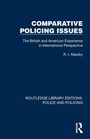
R. I. Mawby
Comparative Policing Issues
The British and American Experience in International Perspective
Book
03/2025
1st Edition
Routledge
€46.70
Shipment within 10-20 days
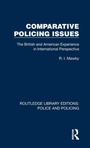
R. I. Mawby
Comparative Policing Issues
The British and American Experience in International Perspective
Book
03/2023
1st Edition
Routledge
€133.10
Shipment within 10-20 days
Person
R. I. Mawby
Content
Preface. 1. A Comparative Analysis of Policing 2. The Emergence of Modern Policing Systems 3. France: the Continental System par Excellence 4. The Netherlands: Variations on a Theme? 5. Canada: Between Britain and the United States 6. Hong Kong: Colonial Capitalism 7. Japan: Gemeinschaft Capitalism 8. USSR: Centralized Communism 9. China: The People's Police? 10. Cuba: Between the USSR and China 11. Community Involvement in Policing: a Comparative Analysis 12. Policing Systems: a Retrospective Analysis. Notes. References. Index.
