

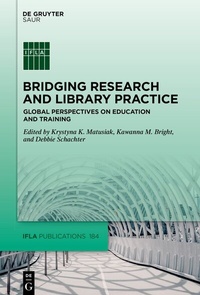
Bridging Research and Library Practice
Description

Bridging the gap between research and practice communities is more pertinent than ever because of the need for evidence in developing and evaluating library services and programs. The gap between research and library practice has been discussed in the library and information science (LIS) field for almost two decades. The issues range from limited transfer of ideas from research into practice to a lack of education in research methods for library practitioners. This book introduces new voices from international research and practice communities into the discussion and contributes to the debate about the research-practice divide.
Education and continuing training in research methods from international perspectives are explored and the experiences of researcher-practitioners from several countries highlight the issues. The volume includes chapters from LIS educators, academic researchers, and researcher-practitioners from 18 countries. It features the voices of instructors who teach research methods in LIS programs and library practitioners who engage in research. The book is addressed to the global audience of LIS educators and practitioners, with the goal of deepening the understanding of LIS education and training in research methods through sharing case studies and approaches to teaching and conducting research in practice.
More details
Other editions
Additional editions
Persons
Krystyna K. Matusiak , University of Denver; Kawanna M. Bright , East Carolina University, USA; Debbie Schachter , Langara College, Canada.
Content
- Intro
- Contents
- About IFLA
- Preface
- Introduction: Bridging the Gap
- Part I: Research Methods Education in LIS Programs
- 1 Information Theory and Research: An Australian Case
- 2 Demystifying Research Methods: A United States Perspective
- 3 Ensuring Effective User Studies Research in México
- 4 Introductory Research Methods for Students of Information Space Architecture in Poland
- 5 Teaching Research Methods in Library and Information Science Programmes: The Russian Perspective
- 6 With the Community in Mind: Teaching Research Methods at One University in Japan
- 7 Teaching Research Methods in Library and Information Science in Zimbabwe
- 8 Between Practice and Research: The National School of Librarianship in Albania
- Part II: Training and Development in Research Methods for Library Practitioners
- 9 A Model Research Methods Training Program: Implications for the Curriculum
- 10 Lessons Learned from Incorporating Research Experience into a Graduate Internship
- 11 Continuing Education in Research Methods for Library Professionals: The Romanian Experience
- 12 Nurturing Emerging Researchers in Malaysia
- 13 Learning As We Go: Junior Faculty Librarians' Perspectives on Research
- 14 The Personal Journey of an Early-Career Researcher in the United States
- Part III: Studies in LIS Research Methods Practice and Teaching
- 15 Research Confidence of Liaison Librarians Providing Faculty Research Support
- 16 A Comparative Study of Italian and Spanish Research in Library and Information Science
- 17 Research Competencies of Postgraduate Students at Lead City University, Nigeria
- 18 Developing Students' Research Skills in the Philippines
- Part IV: Voices from the Field of Practice
- 19 Research and Practice: Developing Searching Guidelines During a Pandemic
- 20 Understanding User Needs and Research Methods through Diary Studies: A Comparative Perspective from Berlin
- 21 Navigating Multidisciplinary Research in STEM Information Literacy
- 22 Lessons from a Research Trip to Mexico
- 23 Research and Practice in a Loop: A Case in and Beyond China
- 24 Integrating a Theoretical Framework into Research Proposal Design
- Contributors
