

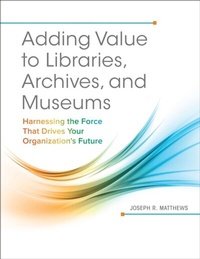
Adding Value to Libraries, Archives, and Museums
Harnessing the Force That Drives Your Organization's Future
1st Edition
Published on 28. March 2016
312 pages
978-1-4408-4289-4 (ISBN)
Description

This book explains the concept of adding value and shows staff at libraries and other organizations why they need to take steps now to ensure they are adding new value to their communities-whether it be a local town or neighborhood, a faculty and student body, or a school.
Value is at the core of every organization's purpose. Without value, organizations die. Libraries-as well as museums, archives, and galleries-have traditionally added value to their communities through their collections and services, but yesterday's collections and services are no longer enough. In order to remain sustainable, today's libraries, archives, museums, and galleries must explore new ways to add value that resonate in the lives of their customers.
This unique book explains how addressing the "5 C's" of adding value-content, context, connection, collaboration, and community-enables organizations to find new ways to invigorate their services, better serve their communities, and thrive today and tomorrow. It addresses adding value in the context of other key topics, such as crowdsourcing, embedded librarianship, makerspaces, self publishing, and repurposing spaces. Filled with charts, tables, screenshots, and other visual representation, this is a useful and provocative guide that anyone interested in vesting in the successful future of libraries, archives, and museums needs to read.
Value is at the core of every organization's purpose. Without value, organizations die. Libraries-as well as museums, archives, and galleries-have traditionally added value to their communities through their collections and services, but yesterday's collections and services are no longer enough. In order to remain sustainable, today's libraries, archives, museums, and galleries must explore new ways to add value that resonate in the lives of their customers.
This unique book explains how addressing the "5 C's" of adding value-content, context, connection, collaboration, and community-enables organizations to find new ways to invigorate their services, better serve their communities, and thrive today and tomorrow. It addresses adding value in the context of other key topics, such as crowdsourcing, embedded librarianship, makerspaces, self publishing, and repurposing spaces. Filled with charts, tables, screenshots, and other visual representation, this is a useful and provocative guide that anyone interested in vesting in the successful future of libraries, archives, and museums needs to read.
More details
Edition
1. Auflage
Language
English
Place of publication
United States
Publishing group
Bloomsbury Publishing Plc
Illustrations
85 bw illus
ISBN-13
978-1-4408-4289-4 (9781440842894)
Copyright in bibliographic data and cover images is held by Nielsen Book Services Limited or by the publishers or by their respective licensors: all rights reserved.
Schweitzer Classification
Other editions
Additional editions
Joseph R. Matthews
Adding Value to Libraries, Archives, and Museums
Harnessing the Force That Drives Your Organization's Future
Book
03/2016
Libraries Unlimited Inc
€78.20
Shipment within 10-20 days
Person
Joseph R. Matthews is a consultant who has provided assistance to numerous academic, public, and special libraries as well as local governments. He has authored more than 30 books.
Content
Acknowledgments
Introduction
1 Adding Value
Logic Model
Business Model
Value Proposition
Intangible Value
Summary
Checklist for Adding Value
Notes
2 How Libraries Have Traditionally Added Value
Taylor's Value-Added Model
Variations on the Taylor Model
Other Models
Ways Libraries Add Value-The Customer's Perspective
Designing Services around Outcomes
Surplus Value
Summary
Notes
3 The Times Are Rapidly Changin'
Trends Impacting Society
What Are the Implications for Libraries?
Summary
Notes
4 Ways to Add Even More Value
Libraries Are Obsolete
Key Questions
Strategic Planning
Strategic Triangle
Blue Ocean
Methods to Add Even More Value
Summary
Notes
5 Content
Digitization
Frameworks
User-Contributed Content
Information Portals
Self-Publishing
Library-Provided Social Content
Summary
Checklist for Adding Value to Content
Notes
6 Context
Methods to Provide Context
Visualization Tools
Displaying Content
Physical Context
Summary
Checklist for Adding Value Using Context
Notes
7 Connection
The Embedded Librarian
Innovation
Engaging in Conversations
Getting in the Flow
Customer Service
Repurposing Space
Makerspace
Community Publishing Portals
Supporting Economic Development
Catalyst for Civic Engagement
Summary
Checklist for Adding Value Using Connections
Notes
8 Collaboration
The OED
Crowdsourcing
Types of Crowdsourcing
Reasons for Collaboration
Types of Collaboration
Successful Collaboration
Why Engage Our Communities?
Summary
Checklist for Adding Value Using Collaboration
Notes
9 Collaboration in Libraries, Museums, and Archives
The New York Public Library
The National Library of Australia
The National Library of the Netherlands
The Library of Congress
The National Library of Finland
The British Library
The National Library of Wales
Rijks Museum in Amsterdam
The University of Iowa Libraries
The University of Oklahoma
The University of Oxford
University College London
The U.S. National Archives
Other Projects
Tips for Crowdsourcing
Summary
Notes
10 Community
The Concept of Platform
Library as Platform
The Physical Library Platform
Value Creation
Summary
Checklist for Adding Value Using Community
Notes
11 Stepping Up-To Lead
Respond to Customer Needs
Rethink
Funding Perspective
Culture
Continuous Innovation
Shape a Digital Identity
Reconsider Your Metrics
Summary
Checklist for Adding Value
Notes
12 Adding Personal Value
Listen, Observe, Read
Link and Connect
Focus on What Matters
Contribute Your Thinking
Slow Down
Have Fun
A Business Model For You!
Summary
Checklist for Adding Value
Notes
Appendix: Business Model Workbook
Recommended Readings
Author Index
Subject Index
Introduction
1 Adding Value
Logic Model
Business Model
Value Proposition
Intangible Value
Summary
Checklist for Adding Value
Notes
2 How Libraries Have Traditionally Added Value
Taylor's Value-Added Model
Variations on the Taylor Model
Other Models
Ways Libraries Add Value-The Customer's Perspective
Designing Services around Outcomes
Surplus Value
Summary
Notes
3 The Times Are Rapidly Changin'
Trends Impacting Society
What Are the Implications for Libraries?
Summary
Notes
4 Ways to Add Even More Value
Libraries Are Obsolete
Key Questions
Strategic Planning
Strategic Triangle
Blue Ocean
Methods to Add Even More Value
Summary
Notes
5 Content
Digitization
Frameworks
User-Contributed Content
Information Portals
Self-Publishing
Library-Provided Social Content
Summary
Checklist for Adding Value to Content
Notes
6 Context
Methods to Provide Context
Visualization Tools
Displaying Content
Physical Context
Summary
Checklist for Adding Value Using Context
Notes
7 Connection
The Embedded Librarian
Innovation
Engaging in Conversations
Getting in the Flow
Customer Service
Repurposing Space
Makerspace
Community Publishing Portals
Supporting Economic Development
Catalyst for Civic Engagement
Summary
Checklist for Adding Value Using Connections
Notes
8 Collaboration
The OED
Crowdsourcing
Types of Crowdsourcing
Reasons for Collaboration
Types of Collaboration
Successful Collaboration
Why Engage Our Communities?
Summary
Checklist for Adding Value Using Collaboration
Notes
9 Collaboration in Libraries, Museums, and Archives
The New York Public Library
The National Library of Australia
The National Library of the Netherlands
The Library of Congress
The National Library of Finland
The British Library
The National Library of Wales
Rijks Museum in Amsterdam
The University of Iowa Libraries
The University of Oklahoma
The University of Oxford
University College London
The U.S. National Archives
Other Projects
Tips for Crowdsourcing
Summary
Notes
10 Community
The Concept of Platform
Library as Platform
The Physical Library Platform
Value Creation
Summary
Checklist for Adding Value Using Community
Notes
11 Stepping Up-To Lead
Respond to Customer Needs
Rethink
Funding Perspective
Culture
Continuous Innovation
Shape a Digital Identity
Reconsider Your Metrics
Summary
Checklist for Adding Value
Notes
12 Adding Personal Value
Listen, Observe, Read
Link and Connect
Focus on What Matters
Contribute Your Thinking
Slow Down
Have Fun
A Business Model For You!
Summary
Checklist for Adding Value
Notes
Appendix: Business Model Workbook
Recommended Readings
Author Index
Subject Index
