

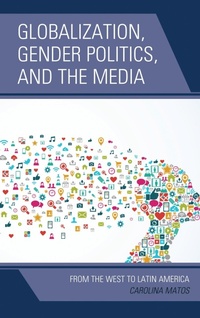
Globalization, Gender Politics, and the Media
From the West to Latin America
1st Edition
Published on 16. November 2016
1 pages
979-8-216-23854-6 (ISBN)
Description

From advertising to television and film, feminist media scholars have examined the changing nature of media representations form the 1990's onwards in comparison to the 1950s in the UK and the US. Many debates focus on the current ambiguity surrounding media representations which are inserted within post-feminist texts that tend to equate female empowerment with choice, individualism and consumerism. This has occurred in a context where there have been some achievements in gender equality worldwide, with women occupying more spaces in the marketplace, business and government.
In the last decades, Latin America has been through many changes. Inequality levels have been reduced and political trends have resulted in the election of female politicians throughout the continent, corresponding with a revival of gender politics and feminist movements. At the same time, however, countries like Brazil are still home to gender discrimination and inequality, with high levels of domestic violence towards women, low levels of political representation, a culture of machismo, and the enduring predominance of stereotypical gender representations in the media.
Globalization, Gender Politics, and the Media looks at the correlation between gender inequality in society with media representations, situating the case of Brazil and Latin America within the global quest for gender justice. It emphasizes the need to equate material and economic concerns with the examination of the reproduction of values and beliefs on gender through cultural and media outlets. Questions that are asked include, how can the media better contribute to assist in gender development and nation-building? How can online platforms make a difference? What can be done within the mainstream media to advance women's rights? What is understood by the myth of the "Brazilian woman," and how does this connect to other notions of what the "Third World woman" is?
Using a triangulation methodology, this book includes a small selection of interviews with experts from international organizations, politicians in Brazil, and bloggers, as well as a sample of media analysis of ads, commercials, posters, campaign material, and feminist blogs to examine the challenges that gender equality faces in this country and the ways in which the media can make a difference.
In the last decades, Latin America has been through many changes. Inequality levels have been reduced and political trends have resulted in the election of female politicians throughout the continent, corresponding with a revival of gender politics and feminist movements. At the same time, however, countries like Brazil are still home to gender discrimination and inequality, with high levels of domestic violence towards women, low levels of political representation, a culture of machismo, and the enduring predominance of stereotypical gender representations in the media.
Globalization, Gender Politics, and the Media looks at the correlation between gender inequality in society with media representations, situating the case of Brazil and Latin America within the global quest for gender justice. It emphasizes the need to equate material and economic concerns with the examination of the reproduction of values and beliefs on gender through cultural and media outlets. Questions that are asked include, how can the media better contribute to assist in gender development and nation-building? How can online platforms make a difference? What can be done within the mainstream media to advance women's rights? What is understood by the myth of the "Brazilian woman," and how does this connect to other notions of what the "Third World woman" is?
Using a triangulation methodology, this book includes a small selection of interviews with experts from international organizations, politicians in Brazil, and bloggers, as well as a sample of media analysis of ads, commercials, posters, campaign material, and feminist blogs to examine the challenges that gender equality faces in this country and the ways in which the media can make a difference.
More details
Other editions
Additional editions
Book
09/2018
Lexington Books
€58.40
Shipment within 15-20 days
Person
Carolina Matos is a lecturer in the Department of Sociology, City University London.
Content
Introduction: Women and Globalization: Equality and Emancipation
Part I
Chapter One: Globalization, Gender and Development: Setting a Framework for Debate
Chapter Two: Postmodernism, Equality and Feminism: Current Contemporary Issues
Part II
Chapter Three: Gender and the Media: International Representations and Stereotyping
Chapter Four: "Women in the Third World": Contextualizing the Brazilian Women in an Age of Globalization
Chapter Five: The Media, Advertising and Images of Femininity: A Case Study of Images and Representations in Brazilian Commercials and Magazines
Part III
Chapter Six: Feminism, Politics and Democracy
Chapter Seven: Gender Politics, Equality and New Technologies for Development
Part IV
Chapter Eight: Gender, Development and Democracy: Future Challenges for Transnational Feminisms and Global Gender Justice
Part I
Chapter One: Globalization, Gender and Development: Setting a Framework for Debate
Chapter Two: Postmodernism, Equality and Feminism: Current Contemporary Issues
Part II
Chapter Three: Gender and the Media: International Representations and Stereotyping
Chapter Four: "Women in the Third World": Contextualizing the Brazilian Women in an Age of Globalization
Chapter Five: The Media, Advertising and Images of Femininity: A Case Study of Images and Representations in Brazilian Commercials and Magazines
Part III
Chapter Six: Feminism, Politics and Democracy
Chapter Seven: Gender Politics, Equality and New Technologies for Development
Part IV
Chapter Eight: Gender, Development and Democracy: Future Challenges for Transnational Feminisms and Global Gender Justice
