

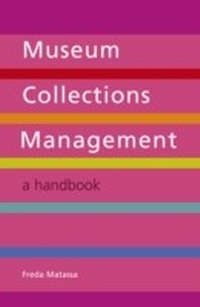
Museum Collections Management
Description

This landmark publication is the first to draw together all aspects of museum collections management in one handbook. It is designed for anyone with responsibility for a cultural collection and covers everything a collections manager needs to know. It describes professional practice in managing cultural objects and works of art, whatever the size and nature of the collection.
The book includes essential information on:
- Legal aspects of collections
- Ethical issues such as due diligence and immunity from seizure
- Up to date concerns such as sustainability, crossing borders and financial constraints
- Loans, acquisitions, inventory and movement.
The book describes all collections management procedures in a simple step-by-step process and is clear and easy to use with all procedures based on international museum practice. Examples of real forms, policies and documents drawn from major museums are included throughout the text and act as guides for any transaction.
Readership: Packed full of practical information, advice and good practice, this will be essential reading for all museum professionals, curators of private collections and museum studies students.
All prices
More details
Other editions
Additional editions
Person
Freda Matassa FRSA MA(Hons) DipAL DipEd is a wellknown UK expert on collections management who advises, teaches and lectures internationally. Former Head of Collections Management at the Tate Gallery and co-founder of the European Registrars Conference, she is expert adviser on several European projects for museum standards and to the Minister of Culture on immunity from seizure. She was recently named one of the Top 50 Women to Watch in the arts.
Content
PART 1: COLLECTIONS MANAGEMENT: OVERVIEW AND PRINCIPLES1. What is collections management?
- Fundamentals
- Know what you have and where to find it
- A brief history
- An international perspective
- Summary
- References
2. Legal requirements
- Fundamentals
- Artists' resale rights
- Copyright
- Customs and excise
- CITES and cultural objects
- Cultural goods and taxation in the UK
- Immunity from seizure
- Summary
- References
3. Ethical considerations
- Fundamentals
- Deaccessioning and disposal
- Due diligence
- Provenance
- Summary
- References
4. Practical aspects
- Fundamentals of collection care
- Risk management
- Insurance and indemnity
- Security
- Emergency response
- Summary
- References
PART 2: COLLECTIONS MANAGEMENT: PROCESSES5. Documentation
- Fundamentals
- Policy
- Procedures
- Information systems
- Documentation plan
- Cataloguing
- Marking and labelling
- Condition reports
- Inventories
- Retrospective documentation
- Summary
- References
6. Movement
- Fundamentals
- Moving objects within a building
- Handling
- Planning and risk assessment for moves
- Procedures
- Equipment
- External moves
- Planning and risk assessment
- Packing for transport
- Transport
- Documentation
- Summary
- References
7. Storage
- Fundamentals
- Storage buildings
- Storage systems
- Environmental conditions
- Inventory
- Hazardous materials
- Integrated pest management (IPM)
- Summary
- References
8. Acquisitions
- Fundamentals
- Policy
- Legal and ethical requirements
- Contract
- Procedures
- Collections impact
- Catalogue information
- Provenance
- Shared or co-owned works
- Fractional gifts
- Multiple copies, editioned works and e-media
- Commissions
- Unclaimed loans and unwanted gifts
- Summary
- References
9. Loans
- Fundamentals
- Rights and responsibilities
- Loans policy
- Due diligence for loans
- Loans procedure
- Facilities report
- Conditions of loan
- Valuations
- Loan agreement
- Insurance and indemnity
- Long-term loans
- Condition inspection
- Couriers
- Packing and transport
- Return
- Documentation for loans
- Summary
- References
10. Exhibitions and displays
- Fundamentals
- Due diligence policy for loans
- Installation
- In-house displays
- Loans in
- Exhibitions
- Insurance
- Travelling exhibitions
- Exhibition costs
- Summary
- References
11. Access
- Fundamentals
- Options for providing access
- Policy
- Risk assessment
- Study rooms
- Access to stores
- Virtual access
- Summary
- References
Bibliography
