

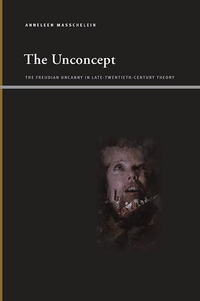
The Unconcept
The Freudian Uncanny in Late-Twentieth-Century Theory
1st Edition
Published on 2. January 2012
239 pages
978-1-4384-3555-8 (ISBN)
Description

Explores the conceptualization of the Freudian uncanny in various late-twentieth-century theoretical and critical discourses (literary studies, psychoanalysis, cultural studies, art history, trauma studies, architecture, etc.).
All prices
More details
Series
Language
English
Place of publication
Basel/Berlin/Boston
United States
Target group
Professional and scholarly
Edition type
Digital original
Product notice
Reflowable
Illustrations
Total Illustrations: 1
Total Illustrations: 1
ISBN-13
978-1-4384-3555-8 (9781438435558)
Schweitzer Classification
Other editions
Additional editions
Book
01/2012
State University of New York Press
€34.00
Article not available at the moment
Book
05/2011
State University of New York Press
€96.00
Shipment within 10-20 days
Person
Anneleen Masschelein is Assistant Professor in Literary Theory and Cultural Studies at the Catholic University of Leuven in Belgium and Postdoctoral Researcher at the National Fund of Scientific Research, Flanders.
Content
Preface
Chapter 1: Introduction
1. A Genealogy of the Uncanny
2. Different Stages in the Conceptualization of the UncanFFny
3. The Uncanny as Unconcept
4. A Functionalist-Discursive Perspective
5.(Re)Constructing a Map of Conceptualizations
Chapter 2: The Position of the Uncanny in Freud's Oeuvre
1. Follow the Index?
2. The Uncanny as a Symptom in Daily life and Pathology
3. From Compulsion to Taboo: The Surmounted Phylogenetic Origin of the Uncanny
4. The Uncanny and Theoretical Revisions
5. The Uncanny and Anxiety-I
6. The Uncanny: A Psychoanalytic Concept?
Chapter 3: Preliminaries to Concept Formation
1. Further Explorations of the Uncanny
2. The Uncanny and Anxiety-II
3. The Uncanny and Genre Studies
4. The Uncanny as Aesthetic Category: Toward a Theory of the Uncanny
Chapter 4: Tying the Knot: The Conceptualization of the Uncanny
1. An Era of Transcontinental Conceptualizations
2. Two Poetics: Todorov and Cixous
3. Poetical Structuralism: Todorov's The Fantastic
4. The Uncanny and the Fantastic
5. The Fantastic and Psychoanalysis
6. Birth and Death of the Fantastic
7. Transformations of the Fantastic
8. Chasing Freud's Chase: Cixous's "Fiction and its Phantoms"
9. "The Uncanny" as Missing Link
10. "Fiction and its Phantoms" as Quest in the Labyrinth
11. Pull the Strings
12. Cixous and Derrida: The Uncanny as a Theory of Fiction
Chapter 5: The Uncanny: A Late Twentieth-Century Concept
1. The Canonization of the Uncanny
2. A Tradition of Rereadings of "The Uncanny"
3. The Dissemination of the Uncanny
4. The "Post-Romantic-Aesthetic" Tradition
5. The Unhomely and Existential and Political Alienation
6. Hauntology
7. The Uncanny and Contemporary Culture
Chapter 6: Concluding Remarks
Notes
Bibliography
Index
Chapter 1: Introduction
1. A Genealogy of the Uncanny
2. Different Stages in the Conceptualization of the UncanFFny
3. The Uncanny as Unconcept
4. A Functionalist-Discursive Perspective
5.(Re)Constructing a Map of Conceptualizations
Chapter 2: The Position of the Uncanny in Freud's Oeuvre
1. Follow the Index?
2. The Uncanny as a Symptom in Daily life and Pathology
3. From Compulsion to Taboo: The Surmounted Phylogenetic Origin of the Uncanny
4. The Uncanny and Theoretical Revisions
5. The Uncanny and Anxiety-I
6. The Uncanny: A Psychoanalytic Concept?
Chapter 3: Preliminaries to Concept Formation
1. Further Explorations of the Uncanny
2. The Uncanny and Anxiety-II
3. The Uncanny and Genre Studies
4. The Uncanny as Aesthetic Category: Toward a Theory of the Uncanny
Chapter 4: Tying the Knot: The Conceptualization of the Uncanny
1. An Era of Transcontinental Conceptualizations
2. Two Poetics: Todorov and Cixous
3. Poetical Structuralism: Todorov's The Fantastic
4. The Uncanny and the Fantastic
5. The Fantastic and Psychoanalysis
6. Birth and Death of the Fantastic
7. Transformations of the Fantastic
8. Chasing Freud's Chase: Cixous's "Fiction and its Phantoms"
9. "The Uncanny" as Missing Link
10. "Fiction and its Phantoms" as Quest in the Labyrinth
11. Pull the Strings
12. Cixous and Derrida: The Uncanny as a Theory of Fiction
Chapter 5: The Uncanny: A Late Twentieth-Century Concept
1. The Canonization of the Uncanny
2. A Tradition of Rereadings of "The Uncanny"
3. The Dissemination of the Uncanny
4. The "Post-Romantic-Aesthetic" Tradition
5. The Unhomely and Existential and Political Alienation
6. Hauntology
7. The Uncanny and Contemporary Culture
Chapter 6: Concluding Remarks
Notes
Bibliography
Index
