

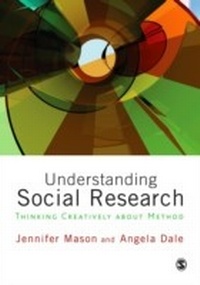
Understanding Social Research
Thinking Creatively about Method
1st Edition
Published on 10. December 2010
264 pages
978-1-4462-4656-6 (ISBN)
Description

Jennifer Mason and Angela Dale's book seeks to set out cutting-edge developments in the field of social research and to encourage students and researchers to consider ways of learning from different approaches and perspectives in such a way as to make their own research richer, more insightful and more rewarding.
Social Researching brings together a wide variety of research methods - both qualitative and quantitative - to help students and researchers to consider the relative benefits of adopting different approaches for their own research work.
The authors clearly identify the most appropriate methods for different research questions and also highlight areas where it might be fruitful to compliment different methods with each other or exploit creative tensions between them. The book is therefore a highly practical guide which also seeks to draw readers outside their methodological comfort zones.
This book includes:
- Critical coverage of issues in research design;
- Expert experience in many methodological fields;
- An overview of the many different ways to approach similar research problems;
- Coverage of the tensions between different methodological approaches;
- Examples of excellence in research design and practice;
- An examination of how to turn methodological tensions into richer research practice.
The methods covered include highly innovative, 'cutting-edge' approaches and they are demonstrated in terms of their transferability between the different social sciences. This inter-disciplinary approach is complimented by a wide range of strategically chosen examples which demonstrate the authors' pragmatic and creative take on research design.
Social Researching brings together a wide variety of research methods - both qualitative and quantitative - to help students and researchers to consider the relative benefits of adopting different approaches for their own research work.
The authors clearly identify the most appropriate methods for different research questions and also highlight areas where it might be fruitful to compliment different methods with each other or exploit creative tensions between them. The book is therefore a highly practical guide which also seeks to draw readers outside their methodological comfort zones.
This book includes:
- Critical coverage of issues in research design;
- Expert experience in many methodological fields;
- An overview of the many different ways to approach similar research problems;
- Coverage of the tensions between different methodological approaches;
- Examples of excellence in research design and practice;
- An examination of how to turn methodological tensions into richer research practice.
The methods covered include highly innovative, 'cutting-edge' approaches and they are demonstrated in terms of their transferability between the different social sciences. This inter-disciplinary approach is complimented by a wide range of strategically chosen examples which demonstrate the authors' pragmatic and creative take on research design.
All prices
More details
Edition
1. Auflage
Language
English
Place of publication
London
United Kingdom
Target group
College/higher education
Professional and scholarly
Product notice
Reflowable
ISBN-13
978-1-4462-4656-6 (9781446246566)
Copyright in bibliographic data and cover images is held by Nielsen Book Services Limited or by the publishers or by their respective licensors: all rights reserved.
Schweitzer Classification
Other editions
Additional editions
Book
12/2010
1st Edition
SAGE Publications Ltd
€111.10
Shipment within 15-20 days
Book
12/2010
1st Edition
SAGE Publications Ltd
€255.52
Shipment within 15-20 days
Persons
Jennifer Mason is Professor of Sociology at the University of Manchester. Angela Dale is Director of the Census Microdata Unit and Professor of Quantitative Social Research at the University of Manchester.
Content
Creative Tensions in Social Research: Questions of Method - Jennifer Mason and Angela Dale
PART ONE: RESEARCHING RELATIONSHIPS AND PERSONAL LIFE
Experimenting with Qualitative Methods: Researching Family Resemblance - Jennifer Mason and Katherine Davies
Using Psychoanalytic Methodology in Psychosocial Research: Researching Brothers - Stephen Frosh and Lisa Saville Young
Using Biographical and Longitudinal Methods: Researching Mothering - Rachel Thomson
Using Social Network Analysis: Researching Relational Structure - Nick Crossley
Using Survey Data: Researching Families and Households - Angela Dale
PART TWO: RESEARCHING PLACE
Ethnographies of Place: Researching the Road - Penny Harvey and Hannah Knox
Using Sociotechnical Methods: Researching Human-Technological Dynamics in the City - Simon Guy and Andrew Karvonen
Using Participatory, Observational and 'Rapid Appraisal' Methods: Researching Health and Illness - Sarah Salway, Kaveri Harriss and Punita Chowbey
Innovative Ways of Mapping Data about Places - Danny Dorling and Dimitris Ballas
PART THREE: RESEARCHING CHANGE
Using Archived Qualitative Data: Researching Socio-cultural Change - Mike Savage
What's History Got to Do with It? Researching Sexual Histories - Jeffrey Weeks
Using Qualitative Methods to Complement Randomized Controlled Trials: Researching Mental-Health Interventions - Anne Rogers
Exploring the Narrative Potential of Cohort Data and Event History Analysis - Jane Elliott
Using Longitudinal Survey Data: Researching Changing Health in Later Life - James Nazroo
PART ONE: RESEARCHING RELATIONSHIPS AND PERSONAL LIFE
Experimenting with Qualitative Methods: Researching Family Resemblance - Jennifer Mason and Katherine Davies
Using Psychoanalytic Methodology in Psychosocial Research: Researching Brothers - Stephen Frosh and Lisa Saville Young
Using Biographical and Longitudinal Methods: Researching Mothering - Rachel Thomson
Using Social Network Analysis: Researching Relational Structure - Nick Crossley
Using Survey Data: Researching Families and Households - Angela Dale
PART TWO: RESEARCHING PLACE
Ethnographies of Place: Researching the Road - Penny Harvey and Hannah Knox
Using Sociotechnical Methods: Researching Human-Technological Dynamics in the City - Simon Guy and Andrew Karvonen
Using Participatory, Observational and 'Rapid Appraisal' Methods: Researching Health and Illness - Sarah Salway, Kaveri Harriss and Punita Chowbey
Innovative Ways of Mapping Data about Places - Danny Dorling and Dimitris Ballas
PART THREE: RESEARCHING CHANGE
Using Archived Qualitative Data: Researching Socio-cultural Change - Mike Savage
What's History Got to Do with It? Researching Sexual Histories - Jeffrey Weeks
Using Qualitative Methods to Complement Randomized Controlled Trials: Researching Mental-Health Interventions - Anne Rogers
Exploring the Narrative Potential of Cohort Data and Event History Analysis - Jane Elliott
Using Longitudinal Survey Data: Researching Changing Health in Later Life - James Nazroo
