

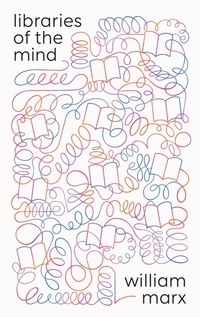
Libraries of the Mind
1st Edition
Published on 20. March 2025
200 pages
978-0-691-27388-4 (ISBN)
Description

How we build our invisible libraries
Erich Auerbach wrote his classic work Mimesis, a history of narrative from Homer to Proust, based largely on his memory of past reading. Having left his physical library behind when he fled to Istanbul to escape the Nazis, he was forced to rely on the invisible library of his mind. Each of us has such a library-if not as extensive as Auerbach's-even if we are unaware of it. In this erudite and provocative book, William Marx explores our invisible libraries-how we build them and how we should expand them.
Libraries, Marx tells us, are mental realities, and, conversely, our minds are libraries. We never read books apart from other texts. We take them from mental shelves filled with a variety of works that help us understand what we are reading. And yet the libraries in our mind are not always what they should be. The selection on our mental shelves-often referred to as canon, heritage, patrimony, or tradition-needs to be modified and expanded. Our intangible libraries should incorporate what Marx calls the dark matter of literature: the works that have been lost, that exist only in fragments, that have been repurposed by their authors, or were never written in the first place. Marx suggests methods for recovering this missing literature, but he also warns us that adding new titles to our libraries is not enough. We must also adopt a new attitude, one that honors the diversity and otherness of literary works. We must shed our preconceptions and build within ourselves a mental world library.
Erich Auerbach wrote his classic work Mimesis, a history of narrative from Homer to Proust, based largely on his memory of past reading. Having left his physical library behind when he fled to Istanbul to escape the Nazis, he was forced to rely on the invisible library of his mind. Each of us has such a library-if not as extensive as Auerbach's-even if we are unaware of it. In this erudite and provocative book, William Marx explores our invisible libraries-how we build them and how we should expand them.
Libraries, Marx tells us, are mental realities, and, conversely, our minds are libraries. We never read books apart from other texts. We take them from mental shelves filled with a variety of works that help us understand what we are reading. And yet the libraries in our mind are not always what they should be. The selection on our mental shelves-often referred to as canon, heritage, patrimony, or tradition-needs to be modified and expanded. Our intangible libraries should incorporate what Marx calls the dark matter of literature: the works that have been lost, that exist only in fragments, that have been repurposed by their authors, or were never written in the first place. Marx suggests methods for recovering this missing literature, but he also warns us that adding new titles to our libraries is not enough. We must also adopt a new attitude, one that honors the diversity and otherness of literary works. We must shed our preconceptions and build within ourselves a mental world library.
More details
Other editions
Additional editions
William Marx
Libraries of the Mind
Book
05/2025
Princeton University Press
€25.00
Shipment within 10-20 days
Person
William Marx is professor of comparative literature at the Collège de France. He is the author of The Hatred of Literature, The Tomb of Oedipus: Why Greek Tragedies Were Not Tragic, and other books.
Content
- Cover
- Contents
- Chapter One. Libraries of the Mind
- The Concept of the Invisible Library,
- A Scholar's Brain
- The Immateriality of Works
- The Evolution of Libraries from Oral Tradition to Written Text
- The Universality of Invisible Libraries
- The Mental Genesis of Libraries
- Definitions
- How Literature Becomes Present in the Mind
- Literature and the Blurring of Fact and Fiction
- The Books We Have Not Read
- Mental Shelves
- The Imaginary of Scrolls
- The Dewey Decimal Classification
- Allegorical Classifications
- The Irreducible Bias of Numerical Classification
- Should We Stop Classifying?
- Failure of the Ideal Order
- A Mental Journey through Wikipedia
- A Funeral Eulogy for the Catalog Room
- What Are Catalogs Thinking About?
- The Mysteries of Call Numbers
- The Catalog as a Sedimentation of Knowledge
- Journey into an Ancient Library
- Preliterature and Literature
- Every Reader Is a Serial Reader
- Chapter Two. The Dark Matter of Literature
- First Type of Dark Matter: The Lost Works
- Second Type of Dark Matter: Works from Which Fragments Have Survived
- Third Type of Dark Matter: The Transformed Works
- Fourth Type of Dark Matter: The Unrealized Works
- Fifth Type of Dark Matter: The Neglected Works
- How to Find Dark Matter?
- The Genealogical Method
- The Indirect Method
- Recovering the Lost Greek Tragedies
- Making the Invisible Visible
- Chapter Three. The World Library
- The Painter and the Crab
- Why a Gamecock Became a Crab
- The Rise of World Literature
- Going beyond World Literature
- Living in the World Library
- The Epistemological Value of Shock
- Acknowledgments
- Illustration Credits
- Notes
- Index
