

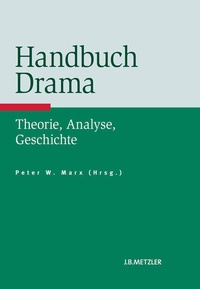
Handbuch Drama
Theorie, Analyse, Geschichte
Published on 6. August 2016
VIII, 348 pages
978-3-476-00512-0 (ISBN)
Description

Das Genre des Dramas in der Gesamtschau. Das Handbuch präsentiert die zentralen Formen und Konzeptionen des Dramas und liefert einen Überblick über den aktuellen Stand der literatur- und theaterwissenschaftlichen Forschung aus komparatistischer Perspektive. Wichtige Begriffe der Dramentheorie werden ebenso erläutert wie die wesentlichen Modelle der Dramenanalyse. Indem es auch die Einflüsse auf das Theater untersucht, trägt das Werk der Sonderstellung Rechnung, die das Drama innerhalb der klassischen Gattungstheorie einnimmt.
More details
Series
Edition
1. Aufl. 2012
Language
German
Place of publication
Stuttgart
Germany
Publishing group
J.B. Metzler, Part of Springer Nature - Springer-Verlag GmbH
Target group
Professional and scholarly
Illustrations
VIII, 348 S.
File size
3,32 MB
ISBN-13
978-3-476-00512-0 (9783476005120)
DOI
10.1007/978-3-476-00512-0
Schweitzer Classification
Other editions
Additional editions
Book
06/2012
1st Edition
J.B. Metzler
€74.99
Shipment within 7-9 days
Person
Peter W. Marx, Professor für Medien- und Theaterwissenschaft an der Universität zu Köln
Content
1 - Cover [Seite 1]
2 - Title [Seite 3]
3 - Copyright [Seite 4]
4 - Inhalt [Seite 5]
5 - Vorwort [Seite 7]
6 - I. Begriffe und Konzepte [Seite 9]
6.1 - 1. Dramentheorie [Seite 9]
6.2 - 2. Begriffe des Aristoteles [Seite 20]
6.3 - 3. Wirkungskategorien [Seite 39]
6.3.1 - 3. 1 Das Tragische [Seite 39]
6.3.2 - 3. 2 Das Komische [Seite 44]
6.3.3 - 3. 3 Das Wunderbare [Seite 47]
6.4 - 4. Drama - Dramaturgie [Seite 51]
6.5 - 5. Dramatik-Lyrik-Epik: Das Drama im System der literarischen Gattungen [Seite 60]
6.6 - 6. Theater jenseits des Dramas: Postdramatisches Theater [Seite 80]
6.7 - 7. Interkulturelle Dramaturgie [Seite 93]
6.8 - 8. Intermediale Dramaturgie [Seite 102]
7 - II. Annäherung an das Drama in analytischer Perspektive [Seite 113]
7.1 - 1. Grundelemente (1): Bausteine des Dramas [Seite 113]
7.2 - 2. Grundelemente (2): Formprinzipien der dramaturgischen Komposition [Seite 130]
7.3 - 3. Regieanweisung/Szenenanweisung [Seite 152]
7.4 - 4. Erzählperspektiven im Drama [Seite 155]
7.5 - 5. Dramaturgien der Unter brechung und der Diversität: Tableaux, Intermezzi, Nachspiele [Seite 159]
7.6 - 6. Die »Absolutheit des Dramas« (Szondi) als analytisches Modell [Seite 165]
7.7 - 7. Drama und Performativität [Seite 170]
7.8 - 8. Dramenanalyse nach dem Ende der Gattungs konvention [Seite 174]
8 - III. Gattungen des Dramas im historischen Kontext [Seite 179]
8.1 - 1. Drama und Theater - eine Wahlverwandtschaft? [Seite 179]
8.2 - 2. Antike [Seite 181]
8.3 - 3. Gattungen des nicht- europäischen Theaters [Seite 199]
8.3.1 - 3.1 Japanisches Theater [Seite 199]
8.3.1.1 - 3.1.1 No-Drama [Seite 199]
8.3.1.2 - 3.1.2 Puppentheater [Seite 202]
8.3.1.3 - 3.1.3 Kabuki-Theater [Seite 204]
8.3.2 - 3.2 Sanskrit-Drama [Seite 206]
8.3.3 - 3.3 Das chinesische Theater bis zum Ende der Yuan-Dynastie (1368) [Seite 211]
8.4 - 4. Mittelalter - geistliches Spiel [Seite 217]
8.5 - 5. Frühe Neuzeit - das englische Drama [Seite 223]
8.6 - 6. Improvisationscomoedie - Drama und Maskenspiel im 16.-18. Jahrhundert [Seite 232]
8.7 - 7. Barock [Seite 238]
8.8 - 8. Französische Klassik [Seite 252]
8.9 - 9. Aufklärung [Seite 259]
8.10 - 10. Bühne und Musik/ Bühnenmusik [Seite 273]
8.11 - 11. Realismus/Naturalismus [Seite 280]
8.12 - 12. Der Theaterboom des 19. Jahrhunderts und die Proliferation der Gattungen [Seite 291]
8.13 - 13. Kurzformen des Dramas seit der Moderne [Seite 294]
8.14 - 14. Lesedrama [Seite 301]
8.15 - 15. Episches Theater [Seite 304]
8.16 - 16. Dokumentartheater/ Dokumentardrama [Seite 313]
8.17 - 17. Der Verlust der Gattungsmerkmale: Drama nach 1945 [Seite 318]
8.18 - 18. Rückkehr des dramatischen Erzählens? [Seite 331]
9 - Verzeichnis der Beiträgerinnen und Beiträger [Seite 336]
10 - Auswahlbibliografie [Seite 338]
11 - Sachregister [Seite 340]
12 - Namen- und Titelregister [Seite 345]
2 - Title [Seite 3]
3 - Copyright [Seite 4]
4 - Inhalt [Seite 5]
5 - Vorwort [Seite 7]
6 - I. Begriffe und Konzepte [Seite 9]
6.1 - 1. Dramentheorie [Seite 9]
6.2 - 2. Begriffe des Aristoteles [Seite 20]
6.3 - 3. Wirkungskategorien [Seite 39]
6.3.1 - 3. 1 Das Tragische [Seite 39]
6.3.2 - 3. 2 Das Komische [Seite 44]
6.3.3 - 3. 3 Das Wunderbare [Seite 47]
6.4 - 4. Drama - Dramaturgie [Seite 51]
6.5 - 5. Dramatik-Lyrik-Epik: Das Drama im System der literarischen Gattungen [Seite 60]
6.6 - 6. Theater jenseits des Dramas: Postdramatisches Theater [Seite 80]
6.7 - 7. Interkulturelle Dramaturgie [Seite 93]
6.8 - 8. Intermediale Dramaturgie [Seite 102]
7 - II. Annäherung an das Drama in analytischer Perspektive [Seite 113]
7.1 - 1. Grundelemente (1): Bausteine des Dramas [Seite 113]
7.2 - 2. Grundelemente (2): Formprinzipien der dramaturgischen Komposition [Seite 130]
7.3 - 3. Regieanweisung/Szenenanweisung [Seite 152]
7.4 - 4. Erzählperspektiven im Drama [Seite 155]
7.5 - 5. Dramaturgien der Unter brechung und der Diversität: Tableaux, Intermezzi, Nachspiele [Seite 159]
7.6 - 6. Die »Absolutheit des Dramas« (Szondi) als analytisches Modell [Seite 165]
7.7 - 7. Drama und Performativität [Seite 170]
7.8 - 8. Dramenanalyse nach dem Ende der Gattungs konvention [Seite 174]
8 - III. Gattungen des Dramas im historischen Kontext [Seite 179]
8.1 - 1. Drama und Theater - eine Wahlverwandtschaft? [Seite 179]
8.2 - 2. Antike [Seite 181]
8.3 - 3. Gattungen des nicht- europäischen Theaters [Seite 199]
8.3.1 - 3.1 Japanisches Theater [Seite 199]
8.3.1.1 - 3.1.1 No-Drama [Seite 199]
8.3.1.2 - 3.1.2 Puppentheater [Seite 202]
8.3.1.3 - 3.1.3 Kabuki-Theater [Seite 204]
8.3.2 - 3.2 Sanskrit-Drama [Seite 206]
8.3.3 - 3.3 Das chinesische Theater bis zum Ende der Yuan-Dynastie (1368) [Seite 211]
8.4 - 4. Mittelalter - geistliches Spiel [Seite 217]
8.5 - 5. Frühe Neuzeit - das englische Drama [Seite 223]
8.6 - 6. Improvisationscomoedie - Drama und Maskenspiel im 16.-18. Jahrhundert [Seite 232]
8.7 - 7. Barock [Seite 238]
8.8 - 8. Französische Klassik [Seite 252]
8.9 - 9. Aufklärung [Seite 259]
8.10 - 10. Bühne und Musik/ Bühnenmusik [Seite 273]
8.11 - 11. Realismus/Naturalismus [Seite 280]
8.12 - 12. Der Theaterboom des 19. Jahrhunderts und die Proliferation der Gattungen [Seite 291]
8.13 - 13. Kurzformen des Dramas seit der Moderne [Seite 294]
8.14 - 14. Lesedrama [Seite 301]
8.15 - 15. Episches Theater [Seite 304]
8.16 - 16. Dokumentartheater/ Dokumentardrama [Seite 313]
8.17 - 17. Der Verlust der Gattungsmerkmale: Drama nach 1945 [Seite 318]
8.18 - 18. Rückkehr des dramatischen Erzählens? [Seite 331]
9 - Verzeichnis der Beiträgerinnen und Beiträger [Seite 336]
10 - Auswahlbibliografie [Seite 338]
11 - Sachregister [Seite 340]
12 - Namen- und Titelregister [Seite 345]
