

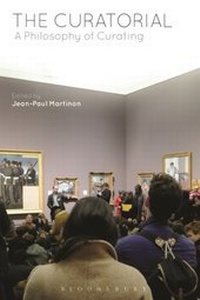
The Curatorial
A Philosophy of Curating
1st Edition
Published on 24. October 2013
224 pages
978-1-4725-2316-7 (ISBN)
Description

Stop curating! And think what curating is all about. This book starts from this simple premise: thinking the activity of curating. To do that, it distinguishes between 'curating' and 'the curatorial'. If 'curating' is a gamut of professional practices for setting up exhibitions, then 'the curatorial' explores what takes place on the stage set up, both intentionally and unintentionally, by the curator. It therefore refers not to the staging of an event, but to the event of knowledge itself.
In order to start thinking about curating, this book takes a new approach to the topic. Instead of relying on conventional art historical narratives (for example, identifying the moments when artistic and curatorial practices merged or when the global curator-author was first identified), this book puts forward a multiplicity of perspectives that go from the anecdotal to the theoretical and from the personal to the philosophical. These perspectives allow for a fresh reflection on curating, one in which, suddenly, curating becomes an activity that implicates us all (artists, curators, and viewers), not just as passive recipients, but as active members. As such, the Curatorial is a book without compromise: it asks us to think again, fight against sweeping art historical generalizations, the sedimentation of ideas and the draw of the sound bite. Curating will not stop, but at least with this book it can begin to allow itself to be challenged by some of the most complex and ethics-driven thought of our times.
In order to start thinking about curating, this book takes a new approach to the topic. Instead of relying on conventional art historical narratives (for example, identifying the moments when artistic and curatorial practices merged or when the global curator-author was first identified), this book puts forward a multiplicity of perspectives that go from the anecdotal to the theoretical and from the personal to the philosophical. These perspectives allow for a fresh reflection on curating, one in which, suddenly, curating becomes an activity that implicates us all (artists, curators, and viewers), not just as passive recipients, but as active members. As such, the Curatorial is a book without compromise: it asks us to think again, fight against sweeping art historical generalizations, the sedimentation of ideas and the draw of the sound bite. Curating will not stop, but at least with this book it can begin to allow itself to be challenged by some of the most complex and ethics-driven thought of our times.
More details
Edition
1. Auflage
Language
English
Place of publication
London
United Kingdom
Publishing group
Bloomsbury Publishing PLC
Target group
Professional and scholarly
Illustrations
5 illus
ISBN-13
978-1-4725-2316-7 (9781472523167)
Copyright in bibliographic data and cover images is held by Nielsen Book Services Limited or by the publishers or by their respective licensors: all rights reserved.
Schweitzer Classification
Other editions
Additional editions
Book
02/2015
Bloomsbury Academic
€42.30
Shipment within 15-20 days
Book
10/2013
Bloomsbury Academic
€178.00
Shipment within 15-20 days
Person
Jean-Paul Martinon is Programme Leader of the MPhil/PhD in Visual Cultures and Senior Lecturer in the Department of Visual Cultures at Goldsmiths College, University of London, UK.
Content
Notes on Contributors
List of Illustrations
Preface Irit Rogoff (Goldsmiths College, UK) and Jean-Paul Martinon(Goldsmiths College, UK)
Introduction Jean-Paul Martinon (Goldsmiths College, UK)
Part I: Send-Offs
1. On the Curatorial, From the Trapeze Raqs Media Collective
2. Theses in the Philosophy of Curating Jean-Paul Martinon (Goldsmiths College, UK)
3. Whence the Future? Alfredo Cramerotti (University of Wales, UK)
4. The Expanded Field Irit Rogoff (Goldsmiths College, UK)
5. Dear Art,Yours Sincerely Natasa Ilic (WHW, Croatia and Germany)
Part II: Praxeologies
6. The Curator Crosses the River: A Fabulation Stefan Nowotny (Goldsmiths College, UK)
7. Becoming-Curator Suzana Milevska (Institute of Gender Studies, Macedonia)
8. An Exhausted Curating Leire Vergara (Goldsmiths College, UK and University of the Basque Country, Spain)
9. Eros, Plague, Olfaction: Three Allegories of the Curatorial Jenny Doussan (Goldsmiths College, UK)
Part III: Moves
10. The Task at Hand: Transcending the Clamp of Sovereignty Ariella Azoulay (Brown University, USA)
11. The Simple Operator Sarah Pierce (Sandberg Institute, The Netherlands)
12. Three Short Takes on the Curatorial Doreen Mende (Dutch Art Institute, The Netherlands)
13. Aku menjadi saksi kepada / What I am Thinking Roopesh Sitharan (University of Santa Cruz, USA)
14. Betrayal and the Curatorial Joshua Simon (Museum of Bat Yam, Israel and New School, NY, USA)
Part IV: Heresies
15. A Conspiracy Without a Plot Stefano Harney (Singapore Management University, Singapore) and Valentina Desideri
16. What does a Question Do? Micropolitics and Art Education Susan Kelly (Goldsmiths College, UK)
17. Being Able to Do Something Nora Sternfeld (Aalto University, Finland)
18. The Politics of Residual Fun Valeria Graziano (Queen Mary University, UK)
Part V: Refigurations
19. Modern Art: Its Very Idea Helmut Draxler (Merz Academy, Germany)
20 Two Invoking Media: Radio and Exhibition Jean-Louis Déotte (University of Paris, France)
21. In Unfamiliar Terrain Anshuman Dasgupta (Visva-Bharati University, India)
22. Curating Ghostly Objects Cihat Arinç
23. Non-Museums Adnan Madani (Goldsmiths College, UK)
Part VI: Stages
24. Curating, Dramatization, and the Diagram Bridget Crone(Goldsmiths College, UK)
25. Curating Context Aneta Szylak(Copenhagen University, Denmark and Goldsmiths, UK)
26. Backstage and Processuality Ines Moreira(Goldsmiths College, UK)
27. This is Not About Us Je Yun Moon(Goldsmiths College, UK)
Coda
The Curatorial Charles Esche (University of the Arts, London, UK)
Bibliography
Index
List of Illustrations
Preface Irit Rogoff (Goldsmiths College, UK) and Jean-Paul Martinon(Goldsmiths College, UK)
Introduction Jean-Paul Martinon (Goldsmiths College, UK)
Part I: Send-Offs
1. On the Curatorial, From the Trapeze Raqs Media Collective
2. Theses in the Philosophy of Curating Jean-Paul Martinon (Goldsmiths College, UK)
3. Whence the Future? Alfredo Cramerotti (University of Wales, UK)
4. The Expanded Field Irit Rogoff (Goldsmiths College, UK)
5. Dear Art,Yours Sincerely Natasa Ilic (WHW, Croatia and Germany)
Part II: Praxeologies
6. The Curator Crosses the River: A Fabulation Stefan Nowotny (Goldsmiths College, UK)
7. Becoming-Curator Suzana Milevska (Institute of Gender Studies, Macedonia)
8. An Exhausted Curating Leire Vergara (Goldsmiths College, UK and University of the Basque Country, Spain)
9. Eros, Plague, Olfaction: Three Allegories of the Curatorial Jenny Doussan (Goldsmiths College, UK)
Part III: Moves
10. The Task at Hand: Transcending the Clamp of Sovereignty Ariella Azoulay (Brown University, USA)
11. The Simple Operator Sarah Pierce (Sandberg Institute, The Netherlands)
12. Three Short Takes on the Curatorial Doreen Mende (Dutch Art Institute, The Netherlands)
13. Aku menjadi saksi kepada / What I am Thinking Roopesh Sitharan (University of Santa Cruz, USA)
14. Betrayal and the Curatorial Joshua Simon (Museum of Bat Yam, Israel and New School, NY, USA)
Part IV: Heresies
15. A Conspiracy Without a Plot Stefano Harney (Singapore Management University, Singapore) and Valentina Desideri
16. What does a Question Do? Micropolitics and Art Education Susan Kelly (Goldsmiths College, UK)
17. Being Able to Do Something Nora Sternfeld (Aalto University, Finland)
18. The Politics of Residual Fun Valeria Graziano (Queen Mary University, UK)
Part V: Refigurations
19. Modern Art: Its Very Idea Helmut Draxler (Merz Academy, Germany)
20 Two Invoking Media: Radio and Exhibition Jean-Louis Déotte (University of Paris, France)
21. In Unfamiliar Terrain Anshuman Dasgupta (Visva-Bharati University, India)
22. Curating Ghostly Objects Cihat Arinç
23. Non-Museums Adnan Madani (Goldsmiths College, UK)
Part VI: Stages
24. Curating, Dramatization, and the Diagram Bridget Crone(Goldsmiths College, UK)
25. Curating Context Aneta Szylak(Copenhagen University, Denmark and Goldsmiths, UK)
26. Backstage and Processuality Ines Moreira(Goldsmiths College, UK)
27. This is Not About Us Je Yun Moon(Goldsmiths College, UK)
Coda
The Curatorial Charles Esche (University of the Arts, London, UK)
Bibliography
Index
