
The Replaceability Paradigm
Description
Alles über E-Books | Antworten auf Fragen rund um E-Books, Kopierschutz und Dateiformate finden Sie in unserem Info- & Hilfebereich.
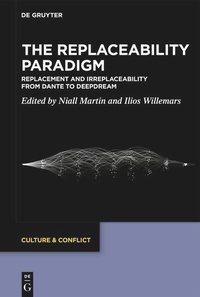
The trope of humans being 'replaced' by 'AI' is one of the most familiar examples of the rhetoric of replaceability. Not only have questions about what is unique and what is replaceable gained momentum in digital culture, but notions of 'fungibility' have emerged in many other contexts as well such as ecology, management theory, and, more sinisterly, in racist and conspiracist thinking. This volume argues that there is a 'replaceability paradigm' at work throughout the culture of modernity, from the European Renaissance, through Freudian psychoanalysis, Chinese science fiction and postcolonial theory, all the way to neural network programs such as Google's DeepDream. This collection will be of interest to anybody engaged with the conceptual architecture of contemporary culture, whether through film, literature, or new digital media.
More details
Other editions
Additional editions
Persons
Niall Martin , University of Amsterdam, Netherlands; Ilios Willemars, Leiden University, Netherlands.

System requirements
File format: ePUB
Copy protection: Watermark-DRM (Digital Rights Management)
System requirements:
- Computer (Windows; MacOS X; Linux): Use a reading software that can process the file format ePUB: e.g., Adobe Digital Editions or FBReader – both free (see eBook Help).
- Tablet/Smartphone (Android; iOS): Before downloading, install the free app Adobe Digital Editions (see eBook Help).
- E-reader: Bookeen, Kobo, Pocketbook, Sony, Tolino and many more (not Kindle).
The file format ePUB works well for novels and non-fiction books – i.e., „flowing” text without complex layout. On an e-reader or smartphone, line and page breaks automatically adjust to fit the small displays.
This eBook uses Watermark-DRM, a „soft” copy protection. This means that there are no technical restrictions to prevent illegal distribution. However, there is a personalised watermark embedded in the eBook that can be used to identify the purchaser of the eBook in the event of misuse and to provide evidence for legal purposes.
For more information, see our eBook Help page.