


The Geochemical Origin of Microbes
1st Edition
Published on 27. June 2024
248 pages
978-1-003-85952-9 (ISBN)
Description

This is a textbook covering the transition from energy releasing reactions on the early Earth to energy releasing reactions that fueled growth in the first microbial cells. It is for teachers and college students with an interest in microbiology, geosciences, biochemistry, evolution, or all of the above. The scope of the book is a quantum departure from existing "origin of life" books in that it starts with basic chemistry and links energy-releasing geochemical processes to the reactions of microbial metabolism. The text reaches across disciplines, providing students of the geosciences an origins/biology interface and bringing a geochemistry/origins interface to students of microbiology and evolution. Beginning with physical chemistry and transitioning across metabolic networks into microbiology, the timeline documents chemical events and organizational states in hydrothermal vents - the only environments known that bridge the gap between spontaneous chemical reactions that we can still observe in nature today and the physiology of microbes that live from H2, CO2, ammonia, phosphorus, inorganic salts and water. Life is a chemical reaction. What it is and how it arose are two sides of the same coin.
Key Features
Provides clear connections between geochemical reactions and microbial metabolism
Focuses on chemical mechanisms and transition metals
Richly illustrated with color figures explaining reactions and processes
Covers the origin of the Earth, the origin of metabolism, the origin of protein synthesis and genetic information as well as the escape into the wild of the first free-living cells: Bacteria and Archaea
Key Features
Provides clear connections between geochemical reactions and microbial metabolism
Focuses on chemical mechanisms and transition metals
Richly illustrated with color figures explaining reactions and processes
Covers the origin of the Earth, the origin of metabolism, the origin of protein synthesis and genetic information as well as the escape into the wild of the first free-living cells: Bacteria and Archaea
More details
Edition
1. Auflage
Language
English
Place of publication
London
United Kingdom
Publishing group
Taylor & Francis Ebooks
Target group
College/higher education
Professional and scholarly
Illustrations
16 Tables, black and white; 97 Line drawings, color; 37 Line drawings, black and white; 45 Halftones, color; 3 Halftones, black and white; 142 Illustrations, color; 40 Illustrations, black and white
ISBN-13
978-1-003-85952-9 (9781003859529)
Copyright in bibliographic data and cover images is held by Nielsen Book Services Limited or by the publishers or by their respective licensors: all rights reserved.
Schweitzer Classification
Other editions
Additional editions
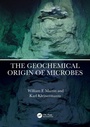
William F. Martin | Karl Kleinermanns
The Geochemical Origin of Microbes
Book
06/2024
1st Edition
CRC Press
€129.30
Shipment within 10-20 days
William F. Martin | Karl Kleinermanns
The Geochemical Origin of Microbes
Book
06/2024
1st Edition
CRC Press
€245.53
Shipment within 10-20 days

William F. Martin
The Geochemical Origin of Microbes
Book
05/2024
CRC Press
Unfortunately, price unknown
Available (delivery time upon request)
Persons
William F. Martin received his undergraduate (diplom) degree in biology 1985 from the Technische Universitaet Hannover and his Ph.D. in Genetics 1988 from the Max-Planck-Institute for Breeding Research in Cologne on molecular evolution. He completed postdoctoral work at the Technische Universitaet Braunschweig with a habilitation on the evolution of primary metabolism. Since 1999 he has held a chair in Biology at the University Duesseldorf as head of the Institute of Molecular Evolution. Author of more than 350 scientific publications that have been cited over 45,000 times, he has served as referee for 135 different journals, 50 different funding agencies, as editor for 16 different journals and as panelist on various advisory boards. He is an Elected Fellow of the Nordrhein-Westfaelische Akademie der Wissenschaften, the American Academy for Microbiology, the European Molecular Biology Organisation, and Corresponding Foreign Member of the Accademia delle Scienza di Bologna. His distinctions for work on molecular evolution include the Heinz-Maier-Leibnitz Prize of the Deutsche Forschungsgemeinschaft in 1990, a Julius von Haast Fellowship from the New Zealand Ministry for Science in 2006, the Klueh Foundation Award for Science and Research in 2018, and the Motoo Kimura Award of the Motoo Kimura Trust Foundation in 2023. Since 2009 his work has been funded by three Advanced Grants from the European Research Council. His main scientific interests are chemical and biochemical evolution, endosymbiosis, microbial evolution, and early evolution including the origin of microbial cells.
Karl Kleinermanns received his diplom degree in chemistry at the RWTH Aachen and his Ph.D. in Physical Chemistry at the Max-Planck in Goettingen about laser induced chemical reactions. He then completed a postdoctoral fellowship at the IBM research laboratories in San Jose, California and a habilitation about kinetics and dynamics of elementary oxidation reactions at the university Heidelberg. 1984 he received the Heinz-Maier-Leibnitz prize of the Deutsche Forschungsgemeinschaft (DFG) for his work about chemical reaction dynamics. 1989 he followed a call to the chair of Physical Chemistry at the University Duesseldorf as head of the Institute of Molecular Spectroscopy and Nanosystems. He had several honorary offices as lead consultant of the Deutsche Forschungsgemeinschaft, chair of Molecular Physics department of the Deutsche Physikalische Gesellschaft and member of its board, member of the prize committee of the Bunsengesellschaft fuer Physikalische Chemie, member of the panel of the European Research Society, chair of the "Scientific Advisory board" of the Max-Born institute in Berlin and member of the "Editorial Advisory Board of CHEMPHYSCHEM - A European Journal of Chemical Physics and Physical Chemistry". He is author of more than 200 peer reviewed scientific publications and editor and coauthor of the textbook of experimental physics "Gase, Nanosysteme, Fluessigkeiten". His main scientific interests in Duesseldorf were spectroscopic investigation of intermolecular interactions between nucleobases of RNA and DNA and short peptides and their aggregates using lasers of high spectral resolution and femtosecond lasers. Further research interests were the development of solar cells based on inorganic nanoparticles and environmental projects with industrial partners based on an own laboratory for organic trace analysis in complex mixtures.
Karl Kleinermanns received his diplom degree in chemistry at the RWTH Aachen and his Ph.D. in Physical Chemistry at the Max-Planck in Goettingen about laser induced chemical reactions. He then completed a postdoctoral fellowship at the IBM research laboratories in San Jose, California and a habilitation about kinetics and dynamics of elementary oxidation reactions at the university Heidelberg. 1984 he received the Heinz-Maier-Leibnitz prize of the Deutsche Forschungsgemeinschaft (DFG) for his work about chemical reaction dynamics. 1989 he followed a call to the chair of Physical Chemistry at the University Duesseldorf as head of the Institute of Molecular Spectroscopy and Nanosystems. He had several honorary offices as lead consultant of the Deutsche Forschungsgemeinschaft, chair of Molecular Physics department of the Deutsche Physikalische Gesellschaft and member of its board, member of the prize committee of the Bunsengesellschaft fuer Physikalische Chemie, member of the panel of the European Research Society, chair of the "Scientific Advisory board" of the Max-Born institute in Berlin and member of the "Editorial Advisory Board of CHEMPHYSCHEM - A European Journal of Chemical Physics and Physical Chemistry". He is author of more than 200 peer reviewed scientific publications and editor and coauthor of the textbook of experimental physics "Gase, Nanosysteme, Fluessigkeiten". His main scientific interests in Duesseldorf were spectroscopic investigation of intermolecular interactions between nucleobases of RNA and DNA and short peptides and their aggregates using lasers of high spectral resolution and femtosecond lasers. Further research interests were the development of solar cells based on inorganic nanoparticles and environmental projects with industrial partners based on an own laboratory for organic trace analysis in complex mixtures.
Content
Chapter 1 The Early Earth Setting and Chemical Fundamentals
Chapter 2 Origin of Organic Molecules
Chapter 3 Primordial Reaction Networks and Energy Metabolism
Chapter 4 Prebiotic Synthesis of Monomers and Polymers
Chapter 5 Template Directed Synthesis of Polymers
Chapter 6 Innovations on the path to cellularity
Chapter 7 Harnessing energy for escape as free-living cells
Appendix
References for further reading
Solutions to problems
Index
Chapter 2 Origin of Organic Molecules
Chapter 3 Primordial Reaction Networks and Energy Metabolism
Chapter 4 Prebiotic Synthesis of Monomers and Polymers
Chapter 5 Template Directed Synthesis of Polymers
Chapter 6 Innovations on the path to cellularity
Chapter 7 Harnessing energy for escape as free-living cells
Appendix
References for further reading
Solutions to problems
Index
