

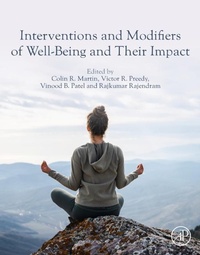
Interventions and Modifiers of Well-Being and Their Impact
Published on 25. May 2026
550 pages
978-0-443-27347-6 (ISBN)
Description

Interventions and Modifiers of Well-Being and Their Impact examines the interlink between physical and emotional well-being. This volume defines the significance of well-being and its applications to health. Sections review the various positive modifiers of well-being, including yoga, meditation, art, and dance while also outlining potential negative modifiers like obesity, addiction, and the use of social media. Each chapter provides case studies and clinical examples of applications. Written by international experts in the field, this book will be the single source researchers and clinicians understand and implement modifiers to help improve well-being.
- Defines the significance of well-being and its applications to health
- Reviews the positive modifiers of well-being, including yoga, meditation, and dance
- Discusses the negative modifiers of well-being, including old age, bone health, and lung and brain disorders
More details
Other editions
Additional editions
Colin R. Martin | Victor R. Preedy | Vinood Patel
Interventions and Modifiers of Well-Being and Their Impact
Book
05/2026
Academic Press
€184.50
Shipment within 15-20 days
Content
Section 1: Introductory Chapters, Correlates and Setting the Scene1. The well-being of parents in households with afflicted children2. Epidemiological perspectives linking health-related quality of life measures and survival3. Mental health of people attending non-psychiatric outpatient clinicsSection 2: Positive Modifiers of Well-Being 4. The effects of physiotherapy and rehabilitation on measures of well-being5. Nutrition and its contribution to well-being: Quality of life and beyond6. Meditation and well-being: applications to metabolic risk factors7. Dance practices and impact on well-being: alleviating effects of trauma8. Dance therapy and dance for health and their impact on well-being in psychiatric and neurological disorders9. Educating for health: The role of cardiac rehabilitation in modifying well-being10. Medicinal plants and applications to well-being11. Virtual reality usage to improve well-being and quality of life12. Promoting mental health through the lens of the time-use epidemiology framework13. Brief psychological interventions to increase well-being14. Yoga for Well-Being and Positive Embodiment: A Focus on Eating Disorders15. Exploring a relationship with the Integrated approach of Yoga therapy among prediabetics16. Art therapy and well-being: managing pain17. Massage and impact on well-being: impact on pelvic painSection 3: Negative or Harmful Modifiers of Well-Being18. Well-being in the hospital setting: From emergency department to discharge19. Oral health neglect as a silent modifier of overall wellness20. Sarcopenia and its negative impact on well-being21. Measures of well-being in COPD22. Acquired brain injury and well-being23. Cyberchondria as a negative influence on well-being24. Olfactory disorders and reduced measures of well-being25. Measures of well-being in the elderly and links with frailty26. Measures of well-being and quality-of-life domains in type 2 diabetes27. Bone fractures and quality of life measures28. Parkinson's disease and mental health: The protective role of psychological wellbeing, life satisfaction and positive affectSection 4: Resources29. Recommended resources for the interventions and modifiers of well-being
