


The Origins of the First World War Reconsidered
Will be published approx. on 31. July 2026
358 pages
E-Book
978-1-040-69930-0 (ISBN)
Description

This book brings together the views of internationally acclaimed scholars who have synthesized debates regarding the First World War's origins, and it will certainly encourage readers to 'reconsider' their ideas regarding this controversial subject.
Since 2014, there have been numerous works dedicated to the war's origins, including studies of the July Crisis, new biographies of politicians and diplomats, and reassessments of pre-war crises, imperial rivalries, nationalist aspirations, militarism and popular culture. In this book, leading experts on aspects of the road that led to war in 1914 consider the contribution to our understanding made by all this new or renewed attention. The role of each of the Great Powers is examined, as well as underlying forces such as nationalism, militarism, the armaments race and the alliance system, and what impact they had on these origins. What did 'mobilization' mean? And what role did domestic politics and popular reactions to the assassination at Sarajevo play? Over three sections, this volume analyses the differing international relationships of the various powers, the tensions between them and the underlying bigger forces at play.
Since 2014, there have been numerous works dedicated to the war's origins, including studies of the July Crisis, new biographies of politicians and diplomats, and reassessments of pre-war crises, imperial rivalries, nationalist aspirations, militarism and popular culture. In this book, leading experts on aspects of the road that led to war in 1914 consider the contribution to our understanding made by all this new or renewed attention. The role of each of the Great Powers is examined, as well as underlying forces such as nationalism, militarism, the armaments race and the alliance system, and what impact they had on these origins. What did 'mobilization' mean? And what role did domestic politics and popular reactions to the assassination at Sarajevo play? Over three sections, this volume analyses the differing international relationships of the various powers, the tensions between them and the underlying bigger forces at play.
Reviews / Votes
'In this volume, renowned historian Gordon Martel has assembled a range of scholars addressing the origins and outbreak of the war in light of recently discovered documents and important reassessments of existing literature. The Origins of the First World War Reconsidered is certain to provide fresh and very welcome light on the actions of the major players leading up to and including the catastrophe of 1914.'Paul R. Bartrop, Professor Emeritus of History, Florida Gulf Coast University
More details
Language
English
Place of publication
London
United Kingdom
Publishing group
Taylor & Francis Ltd
Target group
College/higher education
Product notice
Reflowable
ISBN-13
978-1-040-69930-0 (9781040699300)
Copyright in bibliographic data is held by Nielsen Book Services Limited or its licensors: all rights reserved.
Schweitzer Classification
Other editions
Additional editions
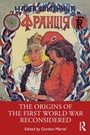
Gordon Martel
The Origins of the First World War Reconsidered
Book
approx. 07/2026
1st Edition
Routledge
€52.50
Not yet published
Gordon Martel
The Origins of the First World War Reconsidered
Book
approx. 07/2026
1st Edition
Routledge
€191.50
Not yet published
Person
Gordon Martel is Adjunct Professor at the University of Victoria and Emeritus Professor at the University of Northern British Columbia. He was one of three founding editors of The International History Review and is the editor of the four-volume Encyclopedia of Diplomacy. He specializes in European diplomacy, 1900-1945 with particular attention to the origins and crises leading to the First and Second World Wars. His publications include The Month That Changed the World: July 1914 and, co-authored with the late James Joll, The Origins of the First World War (fourth edition, Routledge).
Content
PART ONE - THE POWERS 1. Germany: Encircled by Enemies or Grasping at World Power? - Holger Afflerbach and Alexandre Pijade Chiaramonte 2. Austria-Hungary: Dynastic Decline or Multinational Exemplar? - John Deak 3. France: Revanchist or Status Quo State? - Peter Jackson 4. The United Kingdom: 'Free Hand' or Committed to the Entente? - John W. Young 5. Russia: Balkan Hegemon or Cautious Conservative? - Ronald Bobroff 6. A 'Besieged' Historiography: Serbia and the July Crisis - Danilo Sarenac PART TWO - THE TENSIONS 7. The Anglo-German Antagonism: Real or Imagined? - Dominik Geppert and Andreas Rose 8. The Alliance System: Surprisingly Peaceful or Cause of War? - Friedrich Kiessling 9. The Arms Race: Did it Matter? - Matthew S. Seligmann 10. Did Mobilization Have to Mean War? War Plans and the Origins of World War I - John W. Steinberg PART THREE - THE UNDERLYING FORCES 11. Domestic Politics: Primacy or Incidental? - Jerome aan de Wiel 12. Popular Reactions to the Outbreak of War, 1914 - William Mulligan 13. Nationalism: Liberation and Expansion - Rolf Hobson References
